Fairness for Rural Medicare Beneficiaries Act of 2021 This bill modifies the payment methodology and coinsurance amount for outpatient critical access hospital services under Medicare. Currently, the payment rate for such services is 101% of reasonable costs; the coinsurance amount for such services is 20% of the applicable charges. The bill modifies this methodology so as to base the 20% coinsurance amount on the fee schedule under the Medicare outpatient prospective payment system.
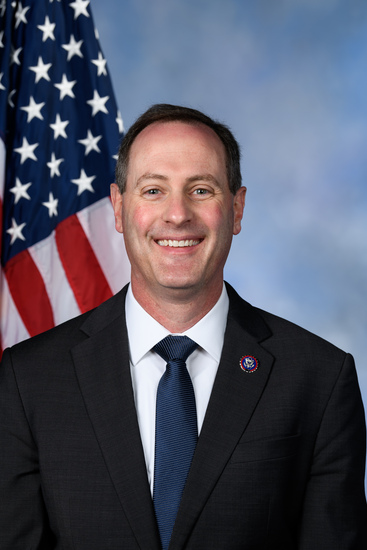
Rep. Tracey Mann
Sponsored bills
Simon Crosier Act This bill requires hospitals and other health care providers, as a condition of Medicare and Medicaid participation, to have certain written policies and procedures in place that limit the implementation of do-not-resuscitate (DNR) orders for unemancipated minors in accordance with specified criteria. Among other provisions, such policies and procedures must (1) require the informed consent of at least one parent and a reasonable attempt to contact the other parent before instituting a DNR order, (2) allow either parent to refuse to consent to a DNR order, and (3) allow a parent to transfer a minor to another facility after being informed of an intent to institute a DNR order.
Transparency in COVID-19 Expenditures Act This bill requires the Government Accountability Office (GAO) to audit certain funding that was provided to address COVID-19. Specifically, the GAO must audit and report on the use of funding provided by the Coronavirus Preparedness and Response Supplemental Appropriations Act, 2020; the Families First Coronavirus Response Act; the Coronavirus Aid, Relief, and Economic Security Act (CARES Act); the Paycheck Protection Program and Health Care Enhancement Act; Divisions M and N of the Consolidated Appropriations Act, 2021; and the American Rescue Plan Act of 2021.
Marginal Well Protection Act This bill prohibits the Environmental Protection Agency from imposing fees for methane emissions from wells that produce less than 15 barrels of oil per day and less than 90 Mcf (90,000 cubic feet) of natural gas per day.
This resolution recognizes and appreciates the dedication and devotion demonstrated by the men and women of law enforcement. It also condemns calls to defund, disband, dismantle, or abolish the police.
Fifth Amendment Integrity Restoration Act of 2021 or the FAIR Act This bill revises federal laws governing civil asset forfeiture. Specifically, the bill makes various changes to the general rules governing civil forfeiture proceedings. Among the changes, the bill requires counsel for an indigent property owner regardless of whether the owner requests counsel, raises the evidentiary standard from preponderance of the evidence to clear and convincing evidence, and sets forth factors courts must consider in determining whether a forfeiture of facilitating property is excessive. Additionally, the bill eliminates statutory authority for equitable sharing and directs forfeiture proceeds to be deposited into the general fund of the Treasury instead of the Department of Justice Assets Forfeiture Fund. Finally, the bill makes changes with respect to the civil forfeiture of money involved in structuring offenses (i.e., structuring currency transactions to evade currency reporting requirements). Among the changes, the bill specifies an evidentiary standard of knowingly for structuring offenses, and requires a prompt probable cause hearing following the seizure of money involved in a structuring offense.
Lower Costs, More Cures Act of 2021 This bill establishes and modifies several programs and requirements to address prescription drug prices. The bill modifies provisions under Medicare and Medicaid relating to prescription drug coverage and price transparency. Among other changes, the bill requires the Centers for Medicare & Medicaid Services to publish certain information, as reported by pharmacy benefit managers (PBMs), relating to generic dispensing rates, drug discounts and rebates, and payments between PBMs, health plans, and pharmacies; caps annual out-of-pocket spending under the Medicare prescription drug benefit; allows prescription drug plan sponsors under the Medicare prescription drug benefit to offer additional plans in a region; requires pass-through pricing models, and prohibits spread-pricing, for payment arrangements with PBMs under Medicaid; and allows states to include in the Medicaid Drug Rebate Program covered outpatient drugs that are provided as part of physician or outpatient hospital services. The bill also generally modifies other provisions relating to the regulation and costs of generic and brand-name drugs. Among other changes, the bill prohibits the manufacturer of a brand-name, generic, or biosimilar drug from entering into certain agreements to resolve or settle a patent infringement claim in connection with the sale of a drug or biological product; permanently allows high deductible health plans to waive deductibles for insulin and associated products; and establishes the position of Chief Pharmaceutical Negotiator in the Office of the U.S. Trade Representative.

Maximum Pressure Act This bill expands sanctions and economic penalties on Iran. It also restricts the President from unilaterally lifting or waiving the sanctions or penalties and increases congressional oversight of them. Specifically, the bill requires the President to impose visa- and asset-blocking sanctions. Additionally, it modifies existing sanctions, including by (1) providing statutory authority for executive orders imposing sanctions; (2) applying sanctions to additional sectors of Iran's economy; and (3) broadening sanctionable conduct to cover, for example, assisting Iran with the acquisition of ballistic missiles and the complicity of Iranian officials in human rights violations in specified countries. The bill also requires reporting on licenses that authorize activities subject to sanctions. The bill prohibits U.S. representatives at the International Monetary Fund from voting to allow Iran's access to special drawing rights (a currency support tool) and places restrictions on financial transactions with Iran. The restrictions include requiring domestic financial institutions to implement special measures with respect to foreign financial institutions that conduct significant transactions connected to the Instrument in Support of Trade Exchanges (a European mechanism that bypasses U.S. sanctions when carrying out trade with Iran). The Department of State must maintain the Islamic Revolutionary Guard Corps' designation as a terrorist organization and must designate Ansharallah (or Houthis), which operates in Syria, as a foreign terrorist organization. The bill also requires reports on U.S. sanctions concerning Iran, the status of Iran's nuclear weapons program, and other matters.
Red Tape Reduction Act This bill grants the force and effect of law to various executive orders relating to administrative procedures that were rescinded on January 20, 2021, including orders requiring agencies to (1) identify at least two regulations for repeal before publishing notice of a proposed new rule, and (2) rescind guidance documents that are no longer in effect.
Child Interstate Abortion Notification Act This bill creates new federal crimes related to transporting a minor across state lines for an abortion. Specifically, the bill makes it a crime to knowingly transport a minor across a state line to obtain an abortion without satisfying the requirements of a parental involvement law in the minor's resident state. A parental involvement law requires parental consent or notification, or judicial authorization, for a minor to obtain an abortion. The bill prohibits an individual who has committed incest with a minor from knowingly transporting the minor across a state line to receive an abortion. Finally, the bill makes it a crime for a physician to knowingly perform or induce an abortion on an out-of-state minor without first notifying the minor's parent.