

Maddy summaryThis bill requires the Committee on Foreign Investment in the United States (CFIUS) to review real estate transactions involving foreign adversaries (including China, Russia, Iran, and North Korea) near sensitive sites like military installations, ports, or critical infrastructure. It defines "elevated risk real estate transactions" as purchases or leases by foreign adversaries near such sites, creating a presumption that these deals pose unresolvable national security risks unless CFIUS explicitly approves them with evidence. The bill also adds food security considerations to CFIUS reviews and mandates declarations for these high-risk transactions. These changes aim to prevent foreign adversaries from gaining access to strategic U.S. land or infrastructure through real estate deals.
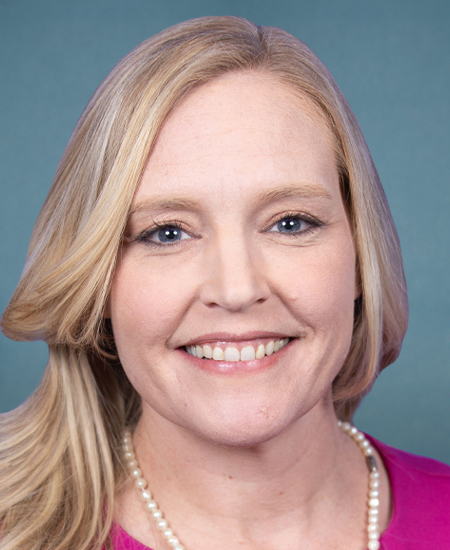
Rep. Erin Houchin
Sponsored bills
Maddy summaryHJRES 80 proposes a constitutional amendment requiring the federal government to balance its budget over time, meaning annual spending must equal revenue (excluding debt payments and borrowing) within ten years of ratification. It directly affects Congress and the executive branch by mandating budgetary balance, with exceptions only for emergencies approved by a two-thirds vote in both the House and Senate. During emergencies, temporary spending above revenue would be allowed but must be repaid quickly. This change would require ratification by 3/4 of state legislatures within seven years to take effect.
This resolution expresses the sense of the House of Representatives that research and promotion boards support efforts to develop new markets and strengthen existing markets via research, education, and promotion.
Maddy summaryThe FRIDGE Act of 2023 authorizes $1 million annually (2024-2028) to provide technical assistance for improving cold chain infrastructure in developing countries. It directly affects U.S. agricultural exporters by addressing infrastructure gaps that cause food loss and export damage, and it targets developing nations needing upgrades to cold storage, transport, and port systems. The bill requires the Secretary of Agriculture to fund needs assessments, training, and infrastructure support through agreements with eligible trade organizations. This concrete funding mechanism aims to reduce food waste and expand U.S. agricultural exports by strengthening supply chains in key markets.
Maddy summaryThis bill requires the Federal Housing Finance Agency (FHFA) to revert mortgage guarantee fees for single-family homes to the rates in effect before May 1, 2023, effectively undoing a 2023 fee increase. It prohibits fees based on a borrower’s debt-to-income ratio and restricts future fee adjustments without following standard federal rulemaking procedures. The bill directly affects mortgage borrowers (particularly middle-class homeowners) and lenders who pay these fees, as it changes how mortgage finance agencies charge for loan guarantees. A GAO study will also examine the FHFA’s previous fee changes and their economic impact, with a report due within 14 months.
Maddy summaryHRES 563 is a symbolic resolution recognizing Vice Admiral Sean Buck for his 44 years of military service. It honors his career, including his role as Superintendent of the U.S. Naval Academy and his retirement on July 7, 2023, while highlighting his family military legacy and awards. The resolution has no policy impact - it is purely ceremonial, expressing the House’s commendation without creating new laws or affecting any individuals or programs. It directly acknowledges Buck’s service to the nation and Indiana, where he was born and attended high school.
Maddy summaryHR 4417, the "Ending Agricultural Trade Suppression Act," prevents state and local governments from imposing additional production standards on agricultural products sold across state lines if those standards aren't already required by federal law or the state where the product is grown. It directly affects agricultural producers, distributors, and businesses operating in interstate commerce by allowing them to sue states in federal court to challenge such regulations. The bill creates a private right of action for affected parties to seek court invalidation of the regulations and damages for economic losses, with provisions for preliminary injunctions to halt enforcement during litigation. This aims to reduce regulatory barriers that could hinder the movement of agricultural goods between states.
This resolution expresses the sense of the House of Representatives that the Centers for Medicare & Medicaid Services should develop quality measures to prevent mobility loss among hospitalized patients.
Maddy summaryHJRES 44 is a congressional resolution seeking to block a 2021 rule by the Bureau of Alcohol, Tobacco, Firearms, and Explosives (ATF). The rule classified firearms with stabilizing braces as "short-barreled rifles," which would have required additional licensing and regulation. This resolution uses a specific legal process (under Title 5, U.S. Code) to formally disapprove the ATF rule, meaning the rule would no longer be in effect. It directly affects firearm owners, manufacturers, and dealers who would have been subject to the rule’s requirements.
Maddy summaryThis resolution (HRES 461) expresses the U.S. House of Representatives' disapproval of using public elementary or secondary school facilities to shelter individuals not admitted to the United States. It specifically references incidents in New York City where school gymnasiums were used for this purpose, arguing such use diverts educational resources, compromises student safety, and disrupts school routines. As a non-binding resolution, it does not create new laws or directly affect anyone but serves as a formal statement of opposition to the practice. The bill focuses on condemning the use of school facilities for sheltering non-admitted individuals, without proposing policy changes.