

Maddy summaryHR 485, the Muhammad Ali Congressional Gold Medal Act, authorizes Congress to award a gold medal in recognition of Muhammad Ali's lifetime contributions to sports, civil rights, and humanitarian causes. The bill directs the Treasury Secretary to strike the medal and present it to Ali's widow, Lonnie Ali, following his death in 2016. It also permits the sale of bronze duplicates to cover costs, with proceeds going to the U.S. Mint. This is a commemorative measure with no policy impact, solely honoring Ali's legacy through a symbolic medal.
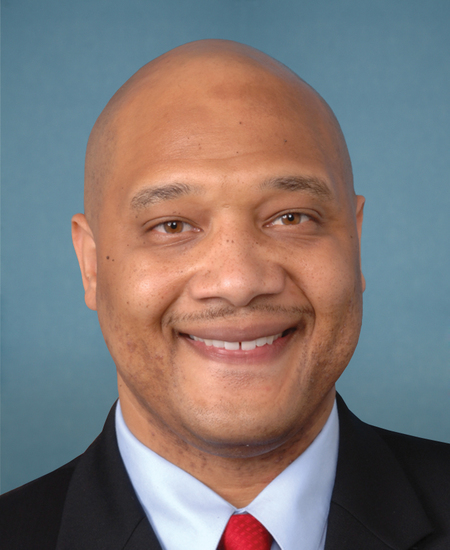
Rep. André Carson
Sponsored bills
Maddy summaryHR 507, the Veterans Member Business Loan Act, amends the Federal Credit Union Act to explicitly include loans made to veterans as qualifying "member business loans" under credit unions. This change directly affects veterans seeking business financing through federal credit unions, allowing them to access these loans under the same framework as other small business borrowers. The key mechanism is adding a new definition category ("made to a veteran") to the existing eligibility criteria for business loans, using the standard military definition of "veteran" from Title 38, U.S. Code. The bill does not create new funding or programs but expands existing credit union lending options to include veterans. This definition change takes effect six months after the bill's enactment.
Maddy summaryHR 486, the Young Americans Financial Literacy Act, authorizes $27.5 million to $55 million annually through 2029 to fund competitive grants for centers of excellence focused on financial literacy education for individuals aged 8-24. These centers, established by eligible institutions like schools, nonprofits, or financial organizations, must develop research-based programs covering budgeting, debt management, student loan guidance, and avoiding pitfalls like predatory lending. The bill specifically requires programs to address at-risk populations, include evidence-based teaching methods, and serve groups such as high school graduates, college students, young families, and military personnel. It mandates annual reporting to Congress on grant recipients and the populations they serve, with funding ending in 2029.
Maddy summaryThe Prevent Tariff Abuse Act amends the International Emergency Economic Powers Act to prohibit the President from using emergency powers to impose tariffs or import quotas on goods entering the U.S. It adds a specific provision stating the President cannot impose duties, tariffs, or quotas under this law. This directly limits the executive branch's authority during emergencies, preventing the use of emergency powers for trade restrictions. The bill does not affect other trade policies or the President's other emergency authorities.
Maddy summaryHR 409, the Supporting Transit Commutes Act, amends the federal tax code to improve tax treatment for employers providing transit benefits. It allows employers to deduct the full amount of qualified transit benefits (like bus or train passes) up to the existing limit, instead of a reduced amount, for benefits provided through salary reduction agreements. This directly affects employers who offer transit passes or similar commuting benefits to employees. The change takes effect for taxable years beginning after the bill's enactment date. The policy change simplifies tax deductions for these benefits without altering the benefit limits themselves.
Maddy summaryHR 429, the Rosie the Riveter Commemorative Coin Act, authorizes the U.S. Treasury to mint and sell three types of commemorative coins ($5 gold, $1 silver, and half-dollar) to honor women who worked on the U.S. home front during World War II. The coins will be sold at face value plus surcharges ($35 for gold, $10 for silver, $5 for half-dollar), with all surcharge revenue directed to the Rosie the Riveter Trust to support the Rosie the Riveter WWII Home Front National Historical Park and related educational programs. The coins must be issued between January 1, 2028, and December 31, 2028, in specified quantities (50,000 gold, 400,000 silver, 750,000 half-dollar), with all costs covered by the sales revenue to avoid net government expense.
Maddy summaryHR 307, the ARC Act of 2025, aims to reduce avoidable amputations by expanding access to peripheral artery disease (PAD) screening and prevention. It requires Medicare and Medicaid to cover PAD screening tests (like ankle-brachial index tests) without cost-sharing for at-risk beneficiaries, including seniors, diabetics, and those with other vascular risk factors. The bill also establishes a federal education program to raise awareness about PAD and creates quality measures to incentivize hospitals to prioritize non-amputation treatments through early detection. These provisions directly affect millions of Americans, particularly minorities disproportionately impacted by PAD-related amputations, by making preventive care more accessible and integrated into routine care.
Maddy summaryThis resolution expresses the House's support for Korean American Day, commemorating January 13, 1903 - the arrival of the first large wave of Korean immigrants to the U.S. It urges all Americans to observe the day to recognize Korean Americans' contributions to U.S. society, including their economic, cultural, and military service. The resolution honors the 122nd anniversary of this historical arrival, acknowledging the resilience of early Korean immigrants and their descendants. As a symbolic gesture, it does not create new laws or affect any specific group directly.
This resolution honors the life, achievements, legacy, and distinguished public service of former President Jimmy Carter. The resolution also (1) acknowledges President Carter's contributions to the state of Georgia, the United States, and the world; and (2) establishes his legacy as one of the great leaders and statesmen of the United States.
Maddy summaryThe D.C. Robert F. Kennedy Memorial Stadium Campus Revitalization Act transfers administrative control of the 174-acre Robert F. Kennedy Memorial Stadium Campus from the federal government to the District of Columbia. This allows the District to develop the campus for residential, commercial, and public purposes, including designating at least 30% as "Robert F. Kennedy Memorial Park" for recreation. The District must pay all transfer and development costs, maintain public access to the Anacostia River, and follow specific environmental and development requirements. The transfer is for a minimum of 99 years, with provisions for federal reversion if the District fails to meet requirements. The bill also repeals the 1957 Stadium Act and terminates a 1988 lease agreement.