Maddy summaryHRES 292 is a non-binding House resolution supporting "Financial Literacy Month" to raise awareness about personal finance education. It references statistics showing widespread financial literacy gaps, including 14.2% of U.S. households being unbanked or underbanked, only 42% of adults budgeting, and just 28 states requiring high school economics courses. The resolution calls on federal, state, local, school, nonprofit, and business entities to observe Financial Literacy Month with programs and activities. It does not create new laws or policies but aims to highlight the importance of financial education for managing money, credit, and debt.
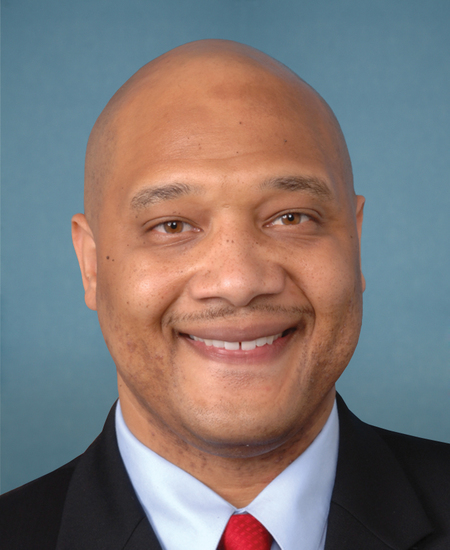
Rep. André Carson
Sponsored bills
Maddy summaryHR 2621, the REAL AMERICA Act, creates two new tax deductions: one for cash tips reported to employers (with an income limit of $450,000 for individuals or $900,000 for joint returns) and another for qualified overtime compensation paid under the Fair Labor Standards Act. It also changes tax treatment for partners providing investment management services to partnerships, requiring certain gains to be treated as ordinary income rather than capital gains. The bill repeals the requirement to include Social Security benefits in gross income while providing funding to maintain Social Security trust fund balances. These changes would primarily affect taxpayers who earn cash tips, receive overtime pay, or work in investment management roles within partnerships.
Maddy summaryThe IDEA Full Funding Act (HR 2598) mandates specific annual federal funding levels for the Individuals with Disabilities Education Act (IDEA), directly affecting schools and students with disabilities nationwide. It requires the federal government to appropriate either a fixed dollar amount or a specified percentage (increasing annually from 4.5% to 40%) of a calculated total - based on the number of eligible students and average per-pupil costs - starting in fiscal year 2026 through 2035. The bill sets clear, escalating funding targets, with the higher of two calculated amounts (dollar figure or percentage) becoming available for obligation each fiscal year. This establishes a binding financial commitment to address long-standing underfunding of special education services under IDEA.
Workplace Violence Prevention for Health Care and Social Service Workers Act This bill requires the Department of Labor to address workplace violence in health care, social service, and similar sectors. Specifically, Labor must issue an occupational safety and health standard that requires certain employers to take actions to protect workers and other personnel from workplace violence. The standard applies to employers in the health care sector, in the social service sector, and in sectors that conduct activities similar to those in the health care and social service sectors. Among other elements, the standard must require each employer to (1) develop a workplace violence prevention plan, (2) promptly investigate incidents of workplace violence, and (3) provide relevant training and education to employees. The bill requires certain hospitals and skilled nursing facilities to comply with this standard as a condition of Medicare participation.
Maddy summaryThis bill (HR 2532) blocks federal funding for large-scale layoffs at the Department of Health and Human Services (HHS) and its sub-agencies. It prohibits using federal funds to remove 3% or more of all HHS employees, or 3% or more at any single sub-agency, within a 60-day period. This applies to actions like layoffs under federal workforce rules (Title 5) or agency reorganizations. The bill directly affects HHS employees and its operating divisions by preventing rapid, widespread workforce reductions. It does not change HHS policies but restricts how personnel actions can be funded.
Maddy summaryHR 2585, the Armenian Genocide Education Act, establishes a federal program through the Library of Congress to develop educational resources about the 1915-1923 Armenian Genocide for K-12 schools. It requires the Librarian to create and distribute accurate teaching materials, provide teacher training workshops, and maintain an online resource hub focused on the genocide's history, lessons, and prevention of hate. The program directly supports local educational agencies, independent schools, and educators by offering professional development and curriculum resources. It defines key terms like "denial" and "distortion" to guide the educational content, aiming to improve understanding of this historical event and its relevance to preventing modern-day hate crimes.
Sanctioning Russia Act of 2025 This bill imposes penalties on certain persons (individuals and entities) if the President determines that the Russian government or a person acting at Russia's direction is involved with (1) refusing to negotiate a peace agreement with Ukraine; (2) violating a negotiated peace agreement; (3) initiating another invasion of Ukraine; or (4) overthrowing, dismantling, or seeking to subvert the Ukrainian government. If the President makes such a determination, the bill requires certain actions including the President must impose visa- and property-blocking sanctions on specified persons such as the Russian president, certain Russian military commanders, and any foreign person that knowingly provides defense items to the Russian armed forces; the President must increase the rate of duty on all goods and services imported from Russia into the United States to at least 500% relative to the value of such goods and services; the President must increase the rate of duty on all goods and services imported into the United States from countries that knowingly engage in the exchange of Russian-origin uranium and petroleum products to at least 500% relative to the value of such goods and services; the Department of the Treasury must impose property-blocking sanctions on any financial institution organized under Russian law and owned wholly or partly by Russia, and any financial institution that engages in transactions with those entities; and the Department of Commerce must prohibit the export, reexport, or in-country transfer to or in Russia of any U.S.-produced energy or energy product.

Maddy summaryThe Heating and Cooling Relief Act (HR 2486) expands the Low-Income Home Energy Assistance Program (LIHEAP) to help low-income households struggling with energy costs. It increases funding to cover all eligible households (those with incomes up to 250% of poverty level or 80% of State median income), sets a goal that no household should spend more than 3% of income on energy, and requires states to operate assistance programs year-round. The bill includes new protections against utility shutoffs for 2 years after assistance is received, prohibits late fees during the 6 months following assistance, and mandates weatherization and energy efficiency improvements in low-income housing. It also requires states to develop extreme heat response plans and addresses the $21 billion in residential utility arrears as of September 2024.
Maddy summaryThis bill directs the U.S. Department of Health and Human Services to launch a national public education campaign about abortion access. The campaign must provide medically accurate information on where to obtain abortion services (including medication abortion), legal rights for out-of-state care, identifying misleading anti-abortion centers, spotting disinformation, and protecting personal health data. It specifically targets underserved communities like people of color, immigrants, LGBTQ+ individuals, rural residents, and those with low incomes, while prohibiting the promotion of misinformation or abstinence-only programs.
Maddy summaryHR 2527, the Early Detection of Vision Impairments for Children Act of 2025, provides federal grants to states, territories, tribes, and urban Indian organizations to establish statewide vision screening and intervention programs for children. The bill requires grantees to implement vision screenings in medical, home, educational, and early learning settings, develop data systems for tracking outcomes, and improve access to care for underserved children in rural and low-income communities. It also authorizes technical assistance grants through the CDC to help develop screening systems, share best practices, and conduct research on vision care programs. The bill allocates $5 million annually for fiscal years 2026-2030 to fund these activities, targeting early detection to prevent vision-related learning and developmental challenges.