

Maddy summaryThis bill establishes a code of conduct for Supreme Court justices, requiring them to disclose gifts, income, and potential conflicts of interest. It creates a formal process for handling complaints about justices, including a judicial investigation panel to review allegations. The bill adds specific circumstances requiring recusal, such as when a justice or family member has financial ties to a party in a case. Additionally, it mandates that parties and amicus briefs disclose any gifts given to justices and lobbying activities related to their nomination. These provisions aim to increase transparency and accountability in the Supreme Court's operations.
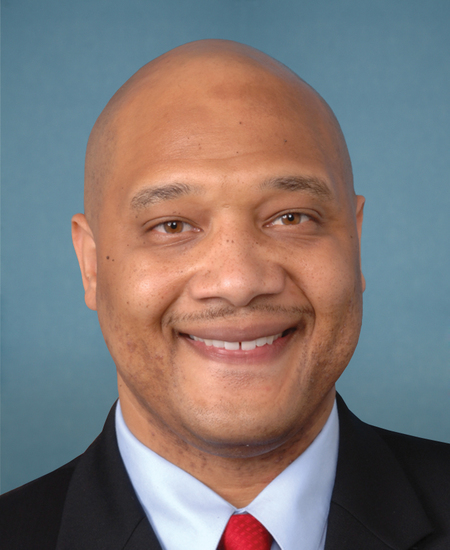
Rep. André Carson
Sponsored bills
Maddy summaryThis bill amends immigration law to create an exception for certain individuals during expedited removal proceedings. It prevents the removal of aliens who are natives or citizens of a "country of concern" (defined as a country designated as a "country of particular concern" or on the "special watch list" under the International Religious Freedom Act of 1998). The key mechanism adds a new exception (subparagraph H) to the existing immigration law, blocking expedited removal for these individuals. This directly affects people from designated countries who would otherwise face rapid deportation. The bill does not change the definition of "country of concern" or create new designations; it only modifies removal procedures for existing designations.
Maddy summaryHR 3505, the Barriers to Suicide Act of 2025, creates a federal grant program administered by the Department of Transportation to fund the installation of proven safety barriers and nets on specific high-risk structures. The program provides competitive grants (up to 80% federal funding) to states, local governments, or other eligible entities for projects installing suicide deterrents on bridges, buildings, parking garages, highway-rail crossings, or rail stations. It prioritizes areas with high suicide rates and mandates a study by the Comptroller General to evaluate effective deterrents for non-bridge structures and their costs, with a report due within one year of enactment. The bill authorizes $10 million annually from 2026-2030 for this initiative.
Maddy summaryHR 3498, the Henrietta Lacks Congressional Gold Medal Act, authorizes a commemorative gold medal to honor Henrietta Lacks for her contribution to science through her immortal HeLa cells. The bill directs the Treasury Secretary to strike the medal, which will be presented posthumously by Congress and displayed at the Smithsonian Institution. It also permits the sale of bronze duplicates to cover costs, with proceeds going to the U.S. Mint fund. This is a ceremonial recognition of Lacks' legacy, not a policy change affecting any group or requiring new regulations.
Stronger Communities through Better Transit Act This bill requires the Department of Transportation (DOT) to establish a grant program to support operating projects for public transportation and related service improvements, particularly in underserved communities and areas of persistent poverty. Specifically, the bill requires DOT to allocate funding under the program for urbanized areas, states, and Indian tribes that are recipients of funds under either the Federal Transit Administration's (FTA's) Urbanized Area Formula Funding program or Formula Grants for Rural Areas program. Eligible recipients may use funding for operating costs associated with projects that improve public transportation service for transit-dependent populations and support increased transit ridership (e.g., service expansion, information technology enhancements, and workforce development). DOT must apportion the funding so that recipients receive funds that are proportional to their share of operating costs. The bill also provides for an increased federal cost share for operating assistance for projects or programs carried out in areas of persistent poverty or underserved communities. DOT must set up a multimodal access measurement interface for public agencies to aid transit agencies in determining and reporting on access to jobs and essential services. A grant recipient must (1) report specific information to the FTA for inclusion in the National Transit Database, and (2) survey transit riders and non-riding residents regarding transit service improvements. Further, the bill expands the purposes of the public transportation programs to include supporting public transportation's role in combating climate change through growing/retaining transit ridership.
Maddy summaryHJRES 96 is a congressional resolution that would block a specific proposed military sale to the United Arab Emirates. It targets defense articles and services listed in Transmittal No. 25-25 (submitted May 13, 2025), specifically F-16 aircraft components, spares, accessories, and related logistics support. The resolution would prohibit this sale under the Arms Export Control Act, requiring congressional disapproval before it could proceed. This directly affects the U.S. government (which would need to halt the sale) and the UAE (which would lose access to these defense items).
Maddy summaryHJRES 97 is a congressional resolution blocking a specific proposed military sale to the United Arab Emirates (UAE). It prohibits the sale of defense articles and services detailed in Transmittal No. 24-118, including six Chinook helicopters, missile warning systems, communications equipment, and machine guns. The resolution exercises Congress’s authority under the Arms Export Control Act to disapprove the sale before it proceeds. This directly affects the UAE government, which sought these defense items, and requires the U.S. State Department to halt the transaction. The bill does not create new policy but stops a specific foreign military sale.
Maddy summaryThis resolution (HRES 417) is a symbolic gesture to honor the National Science Foundation (NSF) on its 75th anniversary. It recognizes the NSF’s founding in 1950 to advance science, engineering, and education, highlighting its role in supporting research across all 50 states, fostering global scientific collaboration, and enabling key innovations like the internet, MRI technology, and AI. The resolution does not create new policy or funding but formally commends the NSF’s mission and achievements, including its annual support for roughly 350,000 researchers and its contribution to 268 Nobel Prize-winning discoveries. It concludes by reaffirming congressional support for the NSF’s ongoing work.
Maddy summaryThis non-binding House resolution recognizes the ongoing Nakba (catastrophe) of Palestinian displacement since 1948 and affirms Palestinian refugees' rights under UN Resolution 194 and international law. It calls for commemorating the Nakba, denouncing current displacement efforts (including home demolitions and settlements), supporting UNRWA services for refugees, and ending U.S. weapons transfers used in forced removals. As a symbolic measure, it does not create new laws or directly affect refugees but aims to shape U.S. diplomatic policy by urging the government to reject denial of the Nakba and halt complicity. The resolution focuses on rhetorical recognition and policy alignment rather than concrete legal changes.
Maddy summaryHR 3368, the "Born in the USA Act of 2025," prohibits federal funding for Executive Order 14160 (which aimed to restrict birthright citizenship for children born in the U.S.). The bill directly affects federal agencies that might implement the executive order by blocking their use of funds for that purpose. Its key provision is a funding ban targeting the executive order and any similar future policies, without changing citizenship law. The bill does not alter birthright citizenship rights but prevents federal resources from being used to enforce the controversial executive order. It is a procedural measure focused on funding, not a substantive policy change to citizenship rules.