

Maddy summaryHRES 547 is a symbolic resolution recognizing June as National Caribbean American Heritage Month. It does not create new laws or directly affect any individuals or groups; instead, it encourages the public to observe the month through ceremonies and celebrations. The resolution affirms that Caribbean Americans' contributions are integral to U.S. history, progress, and cultural diversity. It supports the month's goals and highlights the community's longstanding role in American society, from historical figures like Alexander Hamilton to modern leaders like Kamala Harris. As a non-binding resolution, it has no legal effect but serves to honor this cultural observance.
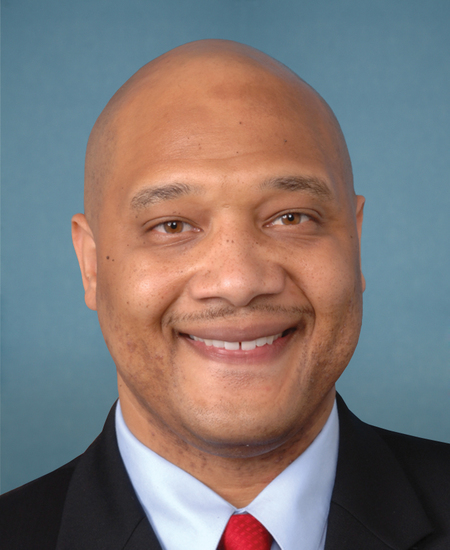
Rep. André Carson
Sponsored bills
Maddy summaryThis resolution (HRES 549) is a non-binding House measure expressing support for designating June 26 as "LGBTQI+ Equality Day." It commemorates three landmark Supreme Court rulings on June 26 (2003, 2013, and 2015) that ended criminalization of same-sex intimacy, struck down marriage discrimination, and established marriage equality. The resolution encourages public celebration of this day to honor these milestones and educate about ongoing discrimination faced by LGBTQI+ communities. It also acknowledges the need for future legislation to address discrimination in areas like employment, housing, and public accommodations. As a symbolic resolution, it does not create new legal requirements but formally recognizes these historical court decisions.
Maddy summaryThe CONNECT for Health Act of 2025 expands Medicare telehealth coverage by removing geographic restrictions that limited where patients could receive care, expanding the types of health care providers who can offer telehealth services, and eliminating the requirement for an in-person visit before receiving telemental health services. The bill includes specific provisions to support telehealth use for Native American health facilities, rural health clinics, and Federally Qualified Health Centers. It requires the Centers for Medicare & Medicaid Services to collect and publish data on telehealth usage and impacts, and to develop resources to improve accessibility for people with disabilities and limited English proficiency. Program integrity measures are added to monitor telehealth billing practices and prevent fraud while maintaining coverage for telehealth services during public health emergencies.
Maddy summaryThis bill prohibits federal agencies from penalizing homeless individuals for engaging in life-sustaining activities on public land, such as sleeping, storing belongings, accessing food/water, or using public spaces. It requires federal agencies to provide accessible, free shelter alternatives (like tiny homes with basic amenities or parking with sanitation) if they cannot prove adequate indoor space is available without requiring daily reapplication or charging fees. Individuals harmed by violations can sue federal agencies for injunctive relief and attorney fees, and homeless people facing charges for basic survival activities may use "lack of shelter access" as a legal defense. The bill directly affects homeless individuals using federal public spaces, aiming to replace criminal penalties with housing access.
Maddy summaryHR 4212, the SHADE Act, establishes a federal grant program to plant trees in historically underserved urban areas. It directly affects cities and communities in "redlined areas" (low-income neighborhoods historically denied loans) or "intra-urban heat islands" (city zones with high temperatures and low tree cover). The bill authorizes $50 million annually (2026-2036) for grants to states, local governments, tribes, or qualifying nonprofits to fund tree planting, maintenance for 5 years, and community engagement plans. Grants prioritize projects that avoid displacing residents and require planting non-invasive tree species suited to the local environment.
Maddy summaryHR 4186, the Connecting Students with Mental Health Services Act, creates a federal grant program to expand mental health services for K-12 students in underserved areas. It authorizes $5 million annually (2026-2029) for grants to school districts partnering with community health providers to establish telehealth programs, focusing on rural, high-poverty, or health-professional-shortage-area schools. Funds can cover telehealth equipment, staffing, and facilities to deliver remote mental health care. The program requires grantees to comply with privacy laws and report on student access to services by 2027. This directly affects students lacking local mental health resources through concrete funding for telehealth infrastructure.
Maddy summaryThe Equal Dignity for Married Taxpayers Act amends the Internal Revenue Code to replace gendered terms like "husband and wife" with gender-neutral language such as "married couple" or "spouses" throughout tax law. This bill affects all married couples filing federal taxes by making the tax code consistent for all married couples regardless of gender. It makes over 30 specific changes to tax code sections, including replacing "his spouse" with "the individual's spouse" and updating references to marital status. The bill does not alter tax rates, deductions, or credits - it only updates language to be more inclusive. This is a technical language update to ensure the tax code treats all married couples equally without gendered references.
Maddy summaryThis bill amends the Older Americans Act of 1965 to better serve LGBTQI older adults (ages 60+). It adds specific definitions for "LGBTQI" and "HIV" in the law, redesignates "minority" to explicitly include LGBTQI individuals, and creates an Office of LGBTQI Inclusion within the Administration on Aging. The bill establishes a National Resource Center on LGBTQI Aging to provide training, technical assistance, and educational resources to organizations serving this community. It also requires the collection and analysis of data on discrimination against LGBTQI older adults in long-term care settings.
Maddy summaryThis bill prohibits U.S. courts from using future earnings calculations in civil damages cases that factor in race, ethnicity, sex, gender identity, sexual orientation, or intersex traits. It requires the Secretary of Labor to create guidance for "inclusive" future earnings tables within 180 days that avoid such bias, and directs studies on damages data by case type and protected class. The bill also mandates training for federal judges on implementing these changes and ensures calculations based on age or disability don’t conflict with equal protection laws. It directly affects plaintiffs, defendants, and courts in personal injury and discrimination cases where damages are calculated.
Maddy summaryHRES 546 is a resolution encouraging Members of Congress to visit U.S. Immigration and Customs Enforcement (ICE) detention facilities in their states to observe conditions firsthand and fulfill oversight responsibilities. It references the 2024 Appropriations Act, which permits unannounced visits and prohibits facilities from altering conditions for such visits, ensuring transparency. The resolution cites concerns about recent cuts to oversight staff (including closed offices for detainee rights) and reports of overcrowding and inadequate medical care in detention centers. It aims to inform congressional efforts to address systemic issues in immigration detention without mandating visits.