

Maddy summaryThis bill requires Medicare Advantage (MA) plan advertisements to disclose specific data about prior authorization denials. Starting one year after enactment, ads must include the number of denied prior authorization requests, how many were later approved after reconsideration, and the average time between denial and approval. These disclosures must cover the most recent plan year before the ad is published, using both verbal and visual methods where possible. The policy directly affects MA plan marketers and beneficiaries who view these advertisements, aiming to provide clearer information about plan coverage experiences.
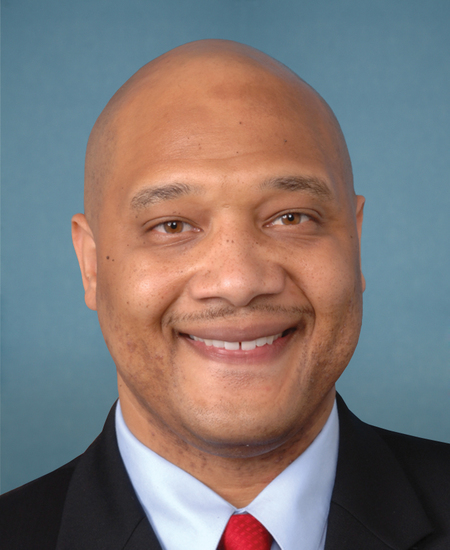
Rep. André Carson
Sponsored bills
Maddy summaryThis bill requires oil and gas companies conducting hydraulic fracturing operations to disclose detailed chemical ingredients before starting and within 30 days after completing operations. Companies must provide full chemical names, CAS numbers, safety data sheets, and volumes to state or federal authorities, who then make this information publicly available online. The bill includes an exception allowing immediate disclosure of proprietary chemical formulas during medical emergencies, though companies can later request confidentiality agreements. It directly affects fracking operators in oil, gas, and geothermal production, amending the Safe Drinking Water Act to mandate transparency while maintaining trade secret protections outside emergency situations.
Maddy summaryHR 6108 requires the federal government to automatically exclude from all federal health care programs anyone convicted of specific fraud-related crimes after a one-year implementation period. It targets convictions for health care fraud, theft, or financial misconduct in health care delivery or government programs (including non-health care programs funded by government). The bill mandates this exclusion without requiring additional administrative action by the Secretary. This directly affects health care providers and organizations found guilty of such offenses, barring them from participating in programs like Medicare or Medicaid.
Maddy summaryThis bill (HR 6110) requires Medicare Advantage plans to automatically reconsider coverage denials without needing an enrollee to request it. It directly affects Medicare Advantage beneficiaries whose initial coverage requests are denied. The key change amends existing law to eliminate the requirement for patients to submit a separate request for reconsideration, instead mandating that plans proactively review these denials. This streamlines the process for enrollees facing coverage rejections under their Medicare Advantage plan.
Maddy summaryHR 6114 prohibits using federal funds from previous appropriations to the Department of Health and Human Services for any activity that automatically enrolls Medicare beneficiaries in Medicare Advantage (MA) plans without their active choice. Specifically, it blocks the use of these funds to implement a system where individuals who fail to select a plan are deemed enrolled in MA by default. This directly affects Medicare beneficiaries who might otherwise be automatically enrolled in MA plans without actively choosing them. The bill’s key mechanism is a funding restriction that prevents HHS from using appropriated money to operate this default enrollment process under Medicare Part C. The policy change ensures beneficiaries must actively elect an MA plan to enroll, rather than being enrolled automatically.
Maddy summaryThis bill requires Medicare Advantage plans to have average monthly payments from the government that don't exceed the average cost of original Medicare (Parts A and B) for the same year. If a plan's payments exceed this cost, the government cannot allow new enrollments or re-enrollments in that plan for the following year. It directly affects Medicare Advantage plans and their enrollees, creating a financial check on plan pricing. An exception applies to specialized Medicare Advantage plans designed for individuals with specific health needs. The provision takes effect one year after the bill's enactment.
Maddy summaryThis bill (HR 6115) requires the U.S. Department of Health and Human Services to create and maintain a website for Medicare beneficiaries. The website would allow current and prospective Medicare users to search for healthcare providers participating in either Medicare Advantage (MA) plans or traditional Medicare (Parts A and B). Key features include searching for providers by name or location and identifying which providers are in each plan's network. The website must be operational within one year of the bill's enactment. This directly affects millions of Medicare beneficiaries seeking clear information about provider availability.
Closing Loopholes for Oil and other Sources of Emissions Act or the CLOSE Act This bill amends the Clean Air Act to revise requirements for hazardous air pollutants. Specifically, the bill allows (1) emissions from oil or gas exploration or production wells and emissions from pipeline compressors or pump stations to be aggregated with emissions from other similar sources and regulated as a major source of toxic air pollutants, (2) emissions from those wells to be aggregated for purposes of emissions standards for hazardous air pollutants, and (3) emissions from oil or gas production wells to be regulated as an area source of toxic air pollutants. The Environmental Protection Agency must (1) issue a final rule adding hydrogen sulfide to the list of hazardous air pollutants; and (2) revise the list of air pollution sources within 365 days after issuing the rule to include categories and subcategories of major sources and area sources of hydrogen sulfide, including oil and gas wells.
Maddy summaryHRES 885 is a symbolic resolution designating November 15, 2025, as "America Recycles Day" to raise public awareness about recycling and promote national discussion on advancing a circular economy. It does not create new laws or funding but formally expresses congressional support for recycling efforts and acknowledges the sector's economic impact (contributing $168 billion and supporting 500,000 jobs). The resolution encourages Americans to "reduce, reuse, and recycle" while highlighting recycling's benefits for environmental sustainability, job creation, and supply chain resilience. It directly affects the public, recycling stakeholders (including communities, businesses, and governments), and the broader recycling industry by elevating public engagement with existing practices.
Maddy summaryHRES 877 is a non-binding resolution expressing the U.S. House of Representatives' support for designating November as "Prematurity Awareness Month." It does not create new laws or allocate funds but calls on the public, interest groups, and communities to observe the month through events, promote awareness, and support preterm birth prevention programs. The resolution references statistics on preterm birth rates (over 370,000 babies born preterm in 2022) and health disparities, but its core action is symbolic advocacy. It directly affects the public by encouraging community engagement in awareness efforts during November. This resolution is procedural, focusing solely on recognition, not policy change.