Promoting Programming, Research, Education and Preservation in Civics and Government Act or the PREP Civics and Government Act This bill amends the National Foundation on the Arts and the Humanities Act of 1965 to include the study and interpretation of civics and government under the definition of humanities.
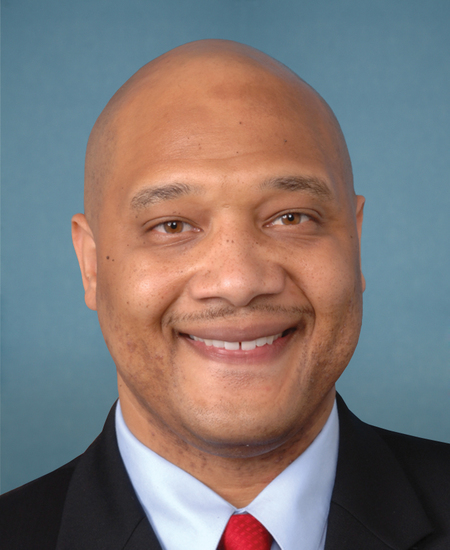
Rep. André Carson
Sponsored bills
Hiring Incentive to Return Employment Act of 2021 or the HIRE Act of 2021 This bill increases the rate of the work opportunity tax credit from 40% to 50% of wages paid to members of the targeted groups eligible for such credit over a two-year period. It also increases to $10,000 the amount of wages taken into account for purposes of the credit.
Jobs, On-the-Job 'Earn-While-You-Learn' Training, and Apprenticeships for Young African Americans Act This bill makes changes to the national apprenticeship system aimed at promoting diversity. Specifically, the bill establishes the Diversity and Inclusion Administrator in the Office Apprenticeship within the Office of Employment and Training Administration at the Department of Labor, requires every apprenticeship program that registers or renews an apprenticeship with the Office of Apprenticeship to submit a plan to increase participation by individuals who are African American, and requires the Diversity and Inclusion Administrator to award grants to create or expand diversity in registered apprenticeship programs.
Civics Learning Act of 2021 This bill expands the use of American History and Civics Education—National Activities grants to prioritize innovative civics learning and teaching. Specifically, the bill expands the allowable uses of these grants to include before-, during-, and after-school activities and extracurricular activities; activities that include service learning and community service projects that are linked to school curriculum; activities that encourage and support student participation in school governance; and online and video game-based learning. Further, the Department of Education must ensure that specified percentages of grant funds are awarded on a diverse basis to eligible entities (e.g., institutions of higher education) that serve students and teachers at elementary schools, middle schools, and high schools.
Opportunity To Address College Hunger Act This bill requires institutions of higher education (IHEs) that receive grants to operate work-study programs to notify a student receiving work-study assistance that the student may be eligible for participation in the Supplemental Nutrition Assistance Program (SNAP). The Department of Education must provide guidance to states and IHEs on how to identify and communicate with students who are potentially eligible for SNAP.
Midwives for Maximizing Optimal Maternity Services Act of 2021 or the Midwives for MOMS Act of 2021 This bill establishes grants within the Health Resources and Services Administration (HRSA) for establishing or expanding midwifery programs at institutions of higher education and nursing schools. HRSA may prioritize funding for institutions that focus on increasing the number of midwife professionals from underrepresented groups and that promote practicing in areas with limited access to professional health care.
This resolution condemns the acts of gun violence that led to the tragic loss of eight lives in Georgia on March 16, 2021.
Birth Access Benefiting Improved Essential Facility Services Act or the BABIES Act This bill requires the Centers for Medicare & Medicaid Services (CMS) to establish a Medicaid demonstration program to improve freestanding birth center services for women with low-risk pregnancies. Among other things, the CMS must (1) publish criteria for freestanding birth centers to participate in the program, including specified accreditation, licensure, and service requirements; (2) publish guidance for states to establish prospective payment systems under Medicaid for program participants; and (3) award planning grants for states to develop program proposals. The CMS may choose up to six states to participate in the program.
Helping American Victims Afflicted by Neurological Attacks Act of 2021 or the HAVANA Act of 2021 This bill specifically authorizes the Central Intelligence Agency, the Department of State, and other agencies to provide payments to agency personnel who incur brain injuries from hostilities while on assignment. Specifically, the bill allows agency personnel and their families to receive payments for brain injuries that are incurred (1) during a period of assignment to a foreign duty station; (2) in connection with war, insurgency, hostile acts, terrorist activity, or other agency-designated incidents; and (3) not as the result of willful misconduct. The bill's authority applies to injuries incurred before, on, or after the date of the bill's enactment. Agencies must submit classified reports on the bill's implementation, including the number of payments made and the amount of each payment. Since 2016, some intelligence, diplomatic, and other governmental personnel have reported experiencing unusual cognitive and neurological impairments while on assignment (particularly abroad), the source of which is currently under investigation. Symptoms were first reported by personnel stationed in Cuba and have since been collectively referred to as Havana Syndrome .

Real Education and Access for Healthy Youth Act of 2021 This bill requires the Department of Health and Human Services (HHS) to establish grants to support sex education and sexual health services for young people (ages 10 through 29) and repeals requirements that apply to certain federally funded sex education programs. HHS must award grants, in coordination with the Department of Education, to (1) provide sex education to young people through elementary and secondary schools, institutions of higher education, and youth-serving organizations; and (2) train education professionals to effectively teach, and otherwise support, sex education. Sex education refers to high quality teaching and learning that follows, to the maximum extent practicable, specified educational standards; covers a variety of topics concerning sex and sexuality; explores values and beliefs about those topics; and helps young people gain skills to navigate relationships and manage sexual health. Additionally, HHS must award grants for the provision of sexual health services to marginalized youth to youth-serving organizations and health care entities that are eligible to receive covered outpatient drugs at reduced prices through the 340B drug discount program. Recipients of any of these grants must comply with certain nondiscrimination requirements. In addition, they may not use funds for sex education programs or sexual health services that provide incomplete or inaccurate medical information or fail to address specified issues. The bill also eliminates prohibitions regarding the content of specified federally funded sexual health education and information programs and repeals the Abstinence Only Until Marriage program.