This resolution expresses the sense of the House of Representatives that the United States shall recognize kind actions in our country, encourage kindness, spread love, and foster a culture of being kind to one another.
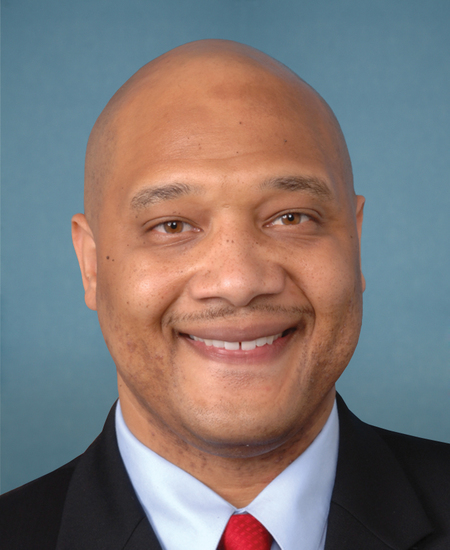
Rep. André Carson
Sponsored bills
This resolution calls on all Americans to observe the 20th anniversary of the September 11 attacks and honor those who lost their lives.
Protecting Student Athletes From Concussions Act This bill conditions each state's receipt of federal funds, beginning in FY2023, on the state's enforcement of specified minimum requirements for the prevention and treatment of concussions in school-sponsored athletics and activities. Each local educational agency must develop and implement a standard plan for concussion safety and management that includes (1) the education of students, parents, and school personnel about concussions; (2) specified supports for each student recovering from a concussion; and (3) best practices designed to ensure the uniformity of safety standards, treatment, and management. Each public school must post on school grounds and publish on the school website specified information about concussions. If any public school personnel suspects that a student has sustained a concussion during a school-sponsored activity, the student must be immediately removed from participation in that activity and prohibited from participating in any school-sponsored athletic activities until the student submits a written release from a health care professional. Furthermore, the school personnel must report all available information regarding the injury to a concussion management team that will confirm and report details of the injury to the student's parents. The school's concussion management team shall consult with and make recommendations to relevant school personnel and the student to ensure that the student is receiving the appropriate academic supports.
Panama Canal Zone Veterans Act of 2021 This bill establishes a presumption of service-connection for specified conditions associated with active duty service in or near the Panama Canal Zone (zone) from January 1, 1958, through the latter of December 31, 1999, or the date on which the last service member departed from duty in the zone. Under a presumption of service-connection, specific conditions diagnosed in certain veterans are presumed to have been caused by the circumstances of their military service. Health care benefits and disability compensation may then be awarded. The presumption of service-connection applies to illnesses listed in the bill (e.g., Hodgkin's disease) or those that (1) have a positive association with exposure to an herbicide agent that is known or presumed to be associated with service in the zone during the specified time period, and (2) become manifest in a veteran who served in the zone during the specified time period and was exposed to an herbicide agent during such service. The Department of Veterans Affairs must prescribe regulations providing for a presumption of service-connection whenever there is a determination that a positive association exists between the exposure to an herbicide agent known or presumed to be associated with service in or near the zone and the occurrence of an illness in humans.
Veterans' Culturally Competent Care Act This bill requires the Department of Veterans Affairs (VA) to establish standards and requirements for the provision of mental health care by non-VA providers in the Veterans Community Care Program (VCCP). The established standards must be the same as the standards applicable to VA employees who provide mental health care. The VA must require non-VA mental health care providers to complete training courses on military culture, core competencies for health care professionals, suicide evaluation and management, post-traumatic stress disorder, traumatic brain injury, and military sexual trauma after the provider becomes approved under the VCCP. The VA must also (1) identify additional training areas for which to develop courses, and (2) require the non-VA providers to complete such courses.
Protecting Access to Lifesaving Screenings Act of 2021 or the PALS Act This bill makes a series of changes relating to health insurance coverage of screening mammography. Specifically, the bill requires that any provision of law referring to current recommendations of the U.S. Preventive Services Task Force (USPSTF) with respect to breast cancer screening mammography be administered as if (1) the provision referred to USPSTF recommendations last issued before 2009; and (2) those recommendations applied to any screening mammography modality, including any digital modality of such a procedure. This requirement shall also apply to the Veterans Health Administration's policy on mammography screening for veterans. In addition, the bill preserves Medicare coverage for screening mammography, without a requirement for coinsurance, and expands the definition of screening mammography to include any digital modality of such a procedure. Further, the Centers for Medicare & Medicaid Services may not decrease the frequency with which screening mammography may be paid by Medicare for a woman over 39 years of age. In 2009, the USPSTF updated its guidelines to recommend against routine screening mammography for women between 40 to 49 years of age and to recommend biennial, instead of annual, screening mammography for most women between 50 to 74 years of age. In 2015, through the appropriations process, a three-year moratorium was placed on implementing the guidelines; the moratorium was subsequently renewed until January 1, 2023.
Voices for Veterans Act This bill expands the membership of the Advisory Committee on Minority Veterans to include veterans who are lesbian, gay, bisexual, transgender, gender diverse, gender non-conforming, intersex, or queer. Among other responsibilities, the committee advises the Department of Veterans Affairs on the administration of benefits and provision of health care, benefits, and services to minority veterans.
Improving Medicare Coverage Act This bill temporarily expands eligibility for Medicare. It also temporarily establishes a premium and cost-sharing assistance program for low-income beneficiaries. Specifically, the bill lowers the age of eligibility for Medicare from 65 to 60. The Centers for Medicare & Medicaid Services must establish procedures to provide for automatic enrollment of qualifying individuals. Enrollment must be completed within 11 months of the bill's enactment. The bill also establishes a program under Medicare to assist low-income Medicare beneficiaries with premiums, coinsurance, deductibles, and other costs. Currently, such assistance is provided through Medicare Savings Programs, which are administered by state Medicaid programs. The bill also establishes a related special enrollment period under Medicare, expands eligibility for assistance to beneficiaries with income up to 200% of the federal poverty line, and provides for joint eligibility determinations with respect to the bill's program and the low-income subsidy program under the Medicare prescription drug benefit. The bill's provisions generally take effect six months after the bill's enactment and terminate five years later.

Prohibition of Medicaid Funding for Conversion Therapy Act This bill prohibits state Medicaid programs from covering conversion therapy. The bill defines conversion therapy as any practice or treatment that seeks to change a person's sexual orientation or gender identity in exchange for monetary compensation.
This bill establishes Rosa Parks Day as a federal holiday.