

Algorithmic Accountability Act of 2022 This bill requires certain businesses that use automated decision systems to make critical decisions to study and report about the impact of those systems on consumers. Critical decisions include those that have a significant effect on a consumer's life such as the cost or availability of health care, housing, educational opportunities, or financial services. The Federal Trade Commission (FTC), in consultation with relevant stakeholders, must issue regulations to implement the bill. The bill provides for enforcement by the FTC and specified state officials. Further, the bill establishes a Bureau of Technology to advise the FTC about the technological aspects of its functions.
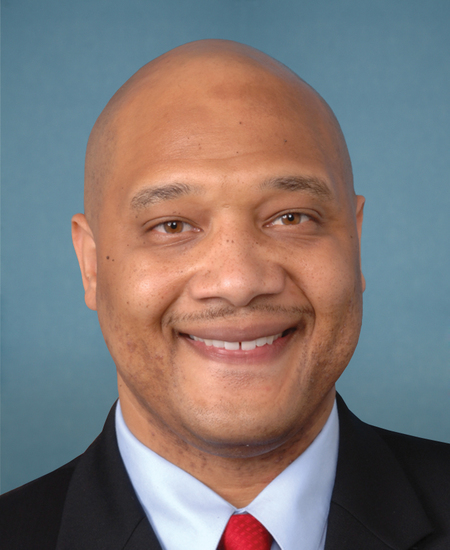
Rep. André Carson
Sponsored bills
Fair College Admissions for Students Act This bill prohibits an institution of higher education (IHE) that participates in federal student-aid programs from giving preferential treatment in the admissions process to applicants based on their relationships to donors or alumni of the IHE. The Department of Education may waive the prohibition against preferential treatment based on relationships to alumni for certain IHEs (e.g., historically Black colleges and universities or other minority-serving institutions) that demonstrate that the use of such preferential treatment is in the best interest of students who have been historically underrepresented in higher education.
Striking Workers Healthcare Protection Act This bill prohibits an employer from terminating or significantly altering the employer-provided health insurance coverage of an employee engaged in a lawful strike. An employer that violates this prohibition is subject to a maximum civil penalty of $50,000 for each violation.
Wireless Electric Vehicle Charging Grant Program Act of 2022 This bill requires the Department of Transportation to establish the Wireless Electric Vehicle Charging Grant Program to award grants on a competitive basis for projects to construct, install, or improve existing wireless charging infrastructure and technology for electric vehicles.
Pell Grant Sustainability Act This bill requires the Department of Education to calculate the maximum award amount for Pell Grants for award year 2022-2023 and each subsequent award year by indexing the award amount to the rate of inflation.
This resolution recognizes the cultural and historical significance of the Lunar New Year. The resolution expresses, in observance of this Lunar New Year, the Year of the Tiger, the deepest respect of the House of Representatives for Asian Americans and all individuals throughout the world who celebrate this significant occasion. The resolution wishes Asian Americans and all individuals who observe this holiday a happy and prosperous new year.
Maddy summaryHR 6525, the Lunar New Year Day Act, would designate the Lunar New Year as an official federal holiday. The bill amends Section 6103(a) of Title 5 of the U.S. Code to add "Lunar New Year Day" to the list of holidays observed by federal employees. This holiday would be observed on the actual date of the Lunar New Year, which varies annually based on the lunar calendar. As a result, federal employees would receive a paid day off, and federal agencies would adjust operations to accommodate the new holiday.
Transition-to-Success Mentoring Act This bill permanently reauthorizes educational programs that assist at-risk middle school students. It also establishes a transition-to-success mentoring program requiring the Department of Education to award grants to eligible entities (e.g., local educational agencies) to provide school-based mentoring programs to assist at-risk students in transitioning from middle to high school.
Heating and Cooling Relief Act This bill provides additional energy assistance to households, including heating and cooling assistance. Specifically, the bill reauthorizes through FY2031 and revises the Low Income Home Energy Assistance Program. Under the existing program, the Department of Health and Human Services (HHS) may award grants to states for assisting low-income households that pay a high proportion of their income for home energy. To be eligible under the existing program, households must have incomes which do not exceed the greater of an amount equal to 150% of the poverty level for their state or an amount equal to 60% of the state median income. The bill expands eligibility to households with incomes which do not exceed the greater of an amount equal to 250% of the poverty line as defined in the Community Services Block Grant Act or an amount equal to 80% of the state median income. In addition, the bill expands eligibility to households with a monthly energy burden of 3% or more per year. It also requires states to establish procedures to protect households receiving assistance under the program from energy shutoffs and certain late fees. In addition, the bill requires HHS and the Department of Energy to jointly carry out a program that awards grants to states and local governments for developing and implementing interagency plans to reduce energy burdens for eligible households with high home energy use. The plans must promote the reduction of energy from fossil fuels.
Maddy summaryThis resolution (HRES 884) symbolically recognizes January 2022 as "National Mentoring Month" to highlight the value of mentoring relationships for youth. It does not create new laws or provide funding, but instead acknowledges mentoring's role in supporting young people's education, career development, and well-being. The resolution encourages promoting mentoring programs across communities, schools, and workplaces to address the "mentoring gap" where one in three youth lacks a supportive adult outside their home. As a procedural resolution, it has no direct legal effect on individuals or programs.