Maddy summaryThis resolution designates April as Arab American Heritage Month to celebrate the cultural contributions and history of Arab Americans. It urges the public to observe the month with activities recognizing Arab American heritage in the U.S., including their historical roles in society, economy, and civic life. The resolution is symbolic - it does not create new laws or policies but formally supports recognition already adopted by 40 states and numerous localities.
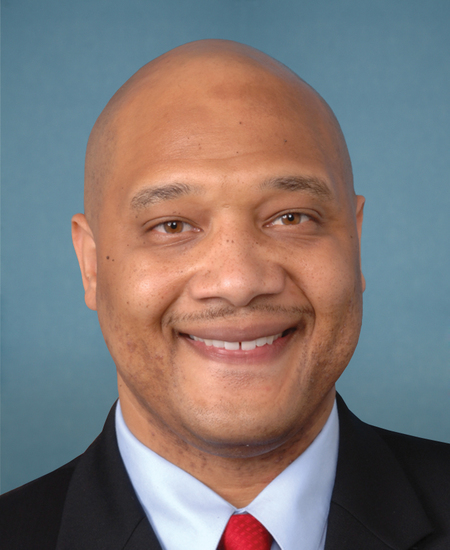
Rep. André Carson
Sponsored bills
This resolution recognizes the Islamic faith as one of the great religions of the world, acknowledges the onset of Ramadan (the holy month of fasting and spiritual renewal for Muslims), and expresses respect to Muslims in the United States and throughout the world on this occasion.
This resolution recognizes the accomplishments and example of Cesar Estrada Chavez. The resolution also encourages the people of the United States to commemorate his legacy and to always remember his rallying cry, "Si, se puede!" (which means "Yes, we can!").
Children's Act for Responsible Employment and Farm Safety of 2022 or the CARE Act of 20 22 This bill revises labor provisions for protecting child workers, including those employed in agriculture, and increases the civil penalties for violations of such provisions and imposes new criminal penalties for violations resulting in the death or serious injury or illness of a child worker. Specifically, the bill revises the definition of oppressive child labor to prohibit the employment of children under 14 years of age and imposes new employer reporting requirements for work-related injuries or deaths of agricultural employees under the age of 18. The Department of Labor must analyze, collect, and report on data concerning children under the age of 18 who are employed in agriculture and each work-related injury, illness, or death of any such child. Labor must also revise regulations to prohibit the employment of a child under the age of 18 as a pesticide handler.
Cabin Air Safety Act of 2022 This bill directs the Federal Aviation Administration (FAA) to implement regulations regarding smoke or fume incidents on aircraft (excluding helicopters). Specifically, the bill requires flight attendants, pilots, aircraft maintenance technicians, airport first responders, and emergency response teams to receive annual training on how to respond to incidents on aircraft; the FAA to develop a standardized form and system for reporting incidents involving smoke or fumes; the FAA to conduct an investigation after a report is submitted about incidents of smoke or fumes if anybody on the aircraft required medical attention; and air carriers to install and operate onboard detectors and other air quality monitoring equipment situated in the air supply system to enable pilots and maintenance technicians to locate the sources of air supply contamination, including carbon monoxide.
Honoring the Oath Act of 2021 This bill establishes the Military Family Immigration Advisory Committee and modifies the naturalization procedures for a noncitizen in the Armed Forces. U.S. Immigration and Customs Enforcement shall notify the committee when any individual in removal proceedings is a (1) member of the Armed Forces, (2) veteran, or (3) noncitizen spouse or minor child of such an Armed Forces member or veteran. The committee shall review the case of any such individual and make recommendations to the Department of Homeland Security (DHS) and the Department of Justice as to how the case should be resolved. Such an individual shall not be removed until the committee has provided its recommendations. DHS and the Department of Defense shall jointly carry out a program allowing a noncitizen individual who serves on active duty in the Armed Forces (and any noncitizen spouse or minor children of the individual) to become a U.S. citizen if the individual is not otherwise ineligible for citizenship. The Armed Forces member shall be given the opportunity to apply for citizenship during the accession process into the Armed Forces. DHS shall adjudicate such an individual's application by the last day of the individual's active service in the Armed Forces.
Veteran Deportation Prevention and Reform Act This bill provides protections from deportation for noncitizen veterans and contains other related provisions. U.S. Immigration and Customs Enforcement (ICE) must identify each individual in removal proceedings who is a member of the Armed Forces, a veteran, or a noncitizen spouse or minor child of such an individual. That individual may not be removed until (1) ICE has transferred that individual's case files to an advisory committee created under this bill, and (2) that committee has provided recommendations as to the outcome of the case. The Department of Homeland Security (DHS) shall create a system to share information across various agencies about noncitizen veterans who may be subject to removal to ensure that such a veteran's military service is taken into consideration in immigration-related cases. DHS shall also create a system for (1) identifying noncitizens who are or may be veterans, and (2) collecting data relating to such noncitizens who are in removal proceedings or may have been removed. DHS and the Department of Defense must jointly carry out a program to naturalize a noncitizen (and the noncitizen's spouse and minor children) who serves on active duty in the Armed Forces and is not otherwise ineligible for citizenship if that noncitizen submits an application. DHS shall also establish a program for eligible noncitizen veterans (generally those not convicted for certain serious crimes) to obtain permanent resident status. Similarly, the Department of Justice shall provide permanent resident status to such an eligible veteran in removal proceedings or subject to a final order of removal.
Emmett Till Antilynching Act This bill makes lynching a federal hate crime offense. Specifically, the bill imposes criminal penalties—a fine, a prison term of up to 30 years, or both—on an individual who conspires to commit a hate crime offense that results in death or serious bodily injury or that includes kidnapping or an attempt to kidnap, aggravated sexual abuse or an attempt to commit aggravated sexual abuse, or an attempt to kill.
Protect Lifesaving Anesthesia Care for Veterans Act of 2022 This bill prohibits the Department of Veterans Affairs (VA) from modifying its policy relating to anesthesia care in a manner that would provide any medical professional other than a physician anesthesiologist with full practice authority for the furnishment of anesthesia care to veterans under VA health care laws. The VA is also prohibited from finalizing, implementing, or enforcing the provisions relating to anesthesia care of the proposed rule titled Advanced Practice Registered Nurses (81 Fed. Reg. 33155), or any substantially similar rule.
Homes for All Act of 2021 This bill provides funding for the construction of new public housing units, authorizes additional assistance for the construction of new affordable housing units, and otherwise addresses housing affordability. Specifically, the bill provides permanent, mandatory funding for the capital and operating funds available to public housing agencies (PHAs) and allows PHAs to use such funds to construct new public housing units. Under current law, a PHA generally may not use such funds to construct public housing units if doing so would result in a net increase of the number of public housing units owned, assisted, or operated by the PHA. The bill also (1) provides annual funding through FY2032 for the construction of new public housing units; and (2) authorizes additional assistance through FY2032 from the Housing Trust Fund for the construction of new, private-market, affordable housing units. A PHA may not discriminate, with respect to the rental of a unit developed with assistance under the bill, based on an individual's criminal record or immigration status. Additionally, a PHA receiving such assistance must meet specified requirements with respect to the new units regarding other forms of discrimination, supportive services, environmental standards, and accessibility. Finally, the bill requires the Department of Housing and Urban Development to establish a Community Control and Anti-Displacement Fund to award grants to local governments for the purpose of combatting gentrification and neighborhood destabilization.