

National Council on African American History and Culture Act of 2022 This bill establishes a National Council on African American History and Culture in the National Endowment for the Humanities (NEH). The duties of the council shall include gathering timely and authoritative information concerning historical developments and cultural trends in African-American history and culture; evaluating the various programs and activities of the NEH to determine the extent to which such programs and activities are contributing, or not contributing, to the successful preservation and celebration of African-American history and culture; and developing and recommending to the NEH national policies to foster and promote the understanding of African-American history, the preservation of African-American culture, and the celebration of African Americans as contributors to the country's economic, cultural, and political success.
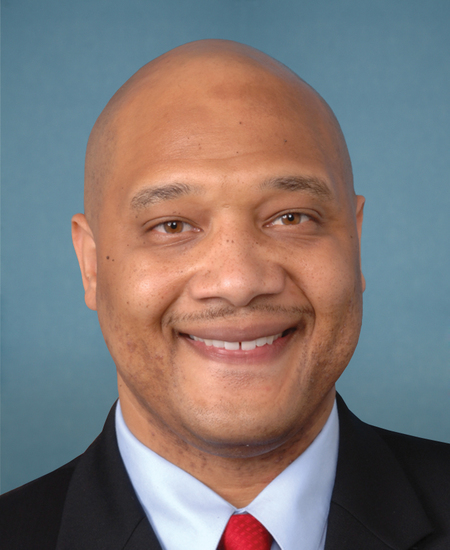
Rep. André Carson
Sponsored bills
Clean Slate Act of 2021 This bill establishes a framework for sealing records related to certain federal criminal offenses. Courts must automatically seal records related to (1) a conviction for simple possession of a controlled substance or for any nonviolent offense involving marijuana, or (2) an arrest for an offense that does not result in a conviction. Additionally, an individual who meets certain criteria may petition to seal records related to a conviction for other nonviolent offenses.
Social Security Fairness Act of 2021 This bill repeals provisions that reduce Social Security benefits for individuals who receive other benefits, such as a pension from a state or local government. The bill eliminates the government pension offset , which in various instances reduces Social Security benefits for spouses, widows, and widowers who also receive government pensions of their own. The bill also eliminates the windfall elimination provision , which in some instances reduces Social Security benefits for individuals who also receive a pension or disability benefit from an employer that did not withhold Social Security taxes. These changes are effective for benefits payable after December 2021.
Maddy summaryHRES 1364 is a resolution recognizing access to water, sanitation, electricity, heating, cooling, broadband, and public transportation as basic human rights that must be accessible, safe, affordable, and climate-resilient for everyone. It specifically calls for banning utility shutoffs (including for nonpayment), ending predatory debt collection practices, and ensuring services are affordable based on income. The resolution also urges public control of utilities, prioritizes environmental justice communities for infrastructure investments, and requires utilities to report disconnection data by demographics and income. It directly affects all residents, with emphasis on low-income households and communities disproportionately impacted by unaffordable or unreliable services.
This resolution recognizes (1) the celebration of Hispanic Heritage Month; and (2) the integral role of Latinos and their manifold heritage in the economy, culture, and identity of the United States.
Maddy summaryHR 7618 designates the Kol Israel Foundation Holocaust Memorial in Bedford Heights, Ohio, as a national memorial. The bill formally recognizes the memorial's role in preserving the memory of Holocaust victims and honoring survivors who built it. Crucially, the designation does not make the site part of the National Park System and explicitly states no federal funds will be used for the memorial. This is a commemorative measure affecting the memorial's official status, not a policy change with operational requirements.
Peace Corps Reauthorization Act of 2022 This bill reauthorizes through FY2024 and modifies operations of the Peace Corps. Changes include increasing the readjustment allowance paid to volunteers when their service terminates and providing statutory authority for an executive order that grants returned volunteers noncompetitive eligibility for federal civil-service positions. Additionally, the bill entitles returned volunteers to sixty days of health care benefits. The Peace Corps must also provide volunteers with information about enrolling in U.S. health plans before service termination and mental health care during and after service. The bill also includes provisions to address involuntary termination of Peace Corps service in emergencies, including by expediting re-enrollment of involuntarily terminated volunteers. The Peace Corps must also adequately insure volunteers' safety and must coordinate with the Department of State to periodically update agreements concerning the security of Peace Corps volunteers and staff abroad. The bill also authorizes Peace Corps to recruit domestically based volunteers to serve in the United States at the request of another agency or to provide services in a host country virtually, modifies the Peace Corps National Advisory Council's membership and functions, expands whistleblower protections for volunteers, increases the rate of pay that applies to a volunteer's workers compensation claim, requires Peace Corps to implement a zero tolerance drug use policy regarding volunteer involvement with illegal drugs, and emphasizes the use of the internet in Peace Corps programs. Furthermore, the bill requires reporting, including on the provision of mental health services to volunteers.
Patient Advocate Tracker Act This act requires the Office of Patient Advocacy within the Veterans Health Administration to establish an information technology system that allows veterans or their representatives to electronically file a complaint with a patient advocate and review the status of a filed complaint.
Lowering Obstacles to Achievement Now Act or the LOAN Act This bill makes various changes to federal student aid programs, including by providing funding to increase the maximum Pell Grant award for each eligible student and reducing the number of monthly loan payments required for loan forgiveness under the Public Service Loan Forgiveness (PSLF) program.
Improving Seniors' Timely Access to Care Act of 2022 This bill establishes several requirements and standards relating to prior authorization processes under Medicare Advantage (MA) plans. Specifically, MA plans must (1) establish an electronic prior authorization program that meets specified standards, including the ability to provide real-time decisions in response to requests for items and services that are routinely approved; (2) annually publish specified prior authorization information, including the percentage of requests approved and the average response time; and (3) meet other standards, as set by the Centers for Medicare & Medicaid Services, relating to the quality and timeliness of prior authorization determinations.