Russian Travel Sanctions for a Democratic Ukraine Act This bill imposes visa-blocking sanctions on certain citizens of Russia. Specifically, the President must impose such sanctions on citizens of Russia who are (1) Russian oligarchs, (2) employees of Russia's government, or (3) employees of companies that are owned by or receive funding from Russia's government. The President must also impose the sanctions on family members of such individuals. The President must coordinate with allies, including NATO member states, on the imposition of such sanctions. The President may waive the application of such sanctions in certain instances.
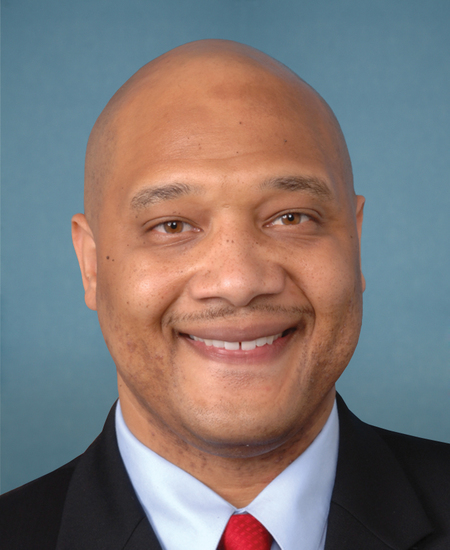
Rep. André Carson
Sponsored bills
This bill authorizes the President to impose asset- and visa-blocking sanctions on any member of Russia's parliament who voted on February 15, 2022, to appeal to Russian President Vladimir Putin to recognize the Donetsk and Luhansk regions of Ukraine as one or more independent states.
Fair Calculations in Civil Damages Act of 2022 This bill prohibits courts from awarding damages to plaintiffs in civil actions using a calculation for projected future earning potential that takes into account a plaintiff's race, ethnicity, gender, religion, or actual or perceived sexual orientation. The bill requires the Department of Labor to develop guidance for economists to develop future earnings tables that do not rely on race, ethnicity, gender, religion, or actual or perceived sexual orientation. Additionally, Labor and the Department of Justice must develop guidance for states on how to calculate future earnings in state tort proceedings in a manner that is free of such biases. The Judicial Conference of the United States must report on damages awarded under federal law for personal injury, employment discrimination, tort damages, and cases involving protected classes of individuals sharing a common characteristic or identity who are legally protected against discrimination. The Administrative Office of the United States Courts must submit recommendations to ensure that future earnings calculations that take into account age and disability do not conflict with federal equal protection laws. The bill requires the Federal Judicial Center to train federal judges on how to implement this bill.
Preventing Pretrial Gun Purchases Act This bill prohibits the sale or disposition of a firearm or ammunition to a person who is subject to a pretrial release order that prohibits the person from purchasing, possessing, or receiving firearms. It also establishes grants for states and Indian tribes to report information about pretrial release orders to the National Instant Criminal Background Check System.
Fresh Start Act of 2022 This bill establishes a federal statutory process to expunge records related to certain nonviolent criminal offenses. The bill defines the nonviolent offenses eligible for expungement; it establishes qualifications for an eligible offender; and it sets forth procedures for filing an expungement petition.
Protect Children Through Safe Gun Ownership Act This bill establishes certain requirements and education programs for the safe storage of firearms, including by establishing grants to provide parents with educational materials on gun safety and the importance of secure gun storage.
Ethiopia Stabilization, Peace, and Democracy Act This bill imposes sanctions and addresses other issues related to the conflict in Ethiopia. The President must impose property-blocking sanctions (and visa-blocking sanctions in the case of an individual) against a foreign entity or individual that has taken certain actions to expand or extend the civil war or other conflicts in Ethiopia. The bill prohibits assistance, with certain exceptions, to Ethiopia's security forces unless the Department of State certifies to Congress that Ethiopia's government has ceased all military operations associated with the civil war and met other specified conditions. The Department of the Treasury must instruct U.S. representatives at international financial institutions to oppose, with some exceptions, such institutions providing loans or assistance to the governments of Ethiopia or Eritrea. Furthermore, the U.S. International Development Finance Corporation may not provide certain support for projects in Ethiopia. These restrictions must terminate after the State Department certifies that certain conditions, such as a cessation of military operations associated with the civil war in Ethiopia, have been met. The President may provide support for activities necessary to preserve evidence of atrocities in Ethiopia and to pursue accountability for such atrocities. Within 90 days of this bill's enactment, the State Department must report to Congress a determination of whether actions in Ethiopia by the armed forces of Ethiopia and Eritrea, the Tigrayan Peoples Liberation Front, and other armed actors constitute genocide, war crimes, or crimes against humanity.

Climate Resilience Workforce Act This bill sets forth provisions to establish a climate resilience workforce, a national climate resilience action plan, an Office of Climate Resilience within the White House, and related efforts and entities.
This bill extends posthumous citizenship to an otherwise qualified noncitizen who enlisted, reenlisted, extended enlistment, or was inducted into the U.S. Armed Forces in the Philippines and died as a result of such active duty service during the period beginning September 1, 1939, and ending December 31, 1946. The executive department under which an individual served must determine whether the individual satisfied the requirements for posthumous citizenship under this bill. Specified naturalization and other posthumous benefit provisions shall not apply to the surviving spouse, child, or parent of such an individual.
Maddy summaryThis bill grants a federal charter to National American Indian Veterans, Incorporated, a nonprofit organization serving American Indian veterans. It formalizes the group’s structure, requiring it to maintain tax-exempt status while advocating for veterans’ needs with specific prohibitions (e.g., no stock, dividends, or loans to members). The charter mandates annual reports to Congress detailing the organization’s activities but does not create new benefits or services for veterans. It directly affects the organization and the American Indian veterans it represents, ensuring its operations align with federal nonprofit standards.