

Maddy summaryThis bill codifies existing U.S. sanctions targeting individuals or entities undermining peace, security, and stability in the West Bank, as defined under Executive Order 14115. It establishes a formal process for the President to terminate sanctions against specific persons only after notifying Congress and confirming they have stopped the sanctioned activity and will not resume it. The bill does not create new sanctions but clarifies the termination procedure, requiring 15 days' advance notice to congressional committees (Foreign Relations and Banking committees in both chambers) unless exigent circumstances apply. It directly affects persons previously sanctioned under the executive order for activities threatening West Bank stability.
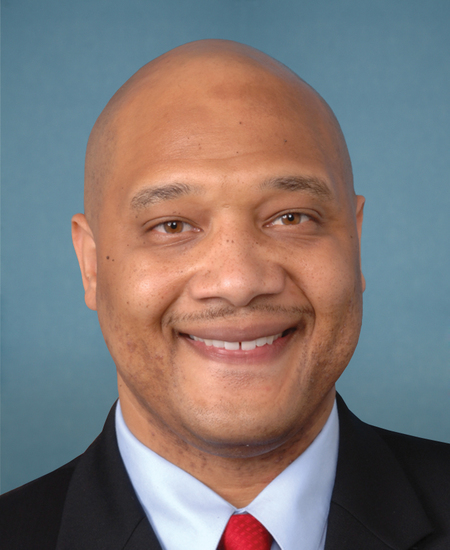
Rep. André Carson
Sponsored bills
Maddy summaryThis bill requires mortgage lenders to consider consumer-permitted alternative data (like rent or bank transaction history) when evaluating loan applications, specifically for applicants who lack traditional credit history. It directly affects approximately 45 million "credit invisible" consumers - disproportionately low-income, younger, and people of color - who struggle to qualify for mortgages due to thin or nonexistent credit files. Lenders must treat this permissioned data equally with traditional credit reports, provide clear multilingual notices explaining the option, and include it in underwriting decisions. The law mandates these changes within 18 months of enactment, aiming to expand mortgage access through standardized, consumer-controlled data sharing.
Maddy summaryHR 6751 authorizes the U.S. Mint to produce commemorative coins honoring Roberto Clemente, a Hall of Fame baseball player and humanitarian, including 50,000 $5 gold coins, 400,000 $1 silver coins, and 750,000 half-dollar coins. The coins must feature Clemente's image and inscriptions like "Roberto Clemente" and "2027," with all sales including a surcharge ($5-$35 per coin) paid to the Roberto Clemente Foundation. The foundation, which supports youth sports, education, and disaster relief programs, will use these funds for its mission, while the U.S. Treasury must recover all production costs. The coins will be sold exclusively in 2027, with no net cost to the government.
Maddy summaryHR 1695, the *Strengthening Agency Management and Oversight of Software Assets Act*, requires all federal agencies to conduct a comprehensive assessment of their software licenses, contracts, and usage within one year of enactment. This assessment must detail current software inventories, costs (including hidden fees), interoperability, and license restrictions, and be submitted to agency leadership, the Office of Management and Budget (OMB), and Congress. Agencies must then develop a 120-day plan to consolidate software licenses, prioritize enterprise agreements, reduce costs, and improve software management - ensuring purchases avoid vendor favoritism and support interoperability. The OMB will create a government-wide strategy within two years to standardize these efforts, with annual budget reports tracking agency progress on software cost and management metrics.
Maddy summaryThe Thyroid Disease CARE Act of 2024 directs the U.S. Department of Health and Human Services (HHS) to conduct research on thyroid disease, with a focus on identifying and addressing health disparities affecting populations such as racial and ethnic minorities, women, and those with varying insurance coverage or geographic locations. It requires HHS to analyze data from Medicaid, Medicare, and other health programs to study gaps in diagnosis, treatment, and outcomes - particularly for thyroid cancer and persistent symptoms - and develop recommendations for improved care. The bill authorizes $30 million annually for research (2025-2029) and $3 million annually for a public awareness campaign to educate patients and healthcare providers about thyroid disease symptoms, treatment options, and early detection, especially during pregnancy. This legislation aims to enhance evidence-based care through research and outreach without altering existing patient benefits or insurance requirements.
Maddy summaryHR 9151 establishes a new Department of Justice task force within 120 days to investigate and prosecute international trade crimes like tariff evasion, smuggling, and trade-based money laundering. The task force will hire specialized prosecutors, coordinate with U.S. Customs and Border Protection and Homeland Security, and focus on violations under specific U.S. Code sections including smuggling (18 U.S.C. 545) and fraud (18 U.S.C. 1001). It authorizes $20 million for fiscal year 2025, with 80% dedicated to criminal prosecutions, and requires annual congressional reports detailing case statistics, funding use, and future needs. The bill directly affects importers/exporters engaging in trade violations and DOJ agencies handling cross-border enforcement.
Maddy summaryThis House resolution supports the goals of World AIDS Day by encouraging efforts to end the HIV epidemic by 2030, aiming for zero new infections, zero discrimination, and zero AIDS-related deaths. It specifically urges sharing of U=U (Undetectable=Untransmittable) information and PrEP (pre-exposure prophylaxis) to prevent transmission, and calls for increased funding for HIV prevention, treatment, and research - particularly for communities disproportionately affected by HIV, such as racial minorities, men who have sex with men, and transgender individuals. The resolution commends existing programs like PEPFAR and the Ryan White CARE Act while advocating for expanded testing, antiretroviral treatment, and comprehensive prevention services, including a National PrEP Program.
Maddy summaryHR 6140, the FAST PASS Act, directs the Secretary of Transportation to study how to expedite the movement of critical cargo (like medical supplies or emergency aid) during declared emergencies. The study examines current practices at ports and terminals, identifies critical cargo faster, and explores ways to move it efficiently without disrupting regular shipments. It requires consultation with agencies like Health and Human Services, a public comment period, and a report to Congress within two years with recommendations for improved systems. The bill does not create new rules but sets up a study to develop better protocols for emergency cargo logistics, affecting shippers, transporters, and ports during crises.
Maddy summaryThe Working Dog Commemorative Coin Act (HR 807) directs the U.S. Treasury to mint three types of commemorative coins honoring working dogs' service: $5 gold coins, $1 silver coins, and half-dollar coins with specific weight and composition requirements. Each coin will carry a surcharge ($35 for $5 coins, $10 for $1 coins, $5 for half-dollars) that will be paid directly to America's VetDogs to support their programs providing service dogs for veterans, the disabled, and others. The coins will be issued in 2027 with designs reflecting working dogs' roles in military, detection, therapy, and assistance work. The legislation specifies that all surcharge revenue must fund America's VetDogs' operations without creating new government programs. This is a commemorative measure focused on honoring working dogs' contributions through coin sales, with all surcharge funds going to a specific nonprofit organization.
Maddy summaryThis bill establishes federal grants to expand training and support services for unpaid caregivers of people with Alzheimer's disease or related dementia. It authorizes funding for organizations like senior centers, area agencies on aging, and community health centers to provide direct caregiver support, requiring at least 50% of grant funds to go directly to services (not administration) and limiting administrative costs to 10%. Priority is given to nonprofit organizations serving underserved communities, including minority, low-income, and disability communities. The program, funded for fiscal years 2025-2029, aims to improve access to culturally appropriate caregiver resources nationwide.