

College Operational Reporting of Emergencies Involving Teens and Young Adults Safety Act of 2022 or the COREY Safety Act of 2022 This bill expands reporting requirements included in the annual security report provided to current and prospective students and employees of each institution of higher education (IHE). Specifically, the bill requires each IHE to include in its report information about the number of incidents that result in serious physical harm or death involving (1) transportation on foot or via bikes, scooters, skateboards, longboards, or motor vehicles; (2) ground level and high height slips and falls; (3) alcohol or drug overdoses; and (4) choking or drowning. Further, the IHE must also include in the report a statement containing the name, address, and distance from campus of the closest Level I trauma center. Additionally, the bill changes the name of the report from annual security report to annual campus safety report .
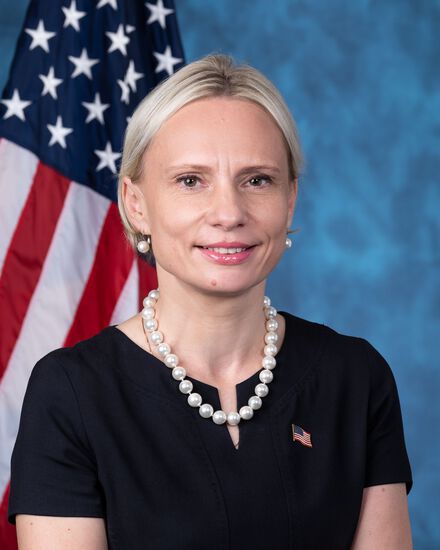
Rep. Victoria Spartz
Sponsored bills
Active Shooter Alert Act of 2022 This bill requires a designated officer of the Department of Justice to act as the national coordinator of an Active Shooter Alert Communications Network regarding an emergency involving an active shooter. The bill sets forth duties of the coordinator, including to work with state, tribal, and local governments to encourage coordination of various elements of the network. The coordinator must also encourage federal, state, local, and tribal government agencies to establish procedures for responding to active shooters. Finally, the bill requires the Government Accountability Office to study and report on state and local responses to active shooters and situations requiring the issuance of a public alert or warning.
Unleash American Drilling Act This bill requires the Department of Interior to issue decisions on applications for drilling permits associated with certain oil and gas leases within specified timeframes. If a decision is not made within the timeframe, the permit shall be considered issued.
Flexibility in Hospital Ownership Act This bill repeals provisions under the Stark law (i.e., the Physician Self-Referral Law) that (1) require rural providers and physician-owned hospitals to meet certain additional criteria in order to be excepted under the Stark law (e.g., restrictions on facility expansion), and (2) require physicians to provide certain notices to patients in conjunction with referrals for radiology services at group practices in order for such services to be considered excepted in-office ancillary services.
Oversight of Anti-Competitive Behavior of Non-Profit Hospitals Act This bill provides the Federal Trade Commission with enforcement authority over certain tax-exempt, hospital or cooperative hospital service organizations.
Transparency of Hospital Billing Act This bill repeals certain exceptions to site-neutral payments with respect to Medicare payments to an off-campus outpatient department of a health care provider. It also requires providers to use separate, unique health identifiers when submitting a claim to a health insurance issuer for services provided at an off-campus outpatient department.
Consumer Choice of Care Act This bill prohibits the Centers for Medicare and Medicaid Services from refusing to designate a service as a covered hospital outpatient service under Medicare based solely on its determination that the service can only be safely furnished in an inpatient setting.
Competition in State Healthcare Markets Act This bill temporarily requires studies on licensing of health care professionals, mergers and acquisitions of health care entities (e.g., hospitals and health insurance companies), and other matters affecting health care competition and consolidation at the state level. For 10 years following the bill's enactment, the Office of the Assistant Secretary for Planning and Evaluation within the Department of Health and Human Services must annually carry out the studies. The office must consult with the Antitrust Division of the Department of Justice and the Federal Trade Commission on the studies.
Student Loan Accountability Act This bill generally prohibits the Departments of Education, Justice, or the Treasury from taking any action to cancel or forgive the outstanding balances, or portion of balances, of covered loans. Covered loans refer to Federal Family Education Loans, Federal Direct Loans, Federal Perkins Loans, and loans under the Health Education Assistance Loan Program. The prohibition does not apply to targeted federal student loan forgiveness, cancellation, or repayment programs carried out under the Higher Education Act of 1965. Additionally, the bill repeals the temporary tax-free treatment of discharged student loan debt. It also prohibits tax return information from being shared for the purpose of administering a student loan cancellation plan.
Halting Academic Liaisons To Our Adversaries Act or the HALT Our Adversaries Act This bill requires the Department of Defense (DOD) to identify academic institutions of China, Russia, and other countries that are known to provide support to China's People's Liberation Army or Russia's armed forces. Further, the bill prohibits an institution of higher education from receiving federal funds if it maintains a contract or other agreement with such an academic institution identified by DOD.