

Unauthorized Spending Accountability Act of 2021 This bill establishes a three-year budgetary level reduction schedule for unauthorized programs funded through the annual appropriations process. Under the bill, a budgetary level is an allocation provided to the congressional appropriations committees under Section 302(a) of the Congressional Budget Act of 1974 by a congressional budget resolution or a deeming resolution. The schedule applies to programs included in the Congressional Budget Office's annual report listing programs that are funded through the appropriations process and have an authorization of appropriations that has either expired or will expire during the year. For the first year after a program's authorization has expired, the bill requires the budgetary level to be reduced by 10% of the funds appropriated for the program in the expiring fiscal year. The bill then requires reductions of 15% in the second and third years before terminating the program at the end of the third unauthorized year. Programs that are reauthorized during the three-year period are exempt from the budgetary level reductions if the reauthorization contains a sunset provision limiting the authorization of appropriations period to no more than three years. The bill establishes the Spending and Accountability Commission to review all mandatory spending programs and submit to Congress a legislative proposal to establish an authorization cycle for discretionary spending programs. The commission may recommend legislation to replace the budgetary level reductions required by this bill with reductions in mandatory spending. The commission's reauthorization schedule must limit reauthorizations to three years, include the budgetary level reductions established by this bill, and establish a mechanism for replacing the budgetary level reductions with reductions to mandatory spending programs. The House of Representatives must consider the commission's proposal using specified expedited legislative procedures.
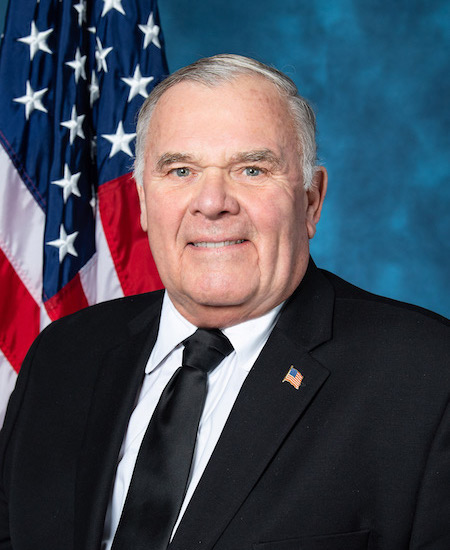
Rep. James R. Baird
Sponsored bills
Stop for School Buses Act of 20 21 This bill addresses safety measures and programs to prevent the illegal passing of school buses. Specifically, the Department of Transportation must conduct a review of existing state laws and programs regarding the illegal passing of school buses; create a nationwide public safety campaign to highlight the dangers of illegally passing school buses; review and evaluate the effectiveness of various technologies to enhance school bus safety; review driver education materials in states to determine how the illegal passing of school buses is addressed; and research the connections between the illegal passing of school buses and other safety issues, including distracted driving.
Working Families Flexibility Act of 2021 This bill revises requirements for the receipt of compensatory time off for private sector employees. Specifically, the bill authorizes private employers to provide compensatory time off to their employees at a rate of one and one-half hours for each hour of employment for which overtime compensation otherwise is required; employees may accrue a maximum of 160 hours of compensatory time. Employers are prohibited from interfering with an employee's right to or not request compensatory time off in lieu of payment of overtime compensation or from requiring an employee to use such compensatory time, and must give their employees 30-days notice before discontinuing a compensatory time policy. Employers are liable to employees for damages from violations of these requirements.
Medicare Multi-Cancer Early Detection Screening Coverage Act of 2021 This bill provides for Medicare coverage and payment for multi-cancer early detection screening tests that are approved by the Food and Drug Administration and that are used to screen for cancer across many cancer types.
This bill directs the Speaker of the House and the President pro tempore of the Senate to arrange for the award of three Congressional Gold Medals to the U.S. Capitol Police (USCP) and other law enforcement agencies that protected the U.S. Capitol on January 6, 2021. Following the award of these medals, one medal shall be given to the USCP, one medal shall be given to the Metropolitan Police Department of the District of Columbia, and one medal shall be given to the Smithsonian Institution and displayed with a plaque listing all law enforcement agencies that participated in protecting the Capitol on January 6, 2021.
Global War on Terrorism Memorial Location Act This bill authorizes the establishment of a National Global War on Terrorism Memorial in the area of the National Mall.
Guard the Border Act This bill requires the Department of Defense (DOD) to reassign 95% of National Guard members deployed to the National Capital Region on or after January 6, 2021, in response to the attacks on the U.S. Capitol building and grounds. Specifically, DOD must reassign such members to support U.S. Customs and Border Protection in (1) securing the southern land border of the country, and (2) management and care for migrants at the border. DOD must report on the results of a study assessing the effects of such reassignment.
Supporting Veteran Families in Need Act This bill permanently extends the authorization for the Department of Veterans Affairs to provide financial assistance for supportive services for very low-income veteran families in permanent housing.
This resolution expresses the sense of the House of Representatives that the global COVID-19 (i.e., coronavirus disease 2019) outbreak is a direct result of China's human rights abuses and propaganda campaign and that China should be held accountable for its handling of the outbreak.
Responsible Additions and Increases to Sustain Employee Health Benefits Act of 2021 This bill modifies the tax exclusion for distributions from health flexible spending arrangements provided to employees under a cafeteria plan to (1) increase the annual limit on employee salary reduction contributions to $5,000, with an additional $500 for each additional employee dependent above two dependents that has not been taken into account by another person for the year; (2) revise the adjustment for inflation after 2021; and (3) allow a carryforward into the next year for unused amounts in such plans.