

Regional Innovation Act of 2021 This bill establishes a Regional Technology and Innovation Hub Program and a Regional Clean Energy Innovation Program. The bill directs the Department of Commerce to establish the Regional Technology and Innovation Hub Program to encourage collaboration among local, state, and federal government entities, institutions of higher education, the private sector, nonprofit organizations, and others to promote inclusive regional innovation initiatives; designate eligible consortia as hubs and facilitate activities by such consortia in implementing their regional innovation strategies; and develop best practices for regional development and competitiveness in technology and innovation. Additionally, the Department of Energy shall establish the Regional Clean Energy Innovation Program to enhance the economic, environmental, and energy security of the United States; accelerate the pace of innovation of clean energy technologies through regional clean energy innovation partnerships; improve the competitiveness of U.S. clean energy technology research, development, demonstration, and commercial application; and support the development of tools and technologies best suited for use in diverse regions of the United States, including in rural, tribal, and low-income communities. Commerce shall carry out a program of data collection and analysis of technology and innovation sectors critical to realizing national objectives, including national security, economic prosperity, and social welfare.
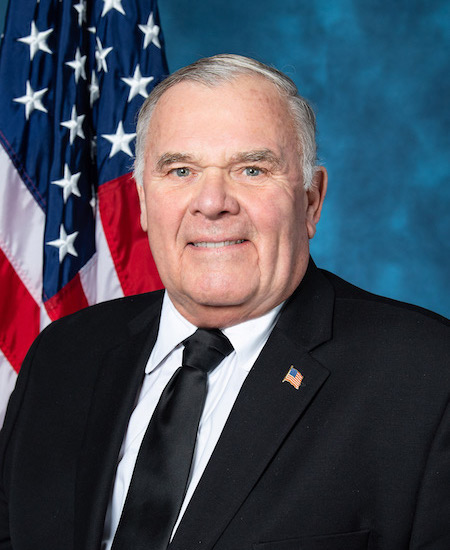
Rep. James R. Baird
Sponsored bills
This resolution supports the designation of a National FFA Week. It also (1) recognizes the important role of the National FFA Organization (Future Farmers of America) in developing the next generation of leaders who will change the world, and (2) celebrates 70 years of the National FFA Organization's membership magazine.
This resolution recognizes the two-year anniversary of the November 2019 massacre by Iran. The resolution also condemns the human rights atrocities committed against Iranians by Supreme Leader Ayatollah Ali Khamenei. Finally, the resolution urges the Department of State to restore the recognized death toll of the November 2019 massacre to 1,500.
This resolution supports the goals and ideals of National Engineers Week to increase understanding of, and interest in, engineering and technology careers. The resolution recognizes that engineering education is a critical component of STEM (science, technology, engineering, and mathematics) education.
This resolution addresses the need for improvements to broadband infrastructure, particularly in rural areas, and the role of specified federal agencies in making such improvements.
Securing Transparent Operations to Prevent China's Abuse of International Financing Act or the STOP China's Abuse of International Financing Act This bill requires U.S. representatives to the United Nations, the World Trade Organization, and specified international financial institutions to take actions to address China's role in such institutions. The representatives to these institutions must (1) advocate and vote against their respective institutions using U.S. contributions to procure goods from (or sourced in) China, and (2) pursue procedural changes so that their respective institutions do not consider China a developing nation for any purpose.
Safeguarding Women's and Children's Health Act of 2022 This bill imposes reporting requirements relating to abortion drugs. The Food and Drug Administration (FDA) must require health care practitioners to report (1) any death or adverse event associated with the use of an abortion drug, whether or not the adverse event is considered drug-related; and (2) each time the practitioner prescribes, dispenses, or administers such a drug. The FDA must establish online portals for health care practitioners to report such information and for patients to self-report adverse events. The Centers for Disease Control and Prevention must aggregate the collected information and annually publish data about such drugs, including the number of prescriptions and adverse events occurring within 120 days of use.
This resolution condemns the military coup that took place in Burma (Myanmar) on February 1, 2021. The resolution denounces the Tatmadaw (the military of Burma) for perpetrating gross violations of human rights as part of its brutal campaign to suppress the democratic aspirations of the people of Burma and calls on the Tatmadaw to cease all violence against prodemocracy activists and reach a cease-fire with ethnic armed organizations, release all political prisoners, and engage in constructive dialogue with all parties to negotiate a pathway toward a government that reflects the will of the Burmese people. The resolution also calls on the President to enact new targeted sanctions on individuals and entities affiliated with the Tatmadaw, including an international arms embargo and a prohibition on the sale of aviation fuel.
Health Care for Burn Pit Veterans Act This bill updates policies and procedures related to Department of Veterans Affairs (VA) health care and benefits for veterans who have been exposed to toxic substances. Specifically, the bill extends the eligibility period for VA hospital care, medical services, and nursing home care for combat veterans who served after September 11, 2001, and were exposed to toxic substances, radiation, or other conditions, including those who did not enroll to receive VA care during the eligibility period. The VA must incorporate into its existing health care screening a screening to help determine potential exposures to toxic substances during military service. Among other requirements, the VA must also provide annual training to health care and benefits personnel with respect to veterans who were exposed to toxic substances; analyze total and respiratory disease mortality in veterans who served in specified locations on specified dates; conduct an epidemiological study on the health trends of veterans who served in the Armed Forces after September 11, 2001; conduct a study to determine trends in the rates of the incidence of cancer in veterans; publish a list of VA resources for veterans who were exposed to toxic substances, families and caregivers of such veterans, and survivors of such veterans who are receiving death benefits; and report on the data quality of the Individual Longitudinal Exposure Record and its usefulness in supporting veterans in receiving VA health care and benefits.
Protecting Family and Small Business Tax Cuts Act of 2022 This bill makes permanent provisions affecting individual and business taxpayers that were enacted in 2017 by the Tax Cuts and Jobs Act and are scheduled to expire at the end of 2025. The bill makes permanent provisions that reduce individual and capital gain tax rates. The bill increases the standard tax deduction for individual taxpayers. It also increases and modifies the child tax credit and raises the contribution base for the tax deduction of charitable contributions. The bill allows additional contributions to ABLE accounts (tax-exempt accounts designed to enable individuals with disabilities to save and pay for disability-related expenses). It exempts from taxation combat zone benefits of members of the Armed Forces serving in the Sinai Peninsula of Egypt and the moving expenses of servicemembers. Additionally, the bill lowers to $750,000 the amount of mortgage debt eligible for an interest expense tax deduction; excludes from the gross income of student borrowers income attributable to the discharge after 2025 of loan debt due to death or disability; makes permanent the limitation on the tax deduction for state and local taxes and denies a deduction for foreign real property taxes; makes permanent the tax deduction of the income of certain pass-through business entities; repeals the tax deduction for personal tax exemptions and the exclusion of employer-provided bicycle commuter fringe benefits; terminates certain miscellaneous itemized tax deductions; doubles the estate and gift tax exemption amount; and makes permanent the increase of the alternative minimum tax exemption amount for individual taxpayers.