

Mercury 13 Congressional Gold Medal Act This bill provides for the award of a Congressional Gold Medal to commemorate the Mercury 13 in recognition of their accomplishments as part of the First Lady Astronaut Trainees (FLATs) Program (a privately funded project testing women pilots for astronaut fitness in the 1960s), their work for gender equity, and their example of women in the science, technology, engineering and mathematics (STEM) fields.
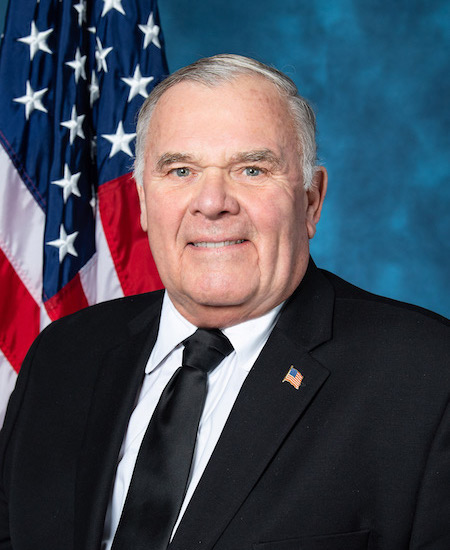
Rep. James R. Baird
Sponsored bills
Maddy summaryThe BRIDGE to DRC Act of 2023 requires the U.S. President to develop a national strategy within 120 days to secure critical mineral supply chains, focusing on the Democratic Republic of the Congo (DRC). The strategy must analyze China’s near-monopoly over DRC cobalt and copper mining (15 of 19 cobalt mines are PRC-linked), assess past policies like Dodd-Frank Act section 1502, and outline steps to increase U.S. investment in the DRC’s mining sector. It mandates specific assessments of human rights abuses, China’s market control, and opportunities to formalize artisanal mining while supporting DRC elections and ending conflict financing. The bill directly affects U.S. diplomatic, development, and security policies toward the DRC, aiming to reduce reliance on Chinese-controlled supply chains for minerals vital to U.S. energy and military needs.
Maddy summaryThis House Resolution condemns the April 2023 conflict in Sudan between the Sudanese Armed Forces (SAF) and Rapid Support Forces (RSF), calling for an immediate ceasefire and adherence to prior cease-fire agreements. It urges the U.S. government to scale up humanitarian aid, prioritize support for displaced civilians and children, and apply sanctions against those obstructing Sudan’s democratic transition or violating international law. The resolution directs U.S. agencies to coordinate with local actors, ensure aid reaches civilians, and develop strategies for civilian-led negotiations. As a non-binding statement, it expresses congressional support for Sudanese civilians and democratic transition without creating new legal requirements or funding.
This resolution expresses the sense of the House of Representatives that research and promotion boards support efforts to develop new markets and strengthen existing markets via research, education, and promotion.
Maddy summaryThe FRIDGE Act of 2023 authorizes $1 million annually (2024-2028) to provide technical assistance for improving cold chain infrastructure in developing countries. It directly affects U.S. agricultural exporters by addressing infrastructure gaps that cause food loss and export damage, and it targets developing nations needing upgrades to cold storage, transport, and port systems. The bill requires the Secretary of Agriculture to fund needs assessments, training, and infrastructure support through agreements with eligible trade organizations. This concrete funding mechanism aims to reduce food waste and expand U.S. agricultural exports by strengthening supply chains in key markets.
Maddy summaryThe Afghan Adjustment Act creates a pathway for certain Afghans who directly supported U.S. missions in Afghanistan during the 20-year U.S. military presence to adjust to lawful permanent resident status (green card holders). It specifically targets Afghans who worked with U.S. forces or agencies, including military personnel, security personnel, and their families, who received "Chief of Mission approval" for special immigrant status. Key provisions include new vetting requirements (in-person interviews and biometric screening), exemption from immigration numerical limits, $20 million annually for implementation, and a task force to develop resettlement strategies. The bill also establishes a new category of special immigrant visas for at-risk Afghan allies and sets a two-year application deadline after guidance is published.
Maddy summaryThis bill (HR 3888) guarantees lifetime health care and benefits for children born with spina bifida to Vietnam veterans, directly affecting these children and their veteran parents. It creates an advisory council to gather feedback from affected families and establishes dedicated care coordination teams that must check in with each child at least every 180 days. The law also mandates a biennial report to Congress on the number of children receiving benefits and outreach efforts, and requires a memorandum of understanding between VA departments to improve service coordination. These provisions ensure continuous support for affected children regardless of their parent's status.
Maddy summaryHR 4395, the Natural GAS Act of 2023, requires the Department of Energy to conduct a comprehensive energy analysis (including full fuel cycle impacts) before setting new efficiency standards for gas water heaters, furnaces, boilers, and kitchen cooktops/ranges/ovens. It mandates that new rules must not cause a significant shift from gas to electric appliances in residential or commercial settings, and requires manufacturers to prominently disclose the analysis results on product labels at point of sale. The bill specifically protects key features of gas appliances (like burner types and grates) and exempts small manufacturers from certain requirements. This affects appliance manufacturers and consumers by adding transparency requirements while preserving gas appliance functionality.
Maddy summaryHRES 563 is a symbolic resolution recognizing Vice Admiral Sean Buck for his 44 years of military service. It honors his career, including his role as Superintendent of the U.S. Naval Academy and his retirement on July 7, 2023, while highlighting his family military legacy and awards. The resolution has no policy impact - it is purely ceremonial, expressing the House’s commendation without creating new laws or affecting any individuals or programs. It directly acknowledges Buck’s service to the nation and Indiana, where he was born and attended high school.
Maddy summaryHR 4417, the "Ending Agricultural Trade Suppression Act," prevents state and local governments from imposing additional production standards on agricultural products sold across state lines if those standards aren't already required by federal law or the state where the product is grown. It directly affects agricultural producers, distributors, and businesses operating in interstate commerce by allowing them to sue states in federal court to challenge such regulations. The bill creates a private right of action for affected parties to seek court invalidation of the regulations and damages for economic losses, with provisions for preliminary injunctions to halt enforcement during litigation. This aims to reduce regulatory barriers that could hinder the movement of agricultural goods between states.