

Maddy summaryThis bill requires the Secretary of State to submit a report within 180 days assessing whether the Conflict and Stabilization Operations Bureau (CSOB) should be maintained. The report must explain the Bureau's unique function, analyze its costs (including potential savings from dissolution), and detail how its work would be handled by other State Department offices if disbanded. It directs the report to the House Foreign Affairs and Senate Foreign Relations Committees for review. The bill does not change the Bureau's operations but mandates a formal evaluation of its value and cost.
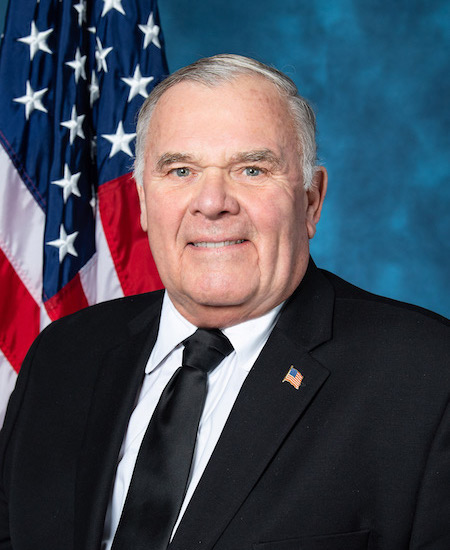
Rep. James R. Baird
Sponsored bills
Maddy summaryThis bill would authorize the U.S. government to confiscate Russian sovereign assets held in U.S. jurisdiction and use those funds to support Ukraine's reconstruction and humanitarian needs following Russia's invasion. It prohibits releasing these blocked assets until Russia fully compensates Ukraine or agrees to an international compensation mechanism. The bill establishes a "Ukraine Support Fund" to hold confiscated assets and requires regular congressional reporting on how these funds are allocated for Ukraine's recovery. It also includes provisions for international coordination with allies on sanctions and asset management related to Russia's invasion of Ukraine.
Maddy summaryThe SHIP Act imposes sanctions on foreign entities that knowingly handle Iranian petroleum, targeting those involved in port operations, transportation, refining, or ship-to-ship transfers of Iranian oil. Starting 90 days after enactment, the President must block assets, deny visas, and impose penalties on individuals or companies engaging in these activities, including family members or owners of sanctioned entities. It requires annual reports tracking Iran's oil exports, revenues, and key players like shipping companies and ports. The sanctions terminate if the President certifies Iran has stopped supporting terrorism and dismantled weapons programs.
Maddy summaryThis bill requires the Secretary of State to report to Congress on progress implementing the Government Accountability Office's (GAO) High Risk List recommendations for the Department of State. It specifically targets four areas: improving information technology acquisitions, strategic human capital management, federal real property management, and security clearance processes. Within 90 days of enactment, the Secretary must submit this report to the House Foreign Affairs Committee and Senate Foreign Relations Committee. The bill does not create new policies but mandates a formal review of existing GAO recommendations affecting the State Department's operations.
Maddy summaryHR 6237 creates a program allowing U.S. Department of State employees to confidentially or openly report fiscal waste they observe in their work. Employees can submit reports, which must be investigated and resolved within 60 days, with strict confidentiality protections to prevent retaliation. The bill also establishes a quarterly award for employees whose non-confidential reports lead to significant cost savings, program cancellations, or resource reallocations. Annual reports detailing all submissions, findings, and actions must be submitted to Congress.
Maddy summaryHR 6247 amends Section 1229(m)(1)(B) of the 2008 National Defense Authorization Act to change the description of the Office of the Special Inspector General for Afghanistan Reconstruction's (SIGAR) mandate. The bill replaces the phrase "reconstruction of Afghanistan" with "assistance for the benefit of the Afghan people" in the law. This technical adjustment broadens SIGAR's oversight scope to include all U.S. assistance to Afghanistan, not just physical reconstruction projects. The change directly affects SIGAR's reporting requirements under the law.
Maddy summaryThis resolution expresses the U.S. House of Representatives' support for designating October 2023 as "National Co-Op Month" to commend the cooperative business model. It highlights how member-owned cooperatives - spanning agriculture, utilities, credit unions, housing, and food systems - create jobs, strengthen rural communities, and provide economic benefits like lower costs and democratic member control. The resolution specifically acknowledges cooperatives' role in supporting farmers, rural infrastructure (like electricity and broadband), and affordable housing. It does not create new laws or funding but formally recognizes cooperatives' positive societal impact.
Living Organ Donor Tax Credit Act of 2023 This bill establishes a refundable tax credit of up to $5,000 for expenses related to the removal and donation of all or part of a kidney, liver, lung, pancreas, intestine, or bone marrow by a living individual for transplant into another individual. Expenses that may be included in the calculation of this tax credit include travel, lodging, medical expenses related to donation and follow-up care, paperwork and legal costs, lost wages, and any other costs paid by the taxpayer in connection with the transplant. Expenses related to the transplant that are reimbursed by any person or entity (public or private) may not be included in the calculation of the credit amount.
Maddy summaryThis resolution (HRES 839) condemns antisemitism at U.S. colleges and universities and urges campus leaders to publicly oppose hate speech targeting Jewish students, faculty, and staff. It encourages university presidents, administrators, and faculty to speak out against speech that promotes violence or discrimination based on religion, national origin, or ancestry. The resolution specifically calls on institutions to support Jewish student organizations and ensure Jewish members can study and work without fear. As a non-binding resolution, it does not create new laws but expresses congressional support for addressing antisemitism on campuses.
Maddy summaryHRES 798 is a House resolution condemning support for Hamas, Hezbollah, and other terrorist organizations at colleges and universities. It states such support may create a hostile environment for Jewish students, faculty, and staff, citing incidents like blaming Israel for the October 7 Hamas attack. The resolution urges the Secretary of Education to direct the Office for Civil Rights to investigate and take action where appropriate. This non-binding resolution expresses the House's position but does not create new law or policy changes.