

Maddy summaryThe AFIDA Improvements Act of 2024 updates the Agricultural Foreign Investment Disclosure Act to require foreign individuals or entities owning at least 1% of U.S. agricultural land (directly or through multiple ownership tiers) to report their holdings. It creates new enforcement duties for the Farm Production and Conservation Business Center (FPAC-BC) to validate data, ensure compliance, and identify violators. The bill mandates the Secretary of Agriculture to share foreign ownership reports with the Committee on Foreign Investment in the United States (CFIUS) and update agency handbooks using recommendations from a 2024 Government Accountability Office report. These changes apply directly to foreign landowners and agricultural agencies like the Farm Service Agency, aiming to improve transparency around foreign ownership of U.S. farmland.
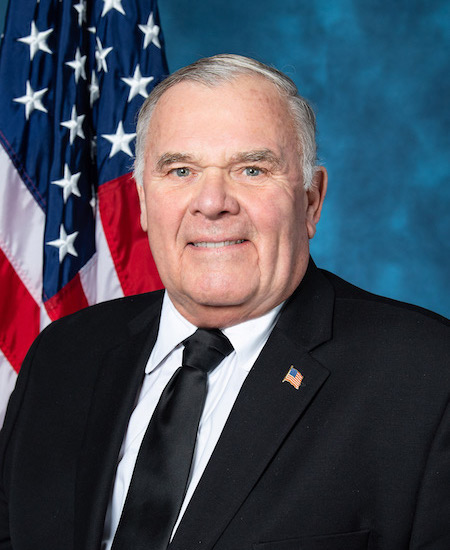
Rep. James R. Baird
Sponsored bills
Maddy summaryThe Energy Parity Act requires that any reduction in capacity fees for wind and solar energy projects must be matched by an equivalent reduction in royalty rates for oil and natural gas leases. It lowers the minimum royalty rate for onshore oil and gas leases from 16.67% to 12.5% and adjusts minimum bid and rental rates (e.g., reducing the minimum bid from $10 to $2 per acre for two years). The bill also directs the Bureau of Land Management to reissue a proposed rule on renewable energy leasing within 120 days of enactment. These changes directly affect federal leaseholders for oil, gas, and renewable energy projects.
Maddy summaryThe Death Tax Repeal Act would eliminate the federal estate tax and generation-skipping transfer tax for estates of people who die on or after the bill's enactment date, and for generation-skipping transfers made after that date. It would also establish a new $10 million lifetime gift tax exemption (adjusted annually for inflation) and replace the existing gift tax rate schedule with a revised structure. These changes would primarily affect high-net-worth individuals and their heirs, as the estate tax and gift tax typically apply to large estates or gifts exceeding the new exemption threshold. The bill's provisions would take effect on the date of enactment, with transitional rules for the year the bill is signed into law.
Maddy summaryThis bill maintains the existing minimum wage rate for H-2A agricultural workers in each state as it stood on December 31, 2023, through December 31, 2025. It directly affects farms that hire H-2A visa workers by requiring the Department of Labor to use these state-specific rates for wage calculations during this period. The bill also clarifies that wage determinations for these workers must consider their primary job duties, especially when workers perform multiple tasks. This provides stability for farms relying on seasonal agricultural labor without changing the current wage structure.
Maddy summaryThis bill clarifies that tax-exempt status for charities (under IRS Section 501(c)(3)) does not count as "federal financial assistance" for other federal programs. It directly affects tax-exempt organizations, such as charities and religious groups, by preventing their tax exemption from automatically qualifying them for other federal benefits or programs. The key provision amends the U.S. Code to define "federal financial assistance" as excluding tax exemptions, ensuring these organizations aren't mistakenly included in programs meant for recipients of direct federal funds. This change applies prospectively and does not alter how tax exemptions were treated before the bill's enactment.
This resolution supports the designation of National Teach Ag Day and recognizes the important role of agricultural education and the National FFA Organization in developing the next generation of agricultural leaders.
Maddy summaryHR 6973 reauthorizes the COPS on the Beat grant program for fiscal years 2025-2034, with new provisions to support diverse hiring and better compensation for officers in rural communities. The bill provides increased federal funding (up to 90% in the first year, decreasing to 75% over four years) for jurisdictions with median household incomes below 80% of the national average. It sets a $75,000 cap on hiring costs per officer and limits compensation to 80% of the national median household income for qualifying rural areas. The legislation also requires the GAO to report on law enforcement workforce diversity and pay relative to local costs of living in 2029 and 2034. This bill directly affects local law enforcement agencies seeking federal grants to hire and retain officers, particularly in rural communities with lower median incomes.
Maddy summaryHR 6980, the DOCTORS Act, reallocates unused J-1 visa waivers that states did not use for foreign medical graduates. Each state must report unused waivers by September 30 annually, and the State Department will redistribute them equally over three years for the next fiscal year. Ten percent of redistributed waivers must support doctors working in facilities serving medically underserved communities. This directly affects state agencies managing visa waivers and impacts foreign doctors seeking permanent U.S. residency after training.
Maddy summaryThe REMAIN in Mexico Act of 2024 would require the U.S. government to reinstate the Migrant Protection Protocols (MPP), a policy that forces certain asylum seekers to wait in Mexico while their U.S. immigration cases are processed. It directly affects asylum seekers from Mexico and Central America who are seeking entry to the United States and would be subject to the MPP under this law. The bill mandates implementation of the MPP as described in a 2019 policy memo by former Homeland Security Secretary Nielsen. This would reverse the current administration's decision to end the program, requiring asylum seekers to remain in Mexico during their immigration proceedings.
Maddy summaryHR 6926, the Safe and Open Streets Act, makes it a federal crime to intentionally block public roads or highways to disrupt the movement of goods or commerce. The bill adds a specific offense under federal law for purposefully obstructing, delaying, or affecting commerce by blocking roads, with penalties including fines or up to five years in prison. It directly affects individuals who block roads to interfere with transportation or delivery of goods, such as during protests or demonstrations. The law updates existing statutes to clarify and strengthen penalties for this specific type of obstruction, without changing broader traffic or protest laws.