

Maddy summaryThis resolution (HRES 616) condemns the Taliban's ongoing human rights abuses in Afghanistan, specifically targeting women, girls, religious minorities (including Hazaras and Sikhs), and ethnic groups. It expresses support for Afghans who assisted U.S. missions and calls for the U.S. government to halt Taliban violence and address systemic repression. Key mechanisms include urging the State Department to assess potential crimes against humanity, developing strategies to support human rights defenders, and expediting refugee processing for Afghans with Special Immigrant Visas. The resolution does not impose new legal requirements but formalizes congressional stance and policy guidance. It directly affects U.S. foreign policy implementation toward Afghanistan.
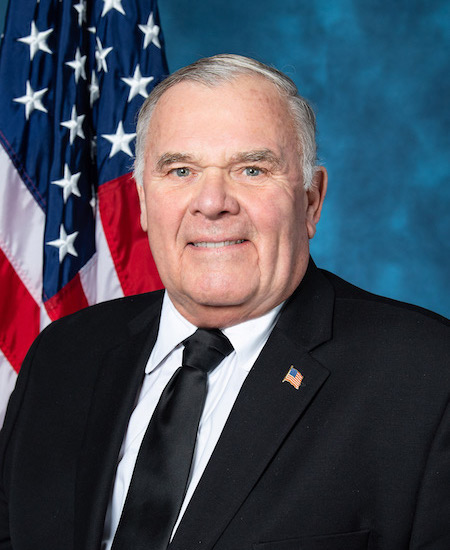
Rep. James R. Baird
Sponsored bills
Maddy summaryThis bill requires the President to provide Congress with a 15-day written notice before pausing, delaying, or suspending U.S. arms shipments to Israel, including detailed justification and impact analysis. It establishes strict congressional review periods: 15 days for initial review, plus additional 10-12 day windows if Congress introduces a disapproval resolution, effectively giving lawmakers significant power to block such pauses. The bill directly affects the President and the White House by restricting unilateral decisions on military aid to Israel, specifically targeting delays like the May 2024 pause on bomb shipments. Key provisions define "covered defense articles" as weapons under existing export laws and mandate transparency about funding, end users, and potential impacts on Israel’s military edge.
Maddy summaryThe Cost Estimates Improvement Act (HR 8341) requires the Congressional Budget Office (CBO) and Joint Committee on Taxation (JCT) to include, to the extent practicable, the costs of servicing the national debt - such as interest payments - in their budget estimates. This change makes cost analyses more comprehensive by reflecting the full financial burden of government borrowing. The bill amends the Congressional Budget and Impoundment Control Act of 1974 to add this requirement, directly affecting how the CBO and JCT produce their budget reports. It does not alter spending or tax laws but ensures estimates better account for long-term debt costs when Congress reviews legislation.
Maddy summaryThis bill amends federal law to simplify interstate firearm transfers. It replaces "rifle or shotgun" with "firearm" in transfer rules, allowing all firearms to be treated uniformly. The key change permits licensed dealers to sell firearms to other licensed dealers anywhere in the U.S., and lets licensed sellers transfer firearms to unlicensed buyers at temporary locations (like gun shows) in any state. It also updates residency definitions for military members and federal employees stationed across state lines, clarifying which state they're considered residents of for firearm purposes. The bill directly affects licensed firearm dealers, military personnel, and federal employees who travel between states.
Maddy summaryHRES 1211 is a symbolic House resolution condemning violent protests on college campuses that organizers describe as "anti-American and anti-Israel," referencing specific incidents like flag desecration and arrests. It specifically cites events such as protests replacing American flags with Palestinian flags at institutions like City College of New York and the University of North Carolina, where law enforcement and campus officials restored the American flag. The resolution has no legal effect or policy changes - it solely expresses condemnation and thanks for law enforcement and campus leaders' actions. As a procedural resolution (not a bill), it does not alter laws, funding, or campus policies. It is a statement of position, not a legislative action.
Maddy summaryHJRES 98 is a congressional resolution seeking to block a National Labor Relations Board (NLRB) rule that defined how businesses are considered "joint employers" for labor law purposes. The bill targets the NLRB's October 2023 rule (88 Fed. Reg. 73946), which would have changed how companies like franchisors or staffing agencies are held responsible for workers' rights. If passed, this resolution would cancel the rule, directly affecting businesses managing multiple employer relationships and labor organizations enforcing workplace standards. The measure uses a standard process under federal law to disapprove an agency rule, not creating new policy but reversing an existing regulation.
Maddy summaryThis bill requires all U.S. foreign aid materials and programs to display only the U.S. flag or official U.S. logos, removing previous flexibility for USAID. It directly affects all U.S. foreign assistance programs funded through USAID, including aid delivered by contractors or partner organizations. The key provision bans any other country's flag, logo, or insignia on U.S. aid unless the President specifically determines it serves U.S. national security interests and submits written justification to Congress within 30 days. This creates a strict default rule for branding while establishing a formal exception process for rare cases.
Maddy summaryThis joint resolution seeks congressional disapproval of a Department of Labor rule designed to improve protections for temporary agricultural workers. It invokes a specific federal process under Title 5 to block the rule from taking effect, preventing the proposed changes from being implemented. The rule, published April 29, 2024, would have affected temporary farmworkers’ rights and working conditions. If passed, the resolution would nullify the rule, meaning the Department of Labor’s proposed protections would not be enforced.
Maddy summaryThe Weather Act Reauthorization Act of 2023 reauthorizes and updates the Weather Research and Forecasting Innovation Act of 2017, focusing on improving weather forecasting capabilities across multiple domains. It authorizes annual funding for research and development in tornado, hurricane, and atmospheric river forecasting, with specific provisions for enhancing data collection from commercial sources and improving public communication of weather warnings. The bill establishes programs to improve data assimilation practices, support agricultural and water management applications, and enhance the National Oceanic and Atmospheric Administration's computing resources for weather modeling. This legislation directly affects the National Oceanic and Atmospheric Administration, its partners in the weather enterprise, and the public who rely on weather forecasts and warnings for safety and planning.
Maddy summaryHR 4824, the Carbon Sequestration Collaboration Act, amends existing law to expand federal research on carbon sequestration. It specifically defines and requires research on both "carbon sequestration in geologic formations" (storing carbon underground in rock formations) and "terrestrial carbon sequestration" (methods to increase carbon storage in soil and forests through farming, forestry, and other land management practices). The bill mandates coordination across federal agencies like the Department of Energy, USDA, and Interior to leverage existing research, avoid duplication, and develop annual research plans for widespread adoption. It directly affects federal research programs and agencies conducting carbon sequestration studies.