

Maddy summaryHR 1623 (the SCREEN Act) requires online platforms that profit from hosting pornographic content to implement age verification technology, preventing minors from accessing such material. Covered platforms must publicly disclose their verification process and securely handle age data collected through these systems. The law applies specifically to platforms where pornographic content is a regular business activity, not all websites. It mandates that only adults can access pornographic content on these platforms, without banning the content itself.
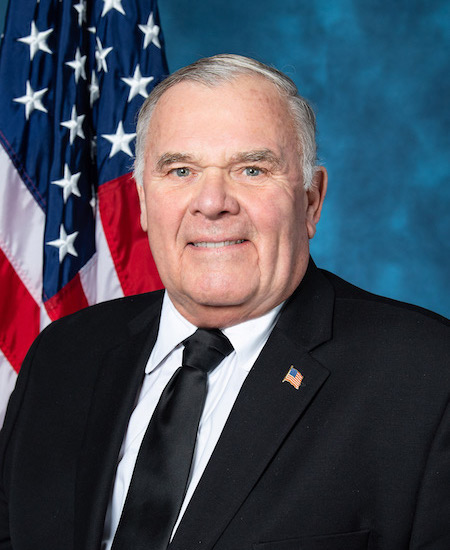
Rep. James R. Baird
Sponsored bills
Maddy summaryThis bill would allow states to waive certain Affordable Care Act requirements for health insurance starting in 2026, provided they maintain a high-risk insurance pool. Residents in participating states would receive funds directly into "Trump Health Freedom Accounts" instead of traditional premium tax credits, which could be used to purchase health insurance with restrictions on coverage for gender transition procedures and abortion services. The bill also modifies tax credits for small employers in participating states and requires better price transparency and outcomes reporting from healthcare providers. It would directly affect residents and small businesses in states that choose to participate in the waiver program.
Maddy summaryHR 6509, the SAFE Drugs Act of 2025, limits how often pharmacies and healthcare providers can create custom drug formulations that copy standard medications. It restricts compounding any drug essentially identical to a commercially available product to no more than 20 times per month for individual patients. The bill also requires pharmacies compounding such drugs for out-of-state patients more than 20 times monthly to report details to the FDA, while exempting hospital pharmacies. These changes aim to improve safety oversight of non-standard drug compounding by setting clear limits and reporting rules.
Maddy summaryHRES 932 is a symbolic resolution passed by the House of Representatives that condemns six specific members of Congress (including Senators Kelly and Slotkin and Representatives Crow, Deluzio, Goodlander, and Houlahan) for allegedly making statements that encouraged military and intelligence personnel to disobey orders from the President. The resolution claims these lawmakers falsely suggested the administration issued "illegal orders" and undermined the military chain of command, violating the Uniform Code of Military Justice (UCMJ). It does not create new laws or policies but formally denounces the lawmakers' statements as "dangerous and seditious rhetoric." As a procedural resolution, it has no binding effect on military conduct or policy.
Maddy summaryHR 6395 directs the Secretary of State to develop a strategy for renegotiating the 1947 agreement that hosts the United Nations headquarters in New York. The strategy must identify potential U.S. locations for the UN, negotiate with the UN, and secure Senate approval for relocation. The Secretary must report the strategy's details and timeline to the House Foreign Affairs and Senate Foreign Relations committees within a specified timeframe. This bill creates a procedural process for potential relocation but does not mandate or implement the move itself.
Maddy summaryHR 6093, the Agricultural Cooperative Energy Savings Act of 2025, expands eligibility for certain USDA programs to include agricultural cooperatives with fewer than 2,500 employees. This change directly affects smaller agricultural cooperatives that previously did not qualify under existing rules. The bill amends Section 9007(c)(1)(A)(i) of the Farm Security and Rural Investment Act of 2002 to add these cooperatives to the list of eligible participants. The key mechanism is simply broadening the definition of qualifying entities for existing USDA program access. This is a procedural change to eligibility criteria, not a new program.
Maddy summaryThis bill suspends payment limits for agricultural subsidies for the 2025 crop year, removing caps on payments to farmers. It also establishes a new option for farmers to receive 50% of their expected 2025 crop payments as an advance by December 1, 2025, if they opt in. The remaining balance is paid later after the marketing year ends, with farmers required to repay any overpayment if the final amount exceeds the advance. The bill directly affects farmers growing covered commodities (like corn, soybeans) who choose to participate in the advance payment program.
Maddy summaryThis bill establishes the "Expanding Childcare in Rural America Initiative" under the USDA, directing the Secretary of Agriculture to prioritize funding through six existing USDA programs (like rural business grants and essential community facilities loans) for projects addressing childcare availability, quality, or cost in rural and agricultural communities. It specifically prioritizes applications from providers in farming-dependent counties (using USDA 2015 county typology) and requires balanced geographic distribution of funds across rural areas. The initiative runs from fiscal years 2026 through 2030, with the USDA required to evaluate outcomes and report findings to Congress within three years. It directly affects rural childcare providers, families in underserved communities, and existing USDA grant programs.
Maddy summaryHR 5341, the LOCAL Foods Act of 2025, expands an existing exemption under the Federal Meat Inspection Act. It allows individuals who own livestock (in whole or part) to slaughter, prepare, or transport meat products for their own household, nonpaying guests, or employees without federal inspection. The bill adds a requirement that if an owner uses an agent for these tasks, they must maintain custody and specific identification of the meat products as determined by the Secretary. This directly affects small-scale livestock owners and handlers who produce meat for personal or limited household use, not commercial sale.
Give Kids a Chance Act of 2025 This bill expands the Food and Drug Administration’s (FDA’s) authority with respect to research on rare pediatric diseases, including by permitting the FDA to take enforcement action against drug sponsors that fail to satisfy pediatric study requirements and by reauthorizing programs that support pediatric research. Specifically, the bill modifies requirements relating to molecularly targeted pediatric cancer investigations to permit research on new drugs in combination with active ingredients that have already been approved, provided certain conditions are met; permits the FDA to take enforcement action against drug sponsors that fail to comply with pediatric study requirements, if such sponsors demonstrated a lack of due diligence in satisfying the requirement; renews the FDA’s authority to award priority review vouchers to sponsors of new products intended to treat rare pediatric diseases through September 30, 2029; and reauthorizes through FY2027 certain funding for the National Institutes of Health to support priority pediatric research. The bill also provides statutory authority for the FDA’s interpretation of the orphan drug exclusivity period. The bill specifies, consistent with FDA regulations, that the seven-year market exclusivity period for drugs for rare diseases or conditions (i.e., orphan drugs) prohibits the approval of the same drug for the same approved use or indication with respect to the disease or condition. (In Catalyst Pharmaceuticals, Inc. v. Becerra , a court rejected the FDA’s interpretation and held that orphan drug exclusivity extends to all uses or indications for the disease or condition.)