

Maddy summaryThis bill amends federal labeling rules for beef products sold in the U.S. It requires clear country-of-origin labeling for beef (including ground beef), expanding existing rules that previously covered lamb and venison. The key change increases penalties for non-compliance: $5,000 per pound of beef sold without required labeling, compared to $1,000 per violation for other meats. These rules directly affect meat producers, processors, and retailers selling beef products. The bill also ensures U.S. labeling authority cannot be overridden by international trade rulings.
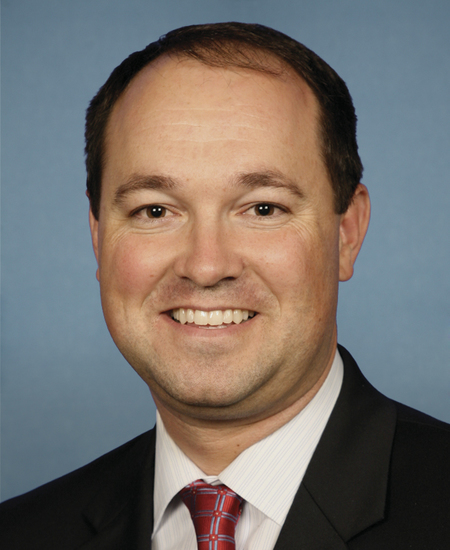
Rep. Marlin A. Stutzman
Sponsored bills
Maddy summaryThis bill prohibits federal funds from being used to cover any abortion-related expenses for individuals classified as "illegal aliens" under immigration law. It specifically blocks taxpayer money from paying for travel, lodging, meals, childcare, translation, doula care, or patient education services connected to abortion access. The law directly affects non-citizens who are inadmissible or deportable under specific immigration statutes (as defined in the Immigration and Nationality Act). It applies to all federal programs and funds, restricting assistance for abortion services beyond the procedure itself.
Maddy summaryThe Congressional Budget Office Scheduling Reform Act (HR 6140) requires the Congressional Budget Office (CBO) to publish an annual schedule of major recurring reports by December 31 each year. This schedule must include key reports like the budget baseline, deficit reduction options analysis, accuracy of budget projections, and reports on unauthorized appropriations. The CBO must update the schedule as needed during the year. This law directly affects the CBO's reporting process and provides Congress with clearer timelines for accessing critical budget information. The bill aims to increase transparency around when these reports will be released.
Maddy summaryHR 6161, the SEC Data Protection Act, requires the Securities and Exchange Commission (SEC) to establish policies protecting sensitive nonpublic data provided by investment advisers. The bill mandates that within one year of enactment, the SEC create rules addressing when it requests such data, safeguarding it based on sensitivity, restricting access to authorized staff, and preventing unauthorized use or disclosure. These policies must be developed through a notice-and-comment rulemaking process. The law directly affects investment advisers who share proprietary information with the SEC, ensuring their data is handled securely under new federal standards.
Maddy summaryHRES 866 is a non-binding House resolution condemning the systematic persecution of Christians in Nigeria by groups like Boko Haram and Fulani militants, and criticizing Nigeria's government for failing to protect Christian communities or acknowledge the violence. It calls on the U.S. government to support President Trump in using diplomatic, economic, and security tools to pressure Nigeria to end impunity for attacks, protect Christians, return displaced persons, and repeal blasphemy laws. The resolution specifically demands action against religiously motivated violence, including the release of those imprisoned for their faith, and urges coordination with international partners for humanitarian aid. It does not create new laws but expresses congressional support for U.S. policy actions targeting Nigeria's religious freedom violations.
Maddy summaryHRES 858 is a resolution by the U.S. House of Representatives to impeach Chief Judge James E. Boasberg of the U.S. District Court for the District of Columbia. It alleges he abused his authority by issuing "frivolous" nondisclosure orders that prevented Members of Congress from being notified of legal process and covered conservative organizations and individuals. These orders, the resolution claims, violated constitutional protections for Congress and a federal law (2 U.S.C. § 6628) safeguarding Senate communications. The resolution would send the impeachment charge to the U.S. Senate for trial, seeking removal from office.
Maddy summaryHRES 842 is a non-binding resolution expressing the House's support for placing a statue of Charles "Charlie" James Kirk in the Capitol's House wing. It honors Kirk, founder of Turning Point USA and a conservative political figure assassinated in 2025, for his advocacy of free expression, civic engagement, and conservative principles. The resolution directs the House Fine Arts Board to accept the statue and display it permanently by January 2, 2027, though actual placement remains subject to the Board's approval. This is a symbolic gesture to commemorate Kirk's legacy, not a new law with policy impacts.
Maddy summaryThis bill ensures that critical firearm-related government operations continue during federal shutdowns. It designates background checks (via the FBI's National Instant Criminal Background Check System), Bureau of Alcohol, Tobacco, Firearms and Explosives enforcement, and firearm export licensing (handled by Commerce and State Departments) as essential services that must remain operational. These functions would be treated as "excepted" under federal law, meaning their employees would continue working even if other government services halt. The bill affects how background checks and firearm export licenses are processed during shutdowns but does not change gun ownership laws or eligibility.
Maddy summaryThis bill mandates U.S. sanctions against Nigerian officials who promote blasphemy laws or tolerate religiously motivated violence by groups like Boko Haram or ISIS-West Africa. It requires the Secretary of State to submit annual reports identifying specific Nigerian federal/state officials, judges, or law enforcement who enforced blasphemy laws or failed to prevent violence. The bill also formally designates Nigeria as a "Country of Particular Concern" for religious freedom violations and Boko Haram/ISIS-West Africa as "Entities of Particular Concern." These designations trigger mandatory U.S. sanctions under existing law, directly affecting Nigerian government actors and designated terror groups.
Maddy summaryThe Retirement Investment Choice Act (HR 5748) codifies Executive Order 14330 into law, making its provisions permanent. This order aims to expand 401(k) investment options by allowing access to alternative assets like real estate and private equity, which were previously restricted. The bill directly affects employers sponsoring 401(k) plans and investment providers, requiring them to offer these expanded choices as a standard feature. By converting the executive order into law, it ensures these investment options become a permanent part of retirement plan structures rather than relying on temporary executive action.