

Equal Representation Act This bill requires that the statement sent by the President to Congress after the decennial census indicating the number of persons in each state exclude noncitizens. (This statement is the basis for reapportionment of U.S. Representatives.) The bill also requires any questionnaire used in the decennial census to include a checkbox or other similar option for respondents to indicate whether the respondent and each household member is (1) a U.S. citizen, (2) a U.S. national but not a citizen, (3) a non-U.S. national ( alien under federal law) lawfully residing in the United States, or (4) a non-U.S. national unlawfully residing in the United States. The Department of Commerce must make public the number of persons in each state, disaggregated by each of these four categories.
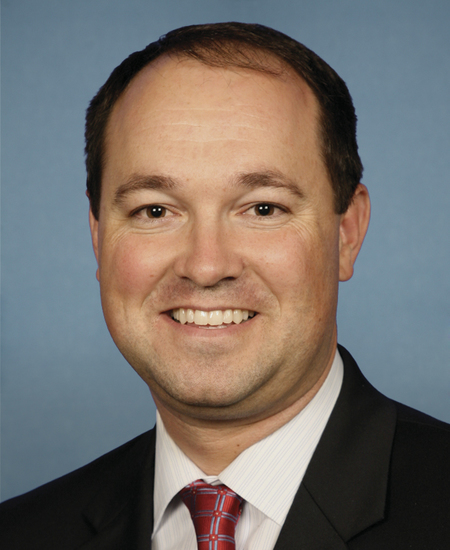
Rep. Marlin A. Stutzman
Sponsored bills
Maddy summaryThis bill amends the Foreign Agents Registration Act to require additional disclosure information on registration forms. It mandates that agents must specify whether their foreign principals are supervised, directed, owned, controlled, financed, or subsidized by covered nations or foreign governments acting on their behalf. The change directly affects foreign agents registered under the existing law by expanding the transparency requirements for their funding sources and government connections. This legislative update aims to provide clearer public information about foreign influence operations without altering the core registration obligations.
Maddy summaryThis bill directs the Federal Deposit Insurance Corporation and the National Credit Union Administration to conduct a study on whether to increase insurance coverage for business transaction accounts held at banks and credit unions. The analysis must be completed within five quarters of the bill's enactment and will examine the economic impact, safety of institutions, and potential for account misclassification if coverage limits were raised. The study will also assess how higher insurance assessments would affect small, medium, and large financial institutions and the overall banking and credit union sectors. Results from the study will be made public, but the bill does not mandate any immediate changes to insurance limits based on the findings.
Deporting Fraudsters Act of 2026 This bill makes certain acts related to public benefits fraud grounds for (1) barring a non-U.S. national ( alien under federal law) from admission into the United States, or (2) deporting the individual. The bill also makes such an individual ineligible for immigration enforcement relief, including relief for an individual in danger of subjection to torture. Specifically, this bill applies to individuals who have been convicted of, admit to having committed, or admit to acts which constitute certain offenses. Offenses covered by this bill include (1) fraud involving Supplemental Nutrition Assistance Program (SNAP) benefits, (2) fraud involving Social Security benefits, (3) fraud involving programs that receive federal funds, and (4) the production of fraudulent identification documents.
Maddy summaryHR 5688, the Non-Domiciled CDL Integrity Act, changes rules for issuing commercial driver's licenses (CDLs) to people who don't live in the state where the license is issued. It allows states to issue CDLs to foreign nationals with lawful U.S. immigration status and work-related visas (valid for up to one year or until their stay ends), requiring states to verify status before issuing and keep records for two years. For residents of U.S. territories like Puerto Rico, it requires proof of U.S. citizenship or permanent residency before issuing CDLs, with similar verification and record-keeping rules. The bill directly affects commercial drivers from foreign countries and U.S. territories seeking CDLs in states where they are not residents.
Enhanced Iran Sanctions Act of 2025 This bill imposes sanctions on certain foreign persons (individuals and entities) that are involved in Iran's petroleum sector as well as certain associated persons. The bill also requires or authorizes actions to facilitate the enforcement of sanctions on Iran. Specifically, the bill requires the President to impose visa- and property-blocking sanctions on any foreign person that, after the bill's enactment, knowingly engages in any transaction related to the processing, export, or sale of oil, condensates, gas, liquefied natural gas, or other petrochemical products in whole or in part from Iran. The President must also impose sanctions on certain foreign persons associated with a sanctioned individual or entity. For example, the President must sanction the subsidiaries and corporate officers of a sanctioned business. The bill provides certain exceptions to these sanctions, including specifying that sanctions do not apply to the importation of goods or to conducting or facilitating transactions for humanitarian assistance. The Department of State must establish an interagency working group that shall seek to establish a multilateral contact group to coordinate international efforts to enforce sanctions on Iran. The bill expands the State Department rewards program to authorize a reward payment to any individual who furnishes information leading to the identification of a person (1) subject to sanctions under this bill, or (2) that has attempted or is attempting to evade sanctions under this bill.
Maddy summaryThis bill, known as the Mail Ballot Integrity Act, would require states to stop sending unsolicited mail-in ballots to voters for federal elections. Under the law, individuals must actively request a mail-in ballot by submitting a written or electronic request that includes a sworn statement confirming they meet specific eligibility criteria. The bill limits who can receive these ballots to groups such as active-duty military personnel, students living away from home, clergy, people with disabilities, seniors aged 65 and older, and others with temporary mobility or residency issues. States could maintain lists of voters who previously qualified for mail-in voting, but only if those voters continue to meet the established eligibility requirements. The changes would take effect for federal elections occurring on or after the bill is enacted.
Maddy summaryThe MINT Act modifies rules for federal home loan banks backing tax-exempt bonds used in community development projects. It removes a 2010 deadline for certain bond issuances and shifts safety requirements to be set by the Federal Housing Finance Agency Director, rather than fixed standards. This directly affects community development organizations and local governments using tax-exempt bonds for housing or neighborhood revitalization. The changes apply to guarantees issued after the bill's enactment, streamlining how these bonds are secured.
Maddy summaryHR 7586, the American Families First Act, requires federal agencies to issue guidance within 180 days of enactment to prevent large institutional investors from purchasing single-family homes financed by the government that could instead be bought by individual homebuyers. The bill mandates agencies like HUD and the USDA to define "large institutional investors," block such investors from acquiring homes meant for owner-occupants, and restrict transferring government-owned homes to these entities. It also directs agencies to promote sales to individual buyers through policies like first-look rights for homebuyers and disclosure requirements. The guidance includes narrow exceptions for build-to-rent rental communities but focuses on using federal housing programs to support individual homeownership.
Maddy summaryHR 7678, the Gun Owner Registration Information Protection Act, prohibits federal funding for state or local databases that track lawfully owned firearms or their owners. The bill allows federal funding for databases recording lost or stolen firearms but bans it for databases listing legal gun ownership. This means states cannot use federal money to create or maintain systems that compile information about legally owned guns. The bill directly affects state and local governments that rely on federal funds for firearm ownership databases.