

Maddy summaryThis bill establishes a Truth and Healing Commission to investigate the history and impacts of U.S. Indian Boarding School policies on Native American communities, including their cultural, emotional, and physical effects. The Commission will document these policies' history through research, public meetings across all 12 Bureau of Indian Affairs regions and Hawai'i, and consultation with survivors, tribes, and relevant Federal agencies. It will develop recommendations for federal action on memorialization, education, and addressing ongoing impacts, with a final report due six years after enactment. The Commission will include a Survivors Truth and Healing Subcommittee with 15 members representing boarding school survivors, their descendants, and tribal communities. The bill requires trauma-informed care at public meetings and mandates consultation with Native American communities throughout the process.
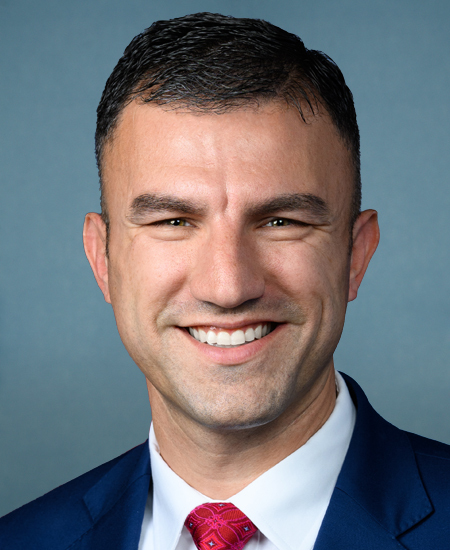
Rep. Rudy Yakym III
Sponsored bills
Maddy summaryThis bill exempts certain less-than-lethal projectile devices from federal sales taxes and National Firearms Act restrictions. It directly affects manufacturers, importers, and producers of these devices, which are defined as non-lethal tools (like rubber bullets or beanbag rounds) designed not to cause serious injury and unable to be easily converted to use standard firearm ammunition. Key mechanisms include a 90-day classification process for manufacturers seeking exemption, an annual public list of approved devices, and annual congressional reports on devices excluded from the exemption. The policy change applies to devices meeting specific safety criteria, such as projectile velocity limits and design features preventing misuse as conventional weapons.
Maddy summaryThis bill requires most employers (those with 50+ employees for 20+ weeks annually) to display a clear notice about veterans' benefits in visible workplace areas. The notice, developed by the Labor and Veterans Affairs Departments, includes the Veterans Crisis Line, how to apply for benefits, and state-specific veteran resources. Employers must post the notice starting one year after the bill's enactment, with the notice updated twice yearly and made available online. A 180-day information campaign will also inform employers about the requirement.
Maddy summaryHR 6945 clarifies that states may use federal grants under Section 403 of the Social Security Act to support pregnancy centers meeting specific criteria. These centers must promote protecting both mother and unborn child life while providing services like counseling, pregnancy testing, and material support (e.g., diapers, baby clothes). The bill explicitly prohibits interpreting existing law as barring such funding for eligible centers. It does not create new funding but defines which pregnancy resource organizations qualify for existing grants.
Maddy summaryThe Gulf War Survivor Benefits Update Act of 2025 would extend the deadline for surviving spouses of Persian Gulf War veterans to apply for certain VA benefits. It changes the current cutoff date (January 1, 2001) to ten years and one day after the Persian Gulf War ended, as defined by presidential proclamation or law. This extension would allow more surviving spouses to qualify for benefits they previously missed due to the old deadline. The bill directly affects surviving spouses of veterans who served in the Persian Gulf War and were ineligible under the prior cutoff.
Maddy summaryThe Tribal Labor Sovereignty Act of 2025 amends the National Labor Relations Act to explicitly include tribal governments and their enterprises as covered employers under federal labor law. It adds new definitions clarifying that "Indian tribe," "Indian," and "Indian lands" encompass federally recognized tribes, their members, and lands held in trust or within reservation boundaries. This change directly affects tribal nations, their member-owned businesses, and tribal employees by bringing them under the same labor protections (like collective bargaining rights) previously applicable to most private-sector employers. The bill does not create new programs but adjusts the legal definition to ensure tribal entities operating on tribal lands are subject to the NLRA’s standard labor regulations.
Maddy summaryHR 7087, the "Grave Injustice Parity Act," expands tax deductions for estates and gifts transferred to qualifying non-profit cemetery entities. It allows deductions for transfers to cemetery companies owned exclusively for members or non-profit burial corporations that operate solely for burial purposes, have no private profit motive, and direct all earnings toward cemetery operations (not private shareholders). This applies to both estate tax (Section 2055) and gift tax (Sections 2522) deductions, as well as private foundation distributions (Sections 4942/4945). The bill directly affects donors and estates/gifts made to such cemetery organizations, with changes effective after enactment.
Maddy summaryHR 7025, the Evidence-Based Grantmaking Act, requires 15 federal agencies (including Education, Health and Human Services, and Housing and Urban Development) to use proven methods in awarding grants. It mandates that agencies clearly define grant goals in funding notices, prioritize applicants using evidence-based practices, and require grant recipients to implement such practices when delivering services. Agencies must also conduct regular evaluations of grant effectiveness, publicly share results, and use findings to improve future funding decisions. This law directly affects federal grant recipients and aims to ensure taxpayer funds achieve measurable outcomes through data-driven approaches.
Maddy summaryHR 2617, the "Say No to Indoctrination Act," amends the Elementary and Secondary Education Act to prohibit public K-12 schools receiving federal funds from teaching "concepts related to gender ideology" as defined in Executive Order 14168. The bill adds this specific restriction to Section 8526 of the ESEA, directly affecting curriculum content in federally funded schools. This policy change would require schools to avoid instructional materials or lessons addressing gender identity concepts as defined by the referenced executive order.
Maddy summaryHR 909, the Crime Victims Fund Stabilization Act of 2025, modifies how funds from the False Claims Act are deposited into the Crime Victims Fund. It specifies that from 2025 through 2029, certain False Claims Act proceeds (specifically those for qui tam plaintiff payments and government damage reimbursements) cannot be deposited into the fund. This change directly affects the composition of the Crime Victims Fund by excluding these specific revenue streams during the specified period. The bill does not create new benefits or alter victim services; it only adjusts fund allocation rules for existing False Claims Act revenues.