American Innovation and R&D Competitiveness Act of 2023 This bill eliminates the five-year amortization requirement for research and experimental expenditures, thus allowing continued expensing of such expenditures in the taxable years in which they are incurred.
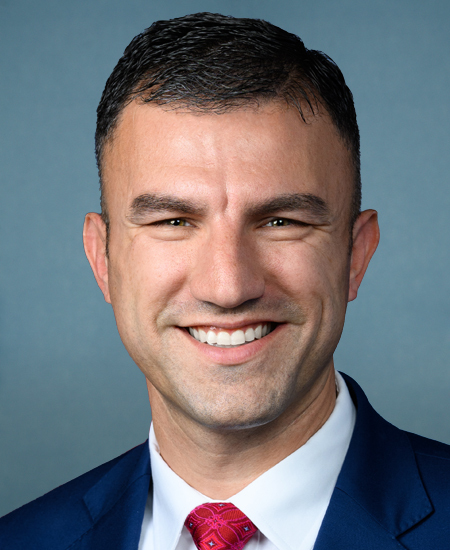
Rep. Rudy Yakym III
Sponsored bills
Maddy summaryH.J. Res. 55 proposes a constitutional amendment requiring the federal government to balance its annual budget, meaning total spending cannot exceed total revenue unless Congress votes to allow an exception with a three-fifths majority in both houses. Key provisions mandate the President to submit a balanced budget each year, prohibit increases to the national debt limit without a three-fifths vote, and require majority approval for tax hikes. Exceptions for declared wars or military threats posing an imminent security risk are permitted only if Congress passes a joint resolution authorizing them. If ratified by three-fourths of state legislatures within seven years, the amendment would take effect starting five years after ratification.
Maddy summaryHJRES 27 is a congressional resolution seeking to block a federal rule that redefined which waterways fall under the Clean Water Act's protections. It targets a rule submitted by the Army Corps of Engineers, Department of Defense, and Environmental Protection Agency (EPA) on January 18, 2023, which aimed to revise the "Waters of the United States" definition. The resolution would formally disapprove this rule under a specific federal procedure (Chapter 8 of Title 5), preventing it from taking effect. This would directly affect how federal agencies regulate pollution and development near water bodies, including wetlands and smaller streams.
Maddy summaryHR 2696 permanently extends a 7-year depreciation period for motorsports entertainment complexes under tax law. It amends the Internal Revenue Code by removing a temporary provision (subparagraph D), making the 7-year recovery period permanent for these facilities. This change directly affects businesses that own or operate motorsports venues when calculating tax deductions for facility investments. The bill is a technical tax code adjustment with no new regulations or direct impact on individuals.
Maddy summaryHR 2630, the Safe Step Act, requires group health plans and health insurance issuers to establish a clear, transparent process for patients or their doctors to request exceptions to medication step therapy protocols. These protocols typically force patients to try cheaper drugs first before covering more expensive alternatives. The bill mandates that plans must approve exceptions when prior treatments failed, delay would cause serious harm, a treatment is unsafe, or a patient is stable on a previously approved drug, with strict 72-hour (or 24-hour in emergencies) decision timelines. It also requires plans to publish the exception process online and limit documentation requests to only necessary medical information. This law directly affects health insurers, employers offering health plans, and patients using step therapy for prescription drugs.
Maddy summaryHR 2620, the Federal Firearms Licensee Protection Act of 2023, increases penalties for crimes targeting firearms licensees. It amends Section 924 of Title 18 to impose mandatory minimum sentences of 3 years for burglaries or 5 years for robberies committed at the business premises of licensed firearms dealers, manufacturers, or importers. The bill specifically targets violations of Section 922(u), which prohibits unauthorized access to these premises, and adds "attempts to do so" to the penalties. This directly affects licensed firearms businesses by strengthening legal protections against theft or violence at their locations. The law creates clearer, harsher consequences for crimes committed during burglaries or robberies at these specific business sites.
Maddy summaryThis bill terminates the national emergency declared by the President on March 13, 2020, under the National Emergencies Act. It ends the executive branch's authority to use emergency powers related to that specific declaration. The resolution passed both chambers in early 2023 and took effect April 10, 2023, without creating new policies or affecting specific groups.
Maddy summaryThis bill allows Medicaid coverage for incarcerated individuals during the 30 days preceding their release from public institutions. It directly affects people transitioning from prisons or jails back into communities by extending health coverage during this critical period. The key mechanism amends the Social Security Act to remove a Medicaid exclusion for this 30-day window. Additionally, it requires an 18-month report analyzing correctional healthcare standards, current discharge practices, and the potential impact of this coverage extension on post-release health access.
Maddy summaryHR 2491, the SAFE School Act, creates a $900 million federal grant program to improve school security in elementary and secondary schools across all 50 states, the District of Columbia, and Puerto Rico. The bill funds states and local schools to hire veterans or former law enforcement officers as school safety officers (after state training) and to install security infrastructure like metal detectors, access control systems, bulletproof glass, and emergency alert systems. It prohibits federal interference in how states implement security measures or design training programs, ensuring states maintain flexibility in using the funds. The program explicitly allows funding for both public and private schools, including religiously affiliated institutions, regardless of existing resource officer funding.

Maddy summaryHR 2539 permanently extends the New Markets Tax Credit (NMTC) program, which incentivizes private investment in low-income communities. The bill directly affects community development financial institutions (CDFIs) and investors who fund projects in designated low-income areas by ensuring the credit remains available beyond 2025. Key provisions include automatically adjusting the credit amount annually for inflation starting in 2024 and clarifying that the credit can be used to offset alternative minimum tax liability. This maintains the program’s effectiveness in channeling capital to underserved neighborhoods without changing eligibility or funding levels.