

Maddy summaryThe Ensuring Veterans’ Final Resting Place Act of 2024 amends federal law to clarify that the Department of Veterans Affairs (VA) will not reimburse veterans' families for the cost of an urn or plaque if a non-VA entity (such as a family, charity, or organization) has already reimbursed the VA for that cost. This applies specifically to urns or plaques provided on or after January 5, 2021, preventing duplicate payments. The change directly affects veterans' families who use non-VA entities to cover burial item costs and streamlines the VA’s administration of burial benefits. It does not alter the standard burial benefit amount but ensures payments are not duplicated when a third party covers the expense.
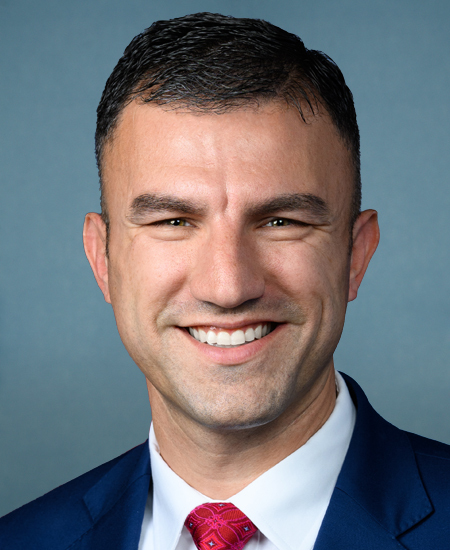
Rep. Rudy Yakym III
Sponsored bills
Maddy summaryThis bill prohibits federal funding for elementary and secondary schools that partner with Chinese government-funded programs, including Confucius Institutes, Confucius Classrooms, or other entities receiving support from China's government (e.g., through teaching materials, personnel, or funds). It directly affects schools with these specific ties to the People's Republic of China. The prohibition takes effect one year after enactment, with the Education Secretary required to notify schools and provide compliance guidance within 90 days of enactment. The policy change blocks federal education funds for schools meeting the defined criteria, without altering existing educational content or curriculum standards.
Maddy summaryThis bill expands eligibility for federal clean water funds to include qualified nonprofit organizations for constructing or improving water treatment works. It also creates new funding pathways for privately owned water treatment facilities to implement efficiency upgrades, conservation measures, water reuse, and security improvements. Crucially, it requires that any assistance to private operators must directly benefit the facility's customers (not shareholders), as determined by the administering state agency. These changes modify existing Clean Water Act provisions to broaden access to infrastructure funding while maintaining customer-focused benefit requirements.
Maddy summaryHJRES 170 is a resolution seeking congressional disapproval of a federal rule that would have required new housing projects financed by the Department of Housing and Urban Development (HUD) or the Department of Agriculture (USDA) to meet specific energy efficiency standards. The rule, published in April 2024, aimed to set these standards for new construction in federally subsidized housing. If passed, this resolution would block the rule under the Congressional Review Act, making it legally void. It directly affects developers and builders of HUD- and USDA-financed housing by removing the requirement to comply with these energy standards.
Maddy summaryHR 8809, the Motor Carrier Safety Selection Standard Act of 2024, requires businesses like shippers, brokers, and freight forwarders (but not individual shippers) to verify a motor carrier’s safety compliance before shipping goods. Specifically, they must confirm the carrier is properly registered, has required insurance, and meets all Federal Motor Carrier Safety Administration (FMCSA) safety standards - verified through a public FMCSA status check - within 45 days before shipment. The bill also directs the Transportation Secretary to update safety fitness regulations within one year to include these verification requirements. Individual shippers are exempt from these checks and are automatically considered reasonable in carrier selection.
Maddy summaryHRES 1300 is a non-binding House resolution condemning campus protests and the groups organizing them. It specifically targets protesters at universities like Columbia and George Washington for actions including blocking classes, using antisemitic rhetoric, and defacing U.S. flags with Palestinian flags. The resolution condemns organizations like Students for Justice in Palestine and George Soros for funding these protests, and calls for an investigation into foreign adversaries involved. It also urges politicians to reject contributions from groups supporting anti-American or antisemitic demonstrations. The resolution does not create new laws but expresses the House's position on campus protests.
Maddy summaryThe Trailer Safety Improvement Act (HR 8651) amends federal highway safety law to require programs preventing unsafe trailer use and public education. It directs existing federal safety programs to specifically address improper and unsafe use of light-duty and medium-duty trailers while educating the public about required safety equipment and preventive maintenance. This affects Department of Transportation highway safety initiatives and aims to reduce trailer-related accidents through proactive measures. The bill modifies current program guidelines without creating new funding or regulations.
Maddy summaryThis resolution (HRES 1272) calls on the Biden Administration to seek symbolic censure of Iran at the International Atomic Energy Agency (IAEA) for violating nuclear nonproliferation agreements and to refer Iran's case to the United Nations Security Council. It urges diplomatic action to prevent Iran from acquiring nuclear weapons, citing Iran's enrichment of uranium to 60% purity, obstruction of IAEA inspections, and development of advanced centrifuges. The resolution does not create new law but formally requests specific international diplomatic steps from the U.S. government.
Maddy summaryThis resolution (HRES 1268) symbolically designates June 2-8, 2024, as "National Trailer Safety Week" in the U.S. It supports existing efforts to educate American motorists - particularly those using light- and medium-duty trailers - about proper towing techniques and maintenance. The resolution emphasizes collaboration between trailer manufacturers, dealers, and end-users to promote safety awareness, referencing the National Association of Trailer Manufacturers’ annual campaign. As a procedural resolution, it does not create new laws or requirements but formally endorses the campaign’s goals.
Maddy summaryHR 5403, the CBDC Anti-Surveillance State Act, prohibits the Federal Reserve from issuing or facilitating central bank digital currency (CBDC) directly or indirectly to individuals through financial institutions. It specifically bans Federal Reserve banks from offering digital products to individuals, maintaining individual accounts, or using CBDC for monetary policy implementation. The bill also clarifies that its restrictions do not apply to existing physical cash or private, permissionless digital payment systems. This bill directly affects the Federal Reserve's ability to develop or deploy a government-run digital dollar. The law aims to prevent the Federal Reserve from creating a digital currency that could enable transaction tracking or government oversight of personal financial activity.