

Maddy summaryHR 551, the "Make the Migrant Protection Protocols Mandatory Act of 2025," would require U.S. border officials to apply the Migrant Protection Protocols (MPP) to all eligible asylum seekers at the southern border, rather than allowing discretion. The bill amends the Immigration and Nationality Act to change the language from "may" to "shall" in Section 235(b)(2)(C), meaning officials must send asylum seekers back to Mexico to await their immigration hearings. This directly affects asylum seekers who would no longer have the option of remaining in the U.S. during processing. The key mechanism is a technical legal change to make the existing MPP policy mandatory for all applicable cases.
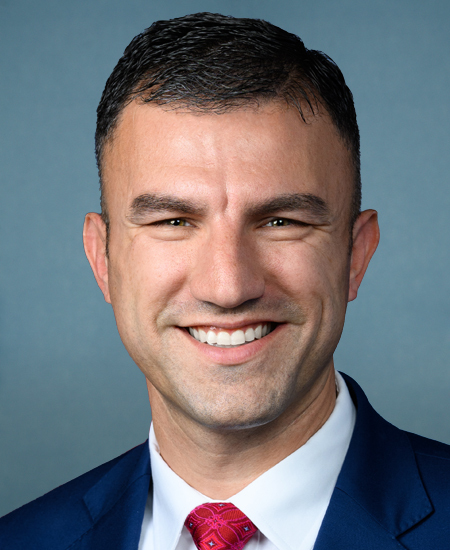
Rep. Rudy Yakym III
Sponsored bills
Maddy summaryHR 511 (AMERICANS Act) prevents the military from imposing new COVID-19 vaccine mandates without explicit congressional approval. It prohibits adverse actions like discharge or rank reduction against service members who refuse the vaccine based on personal reasons, and requires the military to reinstate separated members to their prior rank with back pay, expunge related records, and retain unvaccinated personnel equally. The bill also eliminates bonus repayment obligations for members separated over vaccine refusal and mandates equal professional development opportunities for unvaccinated service members. It directly affects military personnel impacted by prior vaccine mandates, focusing on policy changes rather than future outcomes.
Maddy summaryThis bill makes a 2021 Small Business Administration (SBA) rule permanent, requiring equal treatment for religious organizations in SBA loan and disaster assistance programs. It directly affects faith-based groups applying for SBA financial support, ensuring they cannot be excluded solely due to religious affiliation. The key provision incorporates the existing SBA rule - issued January 19, 2021 - into law without creating new requirements. This policy change ensures religious organizations have the same access to federal small business programs as other entities.
Maddy summaryThis bill creates special tax rules for certain Taiwanese residents with income from U.S. sources, primarily addressing double taxation concerns. It reduces withholding tax rates on interest, dividends, and royalties from 30% to 10% (or 15% for certain dividends) for qualified Taiwanese residents, and eliminates tax on certain wages paid to Taiwanese workers in the U.S. It also sets a $30,000 annual limit on tax-free income from entertainment or athletic activities. To qualify, individuals must meet specific residency and ownership criteria, and the bill requires reciprocal tax benefits from Taiwan before taking effect. This legislation is designed to facilitate economic activity between the U.S. and Taiwan without requiring a formal tax treaty.
Maddy summaryHR 465, the "Old Glory Only Act," requires all U.S. diplomatic and consular posts abroad to fly only the United States flag. The bill directs the Secretary of State to ensure no other flags are displayed over these government facilities. This is a procedural change affecting the physical display of flags at U.S. embassies and consulates worldwide, with no other policy provisions. It mandates a specific practice without altering other diplomatic protocols or affecting citizens or organizations.
Maddy summaryHR 404, the "Hearing Protection Act," reclassifies firearm silencers (devices that reduce gunfire noise) as firearms for federal tax and regulatory purposes. It imposes a 10% federal tax on silencers, requires the destruction of all existing federal silencer registration records within one year, and preempts state laws that tax or regulate silencers. The bill clarifies that silencers are treated as firearms under federal law, including for licensing and marking requirements, and defines "firearm silencer" to include specific components. Note: The bill’s title is misleading - it addresses firearm silencer regulation, not hearing protection for people.
Maddy summaryThe FAIR PREP Act of 2025 prohibits the IRS from preparing individual tax returns or refund claims, except for the existing IRS Free File Program and certain qualified return preparation services. It clarifies that the IRS may still provide fillable tax forms with automated calculations and correct mathematical or clerical errors without violating the prohibition. The bill also bans the IRS from developing or operating new electronic tax preparation services after enactment without explicit new congressional authorization. This directly affects how the IRS delivers tax filing assistance, preserving current free options while restricting new government-run tools.
Maddy summaryThis bill requires colleges and universities receiving federal funding to include a specific definition of antisemitism in all campus conduct documents. The definition states antisemitism is a perception of Jews that may manifest as hatred, targeting both Jewish individuals/non-Jewish people and property, as well as Jewish community institutions. It mandates that institutions explicitly state antisemitic conduct is prohibited, with student offenders facing expulsion and employees facing termination. The law directly affects all institutions covered by the Higher Education Act, setting clear consequences for antisemitic behavior on campus.
Maddy summaryHR 377, the Regulation Reduction Act of 2025, requires federal agencies to repeal three existing rules before issuing new ones that impose costs or responsibilities on businesses, state/local governments, or individuals. For major new rules, agencies must also certify that the new rule’s cost does not exceed the cost of the repealed rules. Agencies must publish all repealed rules in the Federal Register and submit a 90-day review to Congress identifying costly, ineffective, duplicative, or outdated regulations. This bill directly affects how federal agencies develop new rules, aiming to reduce regulatory burden by mandating rule removal before new rule creation.
Maddy summaryHR 378, the Thin Blue Line Act, adds a new aggravating factor for the death penalty in federal cases where a defendant kills or targets a law enforcement officer, firefighter, or other first responder. It specifically applies when the victim was killed or targeted while performing official duties, because of those duties, or due to their status as a public official. This amendment to federal death penalty law would make the death penalty a potential sentencing option for such crimes, as the killing would be considered an aggravating factor. The bill directly affects defendants convicted of homicides meeting these specific circumstances involving public safety personnel.