

Maddy summaryHR 5800, the SAFE Drivers Act, requires commercial driver's license (CDL) applicants and renewers to pass a standardized English proficiency test approved by the Federal Motor Carrier Safety Administration (FMCSA). The test assesses reading road signs, understanding emergency communications, and writing required documentation - critical for safety in commercial driving. States must administer the test through their DMVs, report pass rates annually to the FMCSA, and face potential federal funding cuts if they fail to comply. The law applies to all new CDL issuances or renewals starting 12 months after enactment, directly affecting commercial drivers seeking or maintaining their licenses.
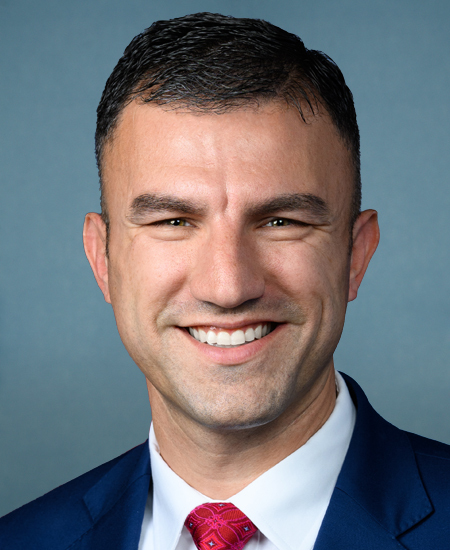
Rep. Rudy Yakym III
Sponsored bills
Maddy summaryHR 5697, the Passenger Rail Liability Adjustment Act of 2025, sets the effective date for adjustments to the liability cap for passenger rail operators. Specifically, any adjustment to the liability cap under federal law that occurs during 2026 must take effect 90 days after a required notice is issued. This procedural bill does not change the liability cap amount itself but establishes a clear timeline for when such adjustments become effective. It directly affects passenger rail operators subject to the liability cap under 49 U.S.C. § 28103.
Maddy summaryHRES 855 is a non-binding House resolution expressing support for National Adoption Day (November 22, 2025) and National Adoption Month (November). It promotes awareness about children in foster care awaiting adoption - highlighting that 49,994 U.S. children were waiting for adoptive families in 2023 - and encourages the public to consider adoption. The resolution recognizes that every child deserves a permanent, loving family and urges Americans to support this goal throughout November and the year. As a symbolic gesture, it does not create new laws or policies.
Maddy summaryThis bill ensures that critical firearm-related government operations continue during federal shutdowns. It designates background checks (via the FBI's National Instant Criminal Background Check System), Bureau of Alcohol, Tobacco, Firearms and Explosives enforcement, and firearm export licensing (handled by Commerce and State Departments) as essential services that must remain operational. These functions would be treated as "excepted" under federal law, meaning their employees would continue working even if other government services halt. The bill affects how background checks and firearm export licenses are processed during shutdowns but does not change gun ownership laws or eligibility.
Maddy summaryThe FREE Act (HR 689) requires federal agencies to replace slow, discretionary permitting processes with a streamlined "permitting by rule" system for certain permits. Under this system, applicants would certify compliance with written standards (instead of lengthy agency reviews) and receive a permit automatically after 180 days if the agency doesn’t act. Agencies must first report on their current permitting processes and identify which permits can transition to this model, with deadlines for submissions and implementation. This directly affects federal agencies issuing permits (e.g., environmental or construction permits) and applicants seeking them, aiming to reduce delays and costs while allowing agencies to audit and enforce compliance after permits are granted.
Maddy summaryHR 647, the Ensuring Veterans’ Final Resting Place Act of 2025, amends a provision in U.S. Code (38 U.S.C. § 2306(h)) to change how burial benefits are provided for veterans. It removes the requirement that a veteran’s family must provide an urn or plaque for the Department of Veterans Affairs (VA) to offer additional burial benefits; the VA will now automatically provide these benefits regardless of whether the family supplies such items. This change directly affects veterans’ families arranging burial services, making it easier to access burial benefits without needing to procure specific items first. The amendment applies to veterans who die on or after January 5, 2021, updating existing eligibility rules.
Maddy summaryHRES 795 is a non-binding resolution condemning Hamas for the October 7, 2023, attacks that killed over 1,200 people, took 251 hostages (including Americans), and involved sexual violence. It demands Hamas immediately surrender and release all remaining hostages - specifically noting 48 people still held, including two U.S. citizens. The resolution also affirms Israel’s right to self-defense, calls for humanitarian aid to reach Palestinians, and condemns global antisemitism following the attacks. As a symbolic congressional statement, it does not create new laws or alter policies.
Maddy summaryThe Black Vulture Relief Act authorizes livestock producers and their employees to remove or kill black vultures (Coragyps atratus) that are causing or likely to cause harm to livestock, bypassing standard protections under the Migratory Bird Treaty Act. It prohibits using poison for this purpose and requires annual reports to the U.S. Fish and Wildlife Service about such actions, using a simplified form. The law specifically targets vultures threatening livestock as defined in existing federal agriculture law, with reporting deadlines starting after a form is developed by the Fish and Wildlife Service.
Maddy summaryThis bill adds Medicare coverage for multi-cancer early detection screening tests (blood or biological tests analyzing cell-free DNA) starting January 1, 2028. It directly affects Medicare beneficiaries aged 68 and older (starting in 2028, with the age limit increasing by 1 year annually), requiring tests to be FDA-cleared and deemed reasonable/necessary by the Secretary for early cancer detection across multiple organ sites. Payment will initially match current stool DNA test rates before 2031, then shift to a lower rate or new payment system after 2031, with limits preventing more than one test per year. The bill explicitly states it does not alter coverage for existing cancer screenings like breast, colorectal, or prostate cancer tests.
Maddy summaryThis bill would require all states to recognize valid concealed carry permits issued by other states, allowing permit holders to carry concealed handguns (excluding machine guns) in any state that either issues such permits or doesn't prohibit concealed carry. It directly affects law-abiding gun owners with valid permits from their home state, ensuring they can carry in states with similar permit systems or no prohibitions. Key provisions include treating valid permit documents as proof of legal carry (reducing officer stops), shifting the burden of proof to prosecutors if challenged, and allowing civil lawsuits for violations with attorney's fee awards. The bill does not override state laws restricting firearms on private property or government land, nor does it affect federal gun restrictions like those in section 922(q).