

Federal Retirement Fairness Act This bill modifies the federal civilian service that is creditable service under the Federal Employees Retirement System (FERS). Specifically, it expands the nondeduction service that may be creditable under FERS. Nondeduction service is federal service where an employee's pay is not subject to retirement deductions (e.g., service under a temporary appointment). Currently, nondeduction service performed before January 1, 1989, is creditable under FERS so long as a deposit is made into the retirement fund to cover the period of nondeduction service. This bill allows nondeduction service performed on or after January 1, 1989, to be creditable under FERS so long as a deposit is made into the retirement fund.
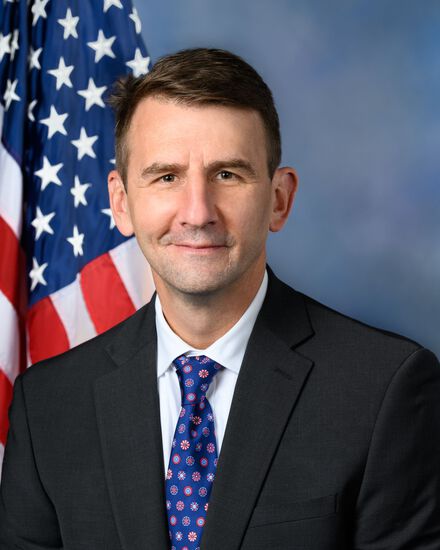
Rep. Frank J. Mrvan
Sponsored bills
Food and Nutrition Education in Schools Act of 202 1 This bill directs the Department of Agriculture (USDA) to establish a Food and Nutrition Education in Schools Pilot Program to award grants to local educational agencies for (1) projects that hire qualified, full-time food and nutrition educators to carry out programs in schools that have the goal of improving student health and nutrition; and (2) projects that fund school gardens or other evidence-based interventions relating to student health and nutrition, aligned with the latest school nutrition standards, to create hands-on learning opportunities for students. In awarding grants under the program, USDA must prioritize projects that serve schools or districts (1) in which not less than 40% of students qualify for free or reduced-price meals, or (2) that include neighborhoods with high rates of childhood obesity or other diet-related diseases. Additionally, it must give priority to projects that provide programming in summer months and those that are joint partnership projects.
Therapeutic Fraud Prevention Act of 20 21 This bill prohibits commercial conversion therapy, which is a practice or treatment designed to change a person's sexual orientation or gender identity or otherwise change behaviors, thoughts, or expressions related to gender or sexual attraction. This prohibition does not apply to treatment that assists an individual undergoing a gender transition or facilitates identity exploration and development.
Protecting Older Workers Against Discrimination Act of 2021 This bill revises the evidentiary standard for age discrimination by establishing an unlawful employment practice when the complaining party demonstrates that age or participation in an investigation, proceeding, or litigation related to an age discrimination claim was a motivating factor for an adverse practice, even though other factors also motivated the practice (thereby allowing what are commonly known as mixed motive claims). The bill (1) permits the complaining party to rely on any type or form of admissible evidence, which need only be sufficient for a reasonable trier of fact to find that an unlawful practice occurred; and (2) declares that the complaining party shall not be required to demonstrate that age or retaliation was the sole cause of the employment practice (thereby rejecting the Supreme Court's decision in Gross v. FBL Financial Services, Inc. , which requires the complainant to prove that age was the but-for cause for the employer's decision). The bill applies this evidentiary standard to other employment discrimination and retaliation claims, including claims under the Civil Rights Act of 1964, the Americans With Disabilities Act of 1990, and the Rehabilitation Act of 1973. In a claim in which age discrimination is shown, but where the employer demonstrates that it would have taken the same action absent the motivating factor of age, the bill authorizes courts to grant declaratory and injunctive relief, but prohibits the court from awarding damages or issuing an order requiring any admission, reinstatement, hiring, promotion, or payment. This limitation also applies to claims of discrimination based on disability. The bill also includes reporting requirements for the Equal Employment Opportunity Commission and the Department of Labor.
Vanessa Guillén Military Justice Improvement and Increasing Prevention Act This bill modifies the process and policy related to the disposition of charges and convening of courts-martial for certain sexual assault cases and other specified offenses under the Uniform Code of Military Justice (UCMJ). Among other elements, the bill provides that the determinations on the preferral, disposition, and referral of charges for specified offenses under the UCMJ must be made by a commissioned officer of the Armed Forces who is designated as a court-martial convening authority (in grade O-6 or higher) and who is available for detail as trial counsel, has significant trial experience, and is outside the chain of command of the member subject to the charges.
Conceding Our Veterans' Exposures Now And Necessitating Training Act of 2021 or the COVENANT Act of 2021 This bill establishes a presumption of service-connection for certain illnesses related to exposure to airborne hazards or open burn pits and addresses the care available through the Department of Veterans Affairs (VA) for veterans with illnesses they assert to be related to exposures during their service. Specifically, the bill establishes a presumption of service-connection for certain illnesses becoming manifest in covered veterans to a degree of 10% or more. Under a presumption of service-connection, specific conditions diagnosed in certain veterans are presumed to have been caused by the circumstances of their military service. Health care benefits and disability compensation may then be awarded. A covered veteran is any veteran who served on or after August 2, 1990, in Bahrain, Iraq, Kuwait, Oman, Qatar, Saudi Arabia, Somalia, or the United Arab Emirates; or served on or after September 11, 2001, in Afghanistan, Djibouti, Egypt, Jordan, Lebanon, Syria, Yemen, Uzbekistan, the Philippines, or other countries the VA determines to be relevant. Among other elements, the bill requires the VA to provide medical examinations for veterans who submit a claim for disability compensation for an illness not listed in the bill but that is asserted to be related to airborne hazard or open burn pit exposure; authorizes the VA to stay pending claims for disability compensation related to the service and illnesses covered by this bill until the implementation of the bill; and provides VA hospital care, medical services, and nursing home care to covered veterans.
Puppy Protection Act of 2021 This bill requires the Department of Agriculture to expand standards that govern the humane handling, care, treatment, and transportation of animals to include new requirements for commercial dog dealers. Specifically, the standards must require dog dealers to provide to dogs adequate housing, exercise, and veterinary care; appropriate and nutritious food; continuous access to potable water; and meaningful socialization with humans and compatible dogs for at least 30 minutes each day. The standards must also include requirements for breeders to use safe breeding practices and make all reasonable efforts to find humane placement for retired breeding dogs.
This resolution expresses the sense of the House of Representatives that the Indiana Veterans' Home is an example of Hoosiers' dedication to their veterans and should be recognized for its 125 years of care to the veterans of Indiana and their families.
Local Journalism Sustainability Act This bill allows individual and business taxpayers tax credits for the support of local newspapers and media. Specifically, individual taxpayers may claim an income tax credit up to $250 for a local newspaper subscription. The bill also allows local newspaper employers a payroll tax credit for wages paid to an employee for service as a local news journalist and certain small businesses a tax credit for local newspaper and media advertising expenses.
Pell Grant Preservation and Expansion Act of 2021 This bill makes various changes to the Federal Pell Grant program, including by expanding student eligibility for Pell Grants. The bill also revises student eligibility for federal student-aid programs. Specifically, the bill provides funding to increase the maximum Pell Grant award for each eligible student. Further, the bill requires the award amount to be adjusted for inflation. Next, the bill allows students who receive means-tested federal benefits (e.g., Medicaid) to automatically qualify for the maximum Pell Grant award plus an additional award amount. In addition, the bill moves the Iraq and Afghanistan Service Grant program into the Pell Grant program. Next, the bill raises from 12 to 18 the total number of semesters during which a student may receive a Pell Grant. The bill makes Dreamer students (i.e., students who have been granted Deferred Action for Childhood Arrivals status) who entered the United States before the age of 18 and who meet certain educational criteria eligible for federal financial aid. The bill also revises satisfactory academic progress requirements for federal student-aid programs, including by allowing a student who has not been enrolled in an institution of higher education for two years to regain eligibility for federal student aid.