Victims of Child Abuse Act Reauthorization Act of 2022 This bill reauthorizes for FY2022-FY2028 and otherwise revises grants for local and regional children's advocacy centers (CACs). CACs coordinate a multidisciplinary response to child abuse.
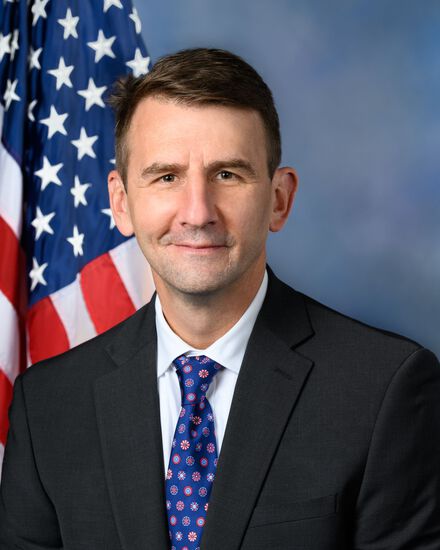
Rep. Frank J. Mrvan
Sponsored bills
Latonya Reeves Freedom Act of 2022 This bill prohibits government entities and insurance providers from denying community-based services to individuals with disabilities that require long-term service or support that would enable such individuals to live in the community and lead an independent life. Specifically, these entities may not discriminate against such individuals in the provision of community-based services by such actions as imposing prohibited eligibility criteria, cost caps, or waiting lists or failing to provide a specific community-based service. Additionally, community-based services must be offered to individuals with such disabilities prior to institutionalization. Institutionalized individuals must be notified regularly of community-based alternatives. The bill requires the Department of Justice to issue regulations requiring government entities and insurance providers to offer community-based long-term services to individuals with such disabilities who would otherwise qualify for institutional placement. Government entities must ensure sufficient availability of affordable, accessible, and integrated housing that is not a disability-specific residential setting or a setting where services are tied to tenancy. Regulations shall also (1) require government entities and insurance providers to perform self-evaluation on current services, policies, and practices and concerning compliance with requirements of this bill; and (2) require government entities to submit a transition plan. The bill provides funds for FY2022 for the Department of Health and Human Services to provide technical assistance with respect to transition plans. The bill allows civil actions by individuals subjected to, or about to be subjected to, a violation of its requirements.
COPS on the Beat Grant Program Reauthorization and Parity Act of 2022 This bill reauthorizes through FY2031 and makes changes to the Community Oriented Policing Services grant program. Among the changes, the bill reduces the required matching contribution for certain rural communities during the first three years of a grant and eliminates the preference for agencies that exceed the matching requirements; allows grant funds to be used to increase wages of career law enforcement officers in states or localities that have a median household income of less than 70% of the national median household income and qualify for a reduced matching contribution; and provides statutory authority for the Office of Community Oriented Policing Services within the Department of Justice. Additionally, the bill requires the Government Accountability Office to report on whether law enforcement workforces are representative of the communities they serve, the percentage of law enforcement employees who live in the community they serve, the average pay of officers compared to the cost of living in the community they serve, and recommendations for improvements.
Bringing an End to Harassment by Enhancing Accountability and Rejecting Discrimination in the Workplace Act or the BE HEARD in the Workplace Act This bill expands protections against discrimination and harassment in the workplace and raises the minimum wage for tipped employees. Specifically, the bill (1) makes it an unlawful employment practice to discriminate against an individual in the workplace based on sexual orientation, gender identity, pregnancy, childbirth, a medical condition related to pregnancy or childbirth, or a sex stereotype; and (2) provides a statutory definition for what constitutes workplace harassment. Further, these protections apply to all workplaces, regardless of size, and to all workers, including independent contractors, interns, volunteers, and trainees. The bill prohibits employers from entering into contracts or agreements with workers that contain certain nondisparagement or nondisclosure clauses and prohibits certain predispute arbitration agreements and postdispute agreements. It also establishes grant programs to (1) prevent and respond to workplace discrimination and harassment, (2) provide legal assistance for low-income workers, and (3) establish a system of legal advocacy in states to protect the rights of workers. The bill further provides employees the right to retain their tips and it increases, in specified annual increments, the minimum wage for tipped employees to match the federal minimum wage for nontipped employees. Additionally, the bill requires the Equal Employment Opportunity Commission to provide specified training and resource materials, establish and convene a harassment prevention task force, and establish an Office of Education and Outreach with regard to prohibited discrimination and harassment in employment. The bill also requires specified studies, reports, and research on prohibited workplace harassment.

Restoring Justice for Workers Act This bill prohibits predispute arbitration agreements that require arbitration of an employment dispute. It allows a postdispute arbitration agreement if the employee enters into it voluntarily without coercion and is informed in writing of rights and protections under such agreement. An employer may not retaliate against an employee for refusing to enter into an agreement for arbitrating an employment dispute.
Improving Access for Afghan Refugees Act This bill requires the Department of State to provide priority refugee status to eligible habitual residents of Afghanistan. To be eligible for such priority status, a habitual resident of Afghanistan must also be a national of Afghanistan or stateless. Such an individual shall receive priority refugee status if the individual (1) has suffered persecution or has a well-founded fear of persecution and worked in a specified field that makes the individual a target of persecution on account of race, religion, or other characteristics; (2) was employed for at least one year in Afghanistan by U.S.-based media or nongovernmental entities or an entity that received a contract or grant from the U.S. government; or (3) is the beneficiary of a visa petition sponsored by a relative who is a U.S. citizen or permanent resident. The State Department may also provide priority status to other groups of individuals who are nationals and residents of Afghanistan. Certain annual numerical limits on refugee admissions shall not apply to individuals who receive priority status under this bill. For refugee applications under this bill, the State Department and the Department of Homeland Security shall ensure that all steps in the approval process in the U.S. government's control are completed within six months of an application's submission, with exceptions for cases that need more time to address national security concerns.
CARA 3.0 Act of 2021 This bill addresses substance use disorders by expanding access to treatment and recovery services, providing for housing protections, and requiring other activities. Specifically, the bill reauthorizes, establishes, and expands support for treatment and recovery services. This includes increasing access to treatment in the criminal justice system and other settings and for particular populations, such as pregnant and postpartum individuals and youth and young adults. Additionally, the bill expands Medicare and Medicaid coverage for treatment, including by expanding telehealth access to medication to treat substance use disorders. The bill also temporarily requires that non-opioid pain treatment options be reimbursed separately, instead of on a packaged basis, under Medicare. As a condition of receiving certain federal funding, states must mandate the use of prescription drug monitoring programs (PDMPs) by prescribers and dispensers and impose additional PDMP requirements. Moreover, prescribers of potentially addictive drugs must complete continuing education requirements. The bill also revises the registration process for providers who prescribe certain medications to treat substance use disorders, including by eliminating the provider's patient limit for such medications. In addition, the Substance Abuse and Mental Health Services Administration must carry out activities to promote access to high-quality recovery housing. The bill also sets out protections for individuals with substance use disorders who live in, or apply to live in, federally assisted housing. Furthermore, the bill requires other activities to address substance use, such as support for workforce education and training; public awareness campaigns and similar outreach; and research on prevention strategies, insurance coverage, and treatment modalities.
Menstrual Equity For All Act of 2021 This bill expands access to free sanitary napkins and tampons (i.e., menstrual products) in certain locations and for particular groups. It also requires Medicaid to cover menstrual products, as well as liners, cups, and similar items used by individuals with respect to menstruation. Specifically, the bill imposes requirements to make free menstrual products available in federal and state correctional facilities (including facilities that house aliens detained by the Department of Homeland Security) and restrooms in federal buildings that are open to the public. It also establishes a demonstration grant program to support the provision of free menstrual products on campuses of institutions of higher education and permits elementary and secondary schools to use certain grants to provide menstrual products to students. Furthermore, the bill requires employers with at least 100 employees to provide free menstrual products for employees. It also permits the use of certain grants for emergency food and shelter to provide menstrual products to homeless individuals.
Major Richard Star Act This bill provides that combat-disabled uniformed services retirees with fewer than 20 years of creditable service may concurrently receive, without reduction, veterans' disability compensation and retired pay or combat-related special compensation.
Global Malnutrition Prevention and Treatment Act of 2021 This act sets out programs and otherwise directs the U.S. Agency for International Development (USAID) to carry out activities to prevent and treat malnutrition globally. Specifically, USAID may leverage resources to address malnutrition through the Global Nutrition Coordination Plan (an interagency effort to strengthen the impact of U.S. investments in nutrition) and its role on the board of directors of the U.S. International Development Finance Corporation. USAID must also select countries based on specified malnutrition-related indicators for purposes of targeting malnutrition prevention and treatment programs and update the selection within five years. Additionally, USAID may establish the Nutrition Leadership Council to coordinate federal government activities to prevent and treat malnutrition; and target resources and nutrition interventions to the populations most susceptible to severe malnutrition and otherwise support efforts to prevent and treat malnutrition globally. The act also requires USAID to provide to Congress an implementation plan and annual reports concerning its programs for treating and preventing malnutrition. The act's provisions terminate seven years after its enactment.