

National Heritage Area Act of 2021 This bill establishes a National Heritage Areas System to recognize certain areas of the United States that tell nationally significant stories and to conserve, enhance, and interpret the areas' natural, historic, scenic, and cultural resources that illustrate significant aspects of U.S. heritage, and authorizes appropriations through FY2034 for each National Heritage Area. Through such system, the Department of the Interior may provide technical and financial assistance to local coordinating entities to support the establishment, development, and continuity of such areas. The bill extends the authority for the Erie Canalway National Heritage Corridor Commission and the Gullah/Geechee Cultural Heritage Corridor Commission until September 30, 2034. The local coordinating entity of a National Heritage Area, not later than three years after the area is included in the National Heritage Area System, shall submit to Interior a management plan for approval. Interior, not later than one year before the authorization for federal funding expires for a National Heritage Area, shall (1) conduct an evaluation of the accomplishments of that area, and (2) submit a report detailing the evaluation to specified congressional committees. Based upon the evaluation, Interior shall prepare a report with recommendations for the National Park Service's continued role, if any, with respect to the area. Interior may carry out or certify a study to assess the suitability and feasibility of designating a specific geographic area as a National Heritage Area to be included in the National Heritage Area System.
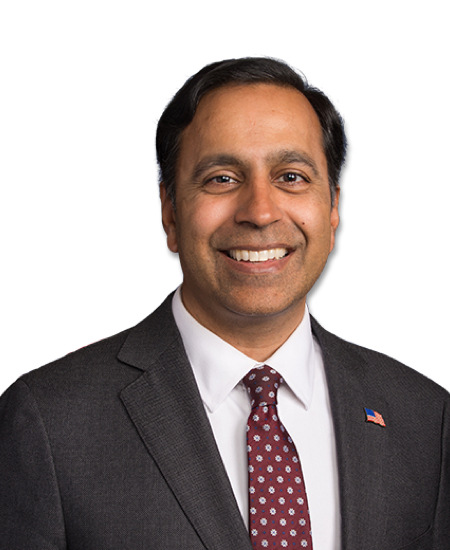
Rep. Raja Krishnamoorthi
Sponsored bills
This resolution expresses support for the goals and ideals of PCOS Awareness Month. Polycystic ovary syndrome (PCOS) is caused by a hormone imbalance. Symptoms can include infertility, weight gain, excess hair growth, and acne.
LGBTQ Essential Data Act This bill directs the Centers for Disease Control and Prevention to more frequently collect information on the sexual orientation and gender identity of deceased individuals through the National Violent Death Reporting System.
Nullifying Opportunities for Variants to Infect and Decimate Act or the NOVID Act This bill establishes the Pandemic Preparedness and Response Program to coordinate and carry out the U.S. government's global health response to COVID-19, its variants, and other pathogens with pandemic potential. As part of the program, the bill requires, within 30 days, the development of a comprehensive strategy to end the COVID-19 pandemic. The strategy must outline efforts to increase COVID-19 vaccinations worldwide, including through the immediate release of the COVID-19 vaccine doses that the United States committed to sending abroad. The bill also requires a long-term strategy for the program to prevent future pandemics.
Medical Nutrition Equity Act of 2021 This bill expands coverage under Medicare, Medicaid, other specified federal health care programs, and private health insurance to include foods, vitamins, and individual amino acids that are medically necessary for the management of certain digestive and metabolic disorders and conditions.
Parity Implementation Assistance Act This bill provides grants to assist states with the implementation of the federal mental health parity requirements. States receiving the grants must request and review from private health insurance plans their required comparative analysis of nonquantitative treatment limitations (NQTLs) with respect to mental health or substance use disorder benefits. (NQTLs are limitations on the scope or duration of benefits for treatment, such as preauthorization requirements.)
Reaching English Learners Act This bill directs the Department of Education to establish a grant program for preparing future teachers to effectively instruct English learners to achieve at high levels in early childhood education programs and in elementary and secondary schools. Under the program, grants must be given to partnerships between (1) certain institutions of higher education, and (2) high-need local educational agencies or high-need early childhood education programs.
Paycheck Fairness Act This bill addresses wage discrimination on the basis of sex, which is defined to include pregnancy, sexual orientation, gender identity, and sex characteristics. Specifically, it limits an employer's defense that a pay differential is based on a factor other than sex to only bona fide job-related factors in wage discrimination claims, enhances nonretaliation prohibitions, and makes it unlawful to require an employee to sign a contract or waiver prohibiting the employee from disclosing information about the employee's wages. The bill also increases civil penalties for violations of equal pay provisions. Additionally, the Equal Employment Opportunity Commission (EEOC) and the Office of Federal Contract Compliance Programs must train EEOC employees and other affected parties on wage discrimination. The bill directs the Department of Labor to (1) establish and carry out a grant program to provide training in negotiation skills related to compensation and equitable working conditions, (2) conduct studies to eliminate pay disparities between men and women, and (3) make available information on wage discrimination to assist the public in understanding and addressing such discrimination. The bill establishes the National Award for Pay Equity in the Workplace for an employer who has made a substantial effort to eliminate pay disparities between men and women. It also establishes the National Equal Pay Enforcement Task Force to address compliance, public education, and enforcement of equal pay laws. Finally, the bill requires the EEOC to issue regulations for collecting from employers compensation and other employment data according to the sex, race, and national origin of employees for use in enforcing laws prohibiting pay discrimination.
United States Army Rangers Veterans of World War II Congressional Gold Medal Act This bill provides for the award of a single Congressional Gold Medal to the U.S. Army Rangers Veterans of World War II in recognition of their dedicated service during World War II.
Veteran Education Empowerment Act This bill reauthorizes through FY2029 and otherwise revises a Department of Education (ED) grant program for student veteran centers. Specifically, ED must make grants to institutions of higher education (IHEs) or consortia of IHEs to establish, maintain, improve, or operate a student veteran center. A student veteran center is a dedicated space on a campus that provides students who are veterans or members of the Armed Forces with (1) a lounge or meeting space for themselves, their spouses or partners, their children, and veterans in the community; and (2) a centralized office for student veteran services that serves as a single point of contact to coordinate comprehensive support services for student veterans.