

Maddy summaryThe Caring for Survivors Act of 2025 increases monthly dependency and indemnity compensation for surviving spouses of veterans. It changes the calculation method from a fixed $1,154 to 55% of a specific veteran compensation rate, effective six months after enactment. The bill also reduces the required continuous disability rating period for survivors from 10 years to 5 years, and provides a proportional payment for cases where the rating period is shorter than 10 years. Surviving spouses of veterans who died before January 1, 1993, receive the greater of their current benefit or the new calculation. This directly affects surviving spouses eligible for benefits under Title 38, U.S. Code, particularly those with veterans who died prior to 1993.
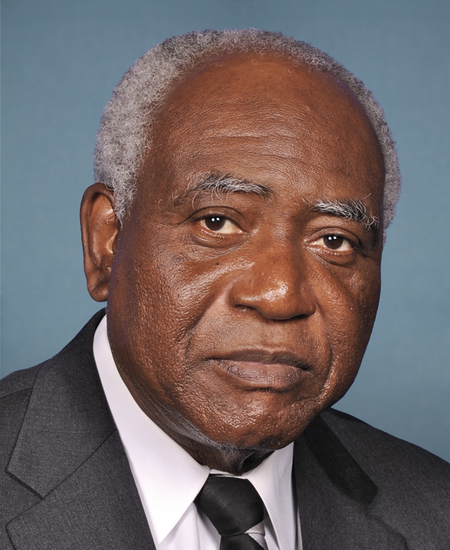
Rep. Danny K. Davis
Sponsored bills
Maddy summaryHRES 533 is a non-binding House resolution calling on the President to lift the indefinite suspension of U.S. refugee admissions, which has left over 100,000 refugees stranded in limbo since January 2025. It specifically references Executive Order 14163 (2025) that halted refugee arrivals, citing the plight of refugees conditionally approved for resettlement, including Afghans, Rohingya, and Sudanese. The resolution reaffirms U.S. commitments under the Refugee Act of 1980 and international obligations, urging restoration of the U.S. Refugee Admissions Program to protect vulnerable refugees. It also calls for increased international cooperation, support for frontline host countries, and meeting global refugee protection pledges. The resolution does not create new law but expresses congressional intent to address the refugee crisis.
Maddy summaryHR 4083, the Marshall “Major” Taylor Congressional Gold Medal Act, authorizes the posthumous presentation of a Congressional Gold Medal to honor cyclist Marshall Walter "Major" Taylor (1878-1932), recognizing his pioneering achievements as a Black athlete who broke racial barriers in professional cycling during the late 19th and early 20th centuries. The bill directs the Secretary of the Treasury to strike the medal with his name and image, to be presented to Taylor’s great-granddaughter, Karen Donovan. It also permits the sale of bronze duplicates to cover costs, classifying all medals as national commemorative items under U.S. law. This is a ceremonial bill with no policy changes, solely focused on commemorating Taylor’s legacy.
Maddy summaryHRES 524 is a congressional resolution designating June 19, 2025, as "World Sickle Cell Awareness Day" to increase public awareness about sickle cell disease (SCD) in the U.S. and globally. It specifically highlights the need for expanded research, early detection screenings, accessible treatments, and preventative care programs for SCD, which disproportionately affects communities of African, Caribbean, and Mediterranean descent. The resolution urges federal agencies to address healthcare disparities and improve equitable access to therapies, including emerging genetic treatments. As a procedural resolution, it does not create new laws but formally supports existing awareness and advocacy efforts for SCD patients.
Maddy summaryHRES 509 is a symbolic resolution expressing the U.S. House of Representatives' support for designating June 2025 as "Black Music Month." It does not create new laws or directly affect any individuals or entities; instead, it urges the public to recognize and celebrate Black music's cultural impact through voluntary actions like promoting artists and spreading awareness. The resolution highlights Black music's historical influence across genres - from spirituals to hip-hop - and calls for honoring its legacy in education, media, and community initiatives. It follows a tradition started by President Carter in 1979 but has no legal force.
Maddy summaryHR 3968, the School Violence Prevention Act, creates a federal grant program to fund school-based violence prevention programs in communities with severe gun violence. It authorizes $25 million annually (2025-2031) for grants to partnerships between state/local education agencies and community nonprofits in areas experiencing high homicide rates (e.g., 35+ homicides annually) or double the national violent crime arrest rate for youth. Grants must support evidence-based programs for K-12 students - including trauma-informed counseling, conflict resolution skills, mental health access, and community engagement - while requiring annual data collection on outcomes like graduation rates. All programs must be evaluated by grantees and independent researchers, with reports shared publicly and submitted to Congress every three years.
Maddy summaryThis bill requires U.S. Immigration and Customs Enforcement (ICE) agents to visibly identify themselves during enforcement operations in the United States by not wearing facial coverings and wearing garments showing their name and agency affiliation. It directly affects ICE agents conducting activities like arrests, raids, or investigations. Exceptions exist for imminent threats or safety gear, but supervisors must review and document such uses within 48 hours. The bill also mandates annual reports to Congress on disciplinary actions and complaints related to violations.
Maddy summaryThe PHARA Act of 2025 requires the National Institutes of Health (NIH) to immediately release all required funding for existing research grants and rapidly pay pending reimbursements. It prohibits NIH from terminating active research grants (entered after the bill's enactment) solely due to shifting agency priorities or program goals, and mandates new termination clauses requiring 90 days' written notice and attempts to amend terms before ending agreements. This directly affects researchers and institutions receiving NIH grants, ensuring funding continuity for ongoing projects. The bill aims to prevent abrupt halts in scientific research by restructuring grant termination processes.
Maddy summaryThe Domestic Workers Bill of Rights Act (HR 3971) would establish key labor protections for domestic workers, including nannies, housekeepers, and caregivers who work in private homes. The bill requires written agreements for workers employed 8+ hours per week, provides earned sick days (1 hour for every 30 hours worked), mandates fair scheduling practices with 72-hour notice for schedule changes, and extends overtime protections to live-in domestic employees. It also prohibits unfair wage deductions, guarantees meal and rest breaks, and ensures privacy protections including no monitoring in private living spaces. The bill directly affects approximately 2.2 million domestic workers across the U.S., who are disproportionately women of color and immigrants. Enforcement would be handled by the Department of Labor through new complaint resolution mechanisms and oversight.
Maddy summaryHRES 502 is a House resolution requesting transparency about a potential federal database project. It directs the President and three Cabinet Secretaries (Treasury, Labor, Health and Human Services) to provide documents to the House within 14 days regarding a proposed centralized database developed with Palantir Technologies Inc. The resolution seeks information about the database’s scope - compiling sensitive personal data like tax records, health information, financial accounts, and Social Security details across federal agencies - and its purpose, including potential uses like tax audits or benefit restrictions. This is a procedural inquiry (not a policy change) focused on obtaining documents for congressional review of the project’s development and contracts.