

Maddy summaryHR 2181, the Protect Our Watchdogs Act of 2025, strengthens protections for federal Inspectors General (IGs) by requiring the President to have specific, documented reasons to remove them. The bill amends federal law to specify nine grounds for removal, including documented felony convictions, gross mismanagement, waste of funds, abuse of authority, or neglect of duty - each requiring written justification. This directly affects IGs who oversee federal agency accountability and investigations, as it prevents arbitrary removals and mandates transparency in the process. The law applies to all federal Inspectors General across agencies, ensuring their independence is maintained through clear, enforceable standards.
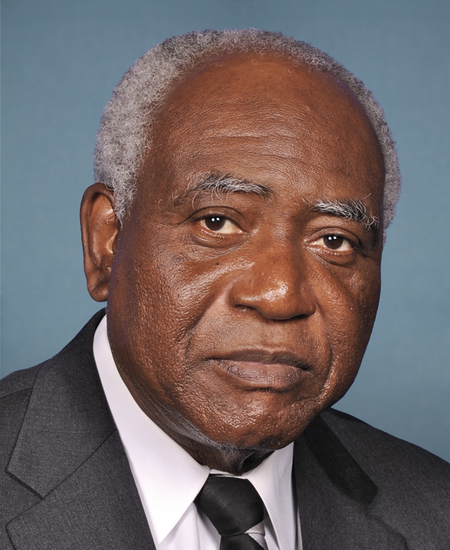
Rep. Danny K. Davis
Sponsored bills
Maddy summaryThis bill (HJRES 115) terminates a presidential emergency declaration made on August 11, 2025, which claimed a "crime emergency" in Washington, D.C. It directly affects the District of Columbia by ending federal restrictions that prevented D.C. from using $1 billion in locally-raised funds for public safety, law enforcement, fire services, and schools. The resolution cites that the emergency declaration was legally flawed - section 740 of the DC Home Rule Act does not permit federalizing the Metropolitan Police Department - and notes that D.C. violent crime has reached a 30-year low. The bill formally ends the emergency under the DC Home Rule Act, restoring D.C.'s authority over its own budget and public safety resources.
Maddy summaryHRES 639 designates the week beginning August 3, 2025, as "National Health Center Week" and encourages all Americans to visit local community health centers during that week. The resolution highlights community health centers' role in providing accessible primary care to over 32 million people across 16,000 locations, including rural and underserved areas. It emphasizes their contributions to health outcomes (like cancer screenings and chronic disease management) and local economies without creating new laws or funding. This is a symbolic resolution, not a policy change, meant to recognize existing health centers' work. It directly affects community health centers by promoting public awareness of their services.
Maddy summaryHR 4894, the Deceptive Practices and Voter Intimidation Prevention Act of 2025, prohibits the intentional spread of false information about voting procedures, eligibility, or penalties within 60 days of an election. The bill specifically targets deceptive communications through social media, text messages, and AI-generated content designed to prevent voters from casting ballots, including false claims about voting locations, registration status, or legal consequences. It creates a private right of action for individuals harmed by these deceptive practices and authorizes the Attorney General to issue corrective information to counter false claims. The law directly affects voters, election officials, social media platforms, and anyone spreading false voting information, with penalties including fines and imprisonment for violations.
Maddy summaryThe LOAN Act would significantly reform federal student loan programs by doubling Federal Pell Grants for eligible students (from $5,000 to $14,000 over several years), eliminating origination fees on new federal loans, and creating two new repayment plans: a fixed repayment plan and an Income-Driven Repayment Plan. It would automatically enroll borrowers who are delinquent or rehabilitating defaulted loans into income-driven repayment plans, eliminate interest capitalization (preventing interest from being added to the principal balance), and streamline Public Service Loan Forgiveness requirements. The bill would also provide refinancing options for existing federal student loans and private student loans with interest rates capped at 5%. These changes would directly affect millions of current and future student loan borrowers and Pell Grant recipients across the United States.
Maddy summaryThis bill adjusts health insurance subsidies by modifying the premium tax credit structure under the Internal Revenue Code. It replaces previous income thresholds with a sliding-scale formula, increasing subsidies for households earning between 150% and 400% of the federal poverty level - reducing their required premium payments as income rises within these tiers. The changes apply to tax years beginning after December 31, 2025, directly affecting middle-income individuals and families purchasing coverage through health insurance marketplaces. It also repeals specific provisions from a prior reconciliation law related to health care.
Maddy summaryThis bill removes a barrier preventing most low-income students from accessing SNAP benefits. It amends the Food and Nutrition Act to explicitly allow students enrolled at least half-time in recognized higher education programs to qualify for SNAP, reversing a prior exclusion. The key change eliminates the previous requirement that students meet specific exceptions (now deleted) and adds a new eligibility category under Section 3(m)(5). This directly affects low-income undergraduate and graduate students at colleges and training programs who were previously ineligible. The changes take effect January 2, 2026.
Maddy summaryThis bill authorizes $50 million annually for the Centers for Disease Control and Prevention (CDC) to conduct research on firearms safety and gun violence prevention, beginning in fiscal year 2026 through 2031. The funding is in addition to existing CDC appropriations and would support studies under the Public Health Service Act. It does not create new regulations or directly affect individuals, but aims to expand research into causes and prevention strategies for gun violence. The bill focuses solely on enabling CDC research, without proposing policy changes or restrictions.
Maddy summaryHR 4796, the Restoring Essential Healthcare Act, repeals a provision that blocked Medicaid payments to certain healthcare providers during a specific period. It directly affects Medicaid beneficiaries who received care from these providers between the enactment of the prior law (Public Law 119-21) and this bill's enactment. The key provision retroactively restores Medicaid payments for services already provided during that blocked period, treating the payment restriction as if it never existed. This change ensures eligible individuals and providers receive reimbursement for covered care delivered during the prohibited timeframe.
Maddy summaryHR 4763, the PTO Act, requires most employers to provide employees with at least 1 hour of paid annual leave for every 25 hours worked, with a maximum of 80 hours per year. It applies to private-sector workers and certain government employees, protecting their right to use paid leave for any purpose without disclosing the reason. The bill mandates employers to maintain health benefits during leave, allow carryover of up to 40 hours of unused leave, and pay out unused leave upon separation. It also prohibits employers from discriminating against employees for using paid leave or requiring them to find replacements while on leave. The law includes enforcement mechanisms, allowing employees to file complaints with the Department of Labor or pursue private lawsuits.