Capitol Remembrance Act This bill requires the Architect of the Capitol (AOC) to design and install in a prominent location in the U.S. Capitol a permanent exhibit that depicts the January 6, 2021, attack on the Capitol. To the extent possible, the AOC must preserve property that was damaged during the attack and include it in the exhibit. The AOC must also include (1) existing photographic records relating to the attack; and (2) a plaque to honor the U.S. Capitol Police and other law enforcement agencies that protected the Capitol, the individuals who died or sustained injuries to protect the Capitol, and the staff who helped restore the Capitol complex after the attack.
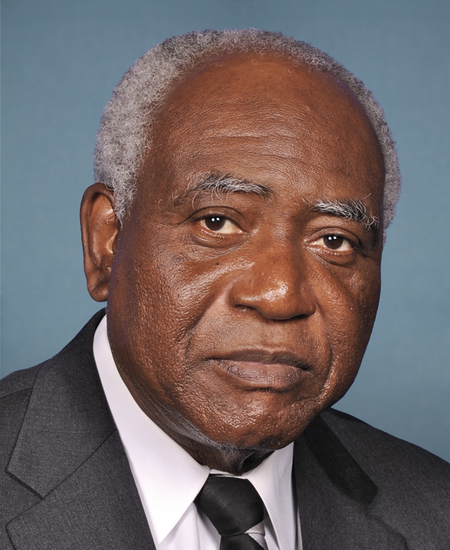
Rep. Danny K. Davis
Sponsored bills
National Women's Hall of Fame Commemorative Coin Act of 2021 This bill directs the Department of the Treasury to mint and issue $5 gold coins, $1 silver coins, half-dollar clad coins, and proof silver $1 coins in recognition and celebration of the National Women's Hall of Fame in Seneca Falls, New York. All minted coins shall include a specified surcharge, which shall be paid to the National Women's Hall of Fame Foundation to establish an endowment fund to provide for the long-term financing of the hall's operations.
New Way Forward Act This bill makes changes to immigration enforcement, including ending mandatory detention in certain cases. The Department of Homeland Security (DHS) shall not enter into or extend any contract with any public or private for-profit entity to own or operate a facility to detain aliens in DHS custody. The bill provides for various protections related to detaining aliens, such as (1) requiring DHS to make an initial custody determination and establish probable cause within 48 hours of taking an alien into custody, (2) establishing in hearings related to such determinations a presumption that the alien be released, and (3) requiring immigration judges to impose the least restrictive detention conditions necessary. A DHS officer may not interrogate a person as to immigration status based on factors such as the person's race, religion, sexual orientation, or spoken language. The bill removes mandatory detention requirements for certain aliens, such as asylum seekers with a credible fear of persecution. Removal proceedings against certain aliens previously admitted into the United States must commence within five years of the alien becoming deportable or inadmissible. The bill also removes certain crime-related grounds of inadmissibility and deportability. The bill gives immigration judges discretion to provide relief from removal if the removal is not based on certain crime-related grounds. State or local officers are prohibited from performing certain immigration enforcement functions, such as apprehending aliens. The National Crime Information Center database shall not contain an alien's immigration information. The bill repeals provisions providing criminal penalties for improper entry or reentry into the United States.
This joint resolution proposes a constitutional amendment authorizing Congress and the states to set reasonable limits on the raising and spending of money by candidates and others to influence elections. The amendment grants Congress and the states the power to implement and enforce this amendment by legislation. They are allowed to distinguish between natural persons and corporations or other artificial entities created by law, including by prohibiting such entities from spending money to influence elections.
This joint resolution proposes a constitutional amendment limiting the pardon power of the President. The amendment prohibits the President from granting a pardon or reprieve to himself or herself, to family members or members of the administration, to paid campaign employees, to a person or entity for an offense motivated by an interest of any of those people, or to a person or entity for an offense directed by or coordinated with the President. The amendment also invalidates pardons issued for a corrupt purpose.
This resolution impeaches President Donald John Trump for high crimes and misdemeanors. Specifically, the resolution sets forth two articles of impeachment stating that President Trump has abused the powers of the presidency. The first article states that, using the powers of his office, President Trump sought to threaten, intimidate, and solicit the Secretary of State of Georgia to acquiesce to his demand to find enough votes to make him the winner of Georgia's presidential election, even though the votes in Georgia had already been counted three times in favor of his opponent. The article further states that, by doing so, President Trump actively undermined public faith and confidence in the integrity of American elections, subverted the rule of law, and placed his personal interests above the national interest. The second article states that President Trump has endeavored to undermine foundations of U.S. democracy, indicating an intention to make himself an authoritarian ruler who is unaccountable to the U.S. people. The article specifies the following actions by President Trump: refusing to acknowledge, and opposing efforts to protect against, Russian interference in U.S. affairs; expressing willingness to accept foreign assistance to win reelection; refusing to accept the results of the election; undermining the ability of American citizens to exercise their rights as voters; falsely alleging widespread voting fraud while producing no evidence; inciting his supporters to believe falsely that the election had been stolen from him; and failing to take action to protect federal officers, personnel, property, and institutions on January 6, 2021, when the Capitol was besieged by his supporters. Both articles state that, by such conduct, President Trump warrants impeachment and trial, removal from office, and disqualification to hold U.S. office.

This resolution requires the House Committee on Ethics to investigate and report on whether (1) actions taken by Members of the 117th Congress seeking to overturn the 2020 Presidential election violated their oath of office; and (2) these Members should face sanction, including removal from the House of Representatives. It also condemns all targeted and malicious efforts to disenfranchise Black, Brown, and Indigenous voters.
This resolution impeaches President Donald John Trump for high crimes and misdemeanors. Specifically, the resolution sets forth two articles of impeachment. The first article states that President Trump abused the powers of the presidency by attempting to unlawfully overturn the results of Georgia's presidential election. The article specifies that President Trump, on a recorded call, repeatedly asked the Secretary of State of Georgia to overturn the verified results of the election and threatened consequences for a failure to do so. The second article states that President Trump abused the powers of the presidency by inciting violence and orchestrating an attempted coup. The article specifies that, on January 6, 2021, President Trump incited a crowd of supporters to attack the Capitol while Congress was in session to certify the results of the election. The article further specifies that, after those supporters had violently breached the Capitol, President Trump made a statement repeating his false claims of election fraud and expressing affection for the supporters. Both articles state that, by such conduct, President Trump warrants impeachment and trial, removal from office, and disqualification from holding U.S. office.
This resolution impeaches President Donald John Trump for high crimes and misdemeanors. Specifically, the resolution sets forth four articles of impeachment. The first article states that President Trump abused the powers of the presidency by inciting an insurrection against the U.S. government. The article specifies a pattern of conduct by President Trump, including the following: spreading disinformation and unsupported allegations of voter fraud; appealing to and defending white supremacists; and encouraging his supporters to descend on the Capitol on January 6, 2021, while Congress certified the results of the presidential election, leading to destruction and death. The second article states that President Trump abused the powers of the presidency by corrupting the electoral process. The article specifies the following conduct by President Trump: soliciting a foreign government (Ukraine) to intervene in the 2020 presidential election; soliciting the Secretary of State of Georgia to overturn election results in Georgia; and during the 2016 presidential election, making unlawful payments to silence persons with unfavorable information about him. The third article states that President Trump has accepted emoluments, including from foreign states, and, in doing so, has violated anti-corruption provisions of the Constitution and used the power of the presidency for improper personal gain. The fourth article states that President Trump has obstructed justice by, for example, directing the firing of the Special Counsel who was investigating him in 2017 and later ordering federal officials to lie about this directive. Each article states that, by such conduct, President Trump warrants impeachment and trial, removal from office, and disqualification from holding U.S. office.
This resolution censures and condemns President Donald J. Trump for asking the Georgia Secretary of State on January 2, 2021, to overturn the Georgia results of the November 2020 presidential election. It further calls on President Trump to (1) retract and disavow this behavior, and (2) acknowledge President-elect Joseph R. Biden as the victor of the November 2020 presidential election.