

Jobs for Economic Recovery Act of 2021 This bill establishes an employment and training program to assist workers who are unemployed or underemployed due to the COVID-19 pandemic, and other displaced workers and those who face barriers to employment, to obtain employment, including through subsidized employment programs. Specifically, states, Indian tribes, local governments, and particular nonprofits must meet certain conditions before receiving funding to establish these programs. In addition to providing this funding, the bill requires the Department of Health and Human Services (HHS) to award temporary grants to these entities to plan and implement the programs. The HHS Inspector General must biennially audit a sample of the state programs to ensure compliance with program and nondisplacement requirements, and to identify and protect against any waste, fraud, or abuse in such programs. HHS must make information publicly available to job seekers online about whether they are eligible for state, local, or tribal program employment services, and the agency to contact for further information. The bill also creates an employee retention work opportunity tax credit for employers that retain workers hired through the program for 24 months. Finally, the bill requires the Government Accountability Office to evaluate whether the retention credit (1) had a meaningful impact on retention as compared to currently existing and previous subsidized employment programs, and (2) was easily understood by employers and had an impact on hiring decisions in addition to any subsidy received by this bill.
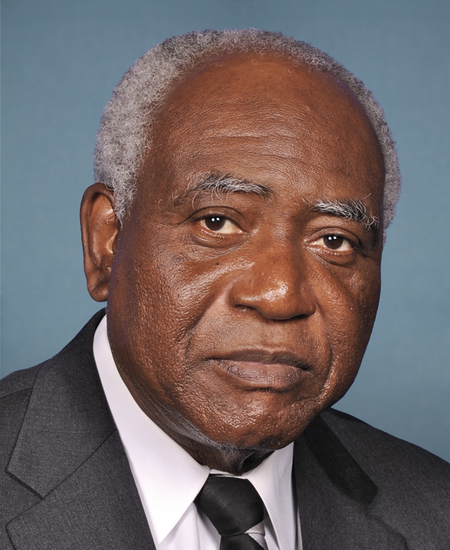
Rep. Danny K. Davis
Sponsored bills
Alice Cogswell and Anne Sullivan Macy Act This bill expands special education and related services for students who are deaf or hard of hearing, students with visual disabilities, and children and youth who are deaf-blind. The individualized education program for each child who is visually and/or hearing impaired must include specified components and must provide the child with instruction that meets the child's unique learning needs. In addition, a state's closure of a special school serving deaf or blind children shall count as a reduction of its financial support for special education and related services. Among other provisions, the bill authorizes support, including grants for training special education personnel, to be used in preparing individuals to become qualified teachers and early intervention specialists for children with hearing disabilities. The bill establishes within the Department of Education the Anne Sullivan Macy Center on Visual Disability and Educational Excellence to better support students with visual disabilities.
Medicare Multi-Cancer Early Detection Screening Coverage Act of 2021 This bill provides for Medicare coverage and payment for multi-cancer early detection screening tests that are approved by the Food and Drug Administration and that are used to screen for cancer across many cancer types.
This bill directs the Speaker of the House and the President pro tempore of the Senate to arrange for the award of three Congressional Gold Medals to the U.S. Capitol Police (USCP) and other law enforcement agencies that protected the U.S. Capitol on January 6, 2021. Following the award of these medals, one medal shall be given to the USCP, one medal shall be given to the Metropolitan Police Department of the District of Columbia, and one medal shall be given to the Smithsonian Institution and displayed with a plaque listing all law enforcement agencies that participated in protecting the Capitol on January 6, 2021.
Equality Act This bill prohibits discrimination based on sex, sexual orientation, and gender identity in areas including public accommodations and facilities, education, federal funding, employment, housing, credit, and the jury system. Specifically, the bill defines and includes sex, sexual orientation, and gender identity among the prohibited categories of discrimination or segregation. The bill expands the definition of public accommodations to include places or establishments that provide (1) exhibitions, recreation, exercise, amusement, gatherings, or displays; (2) goods, services, or programs; and (3) transportation services. The bill allows the Department of Justice to intervene in equal protection actions in federal court on account of sexual orientation or gender identity. The bill prohibits an individual from being denied access to a shared facility, including a restroom, a locker room, and a dressing room, that is in accordance with the individual's gender identity.
This resolution expresses support for the goals and ideals of Social Work Month and World Social Work Day.
This resolution acknowledges racial disparities in the impact of colorectal cancer, particularly in the Black community, and encourages actions to address those disparities.
No Glory for Hate Act This bill prohibits the use of federal funds to commemorate a president twice impeached by the House of Representatives and restricts the benefits afforded such president after leaving office. Specifically, the bill prohibits the use of federal funds for any symbol, monument, structure, building, or public land commemorating a former president twice impeached or who has been convicted of a state or federal crime relating to actions taken in an official capacity. The bill also restricts the benefits given to former presidents who have been twice impeached, including with regard to pension, staff, travel, and burial in Arlington National Cemetery.
Immediate Coverage for Former Foster Youth Act This bill accelerates the application of certain changes that are scheduled to take effect under the Substance Use-Disorder Prevention that Promotes Opioid Recovery and Treatment (SUPPORT) for Patients and Communities Act relating to the coverage of former foster youth under Medicaid. Under current law, a state Medicaid program must cover former foster youth until the age of 26 if the youth were in the state's foster care system at the age of 18 and were enrolled in the state's Medicaid program while in foster care; a state may choose to also cover former foster youth from other states. The SUPPORT for Patients and Communities Act altered these provisions to require a state Medicaid program to cover former foster youth from other states until the age of 26; such changes apply to former foster youth who reach the age of 18 on or after January 1, 2023. The bill instead applies these changes to former foster youth who reach the age of 18 on or after the date of enactment of this bill. States must also establish Medicaid outreach and enrollment programs for former foster youth.
Stop Tax Haven Abuse Act This bill authorizes the Department of the Treasury to impose restrictions on foreign jurisdictions or financial institutions to counter money laundering and efforts to significantly impede U.S. tax enforcement. Among other provisions, the bill expands reporting requirements for certain foreign investments and accounts held by U.S. persons, establishes a rebuttable presumption against the validity of transactions by institutions that do not comply with reporting requirements under the Foreign Account Tax Compliance Act, treats certain foreign corporations managed and controlled primarily in the United States as domestic corporations for tax purposes, treats swap payments sent offshore as taxable U.S. source income, requires corporations to disclose certain financial information on a country-by-country basis, imposes penalties for failing to disclose offshore holdings, modifies the base erosion anti-abuse tax to lower the gross receipts applicability threshold from $500 million to $100 million, makes investment advisers and persons engaged in forming new business entities subject to new anti-money laundering requirements, requires reporting of U. S. beneficial owners of foreign-owned financial accounts, and imposes additional requirements for third party summonses used to obtain information in tax investigations that do not identify the person with respect to whose liability the summons is issued (i.e., John Doe summons).