

For the 99.5 Percent Act This bill imposes increased tax rates on decedent estates, gifts, and generation-skipping transfers. Estates with a value of over $1 billion are taxed at a 65% tax rate. The basic exclusion amount is reduced to $3.5 million. The bill increases (1) to $3 million the reduction in valuations of farmland for estate tax purposes and adjusts such increased amount for inflation, and (2) to $2 million the maximum estate tax exclusion for contributions of conservation easements. It also increases to 60% the applicable percentage for such exclusion. The bill requires (1) consistent basis reporting for property acquired by gift and transfers in trust, and (2) executors of estates and donors of gifts required to file a gift tax return to disclose to the Department of the Treasury, and to recipients of any interest in an estate or a gift, information identifying the value of each interest received. The bill sets forth estate valuation rules for certain transfers of nonbusiness assets and limits estate tax discounts for certain individuals with minority interests in a business acquired from a decedent. The bill expands rules for valuing assets in grantor retained annuity trusts to require that (1) the right to receive fixed amounts from an annuity last for a term of not less than 10 years and not more than the life expectancy of the annuitant plus 10 years, and that such fixed amounts not decrease during the first 10 years of the annuity term, and (2) the remainder interest have a value when transferred that is not less than the the greater of 25% of the fair market value of the trust property or $500,000. The bill also sets forth rules for the application of transfer taxes to a grantor trust (a trust in which the grantor retains control over the trust assets and has the right to receive income from the trust). The bill eliminates the generation-skipping transfer tax exemption for any trust whose termination date is not greater than 50 years after its creation. The bill modifies the tax exclusion for annual gifts to eliminate the present interest requirement for such exclusion and to impose a new, aggregate per donor limit equal to twice the annual exclusion amount in effect for the taxable year.
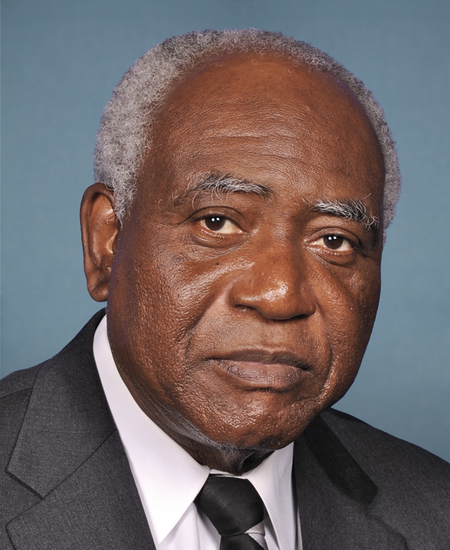
Rep. Danny K. Davis
Sponsored bills
Lead Abatement for Families Act of 2021 This bill requires the Department of Housing and Urban Development (HUD) to identify federally assisted housing projects that use lead-based water pipes and allows HUD to award grants for the replacement of these pipes to public housing agencies and other owners.
Martha Wright Prison Phone Justice Act This bill establishes requirements related to certain charges, practices, classifications, or regulations in connection with confinement facility (i.e., jail or prison) communications services. Specifically, the bill requires the Federal Communications Commission (FCC) to establish maximum rates and charges that a provider of prison communications services may charge for such services. The bill provides interim rate caps until the FCC establishes such rates and charges. The bill requires a provider of prison communications services to assess all charges for communications on a per-minute basis for the actual duration of the communication, and it prohibits a provider from charging a per-communication or per-connection charge. A provider also may not charge an ancillary service charge except in certain circumstances. Further, the bill prohibits a provider from assessing a site commission, which is a payment or donation made to certain entities that operate or oversee a confinement facility.
Commission to Study and Develop Reparation Proposals for African Americans Act This bill establishes the Commission to Study and Develop Reparation Proposals for African Americans. The commission shall examine slavery and discrimination in the colonies and the United States from 1619 to the present and recommend appropriate remedies. The commission shall identify (1) the role of the federal and state governments in supporting the institution of slavery, (2) forms of discrimination in the public and private sectors against freed slaves and their descendants, and (3) lingering negative effects of slavery on living African Americans and society.
Healthy Families Act This bill provides for paid and unpaid sick leave for employees to meet their own medical needs and those of their families. It requires employers with 15 or more employees to provide their employees with at least one hour of earned paid sick leave for every 30 hours worked, up to a maximum of 56 hours of paid sick leave in a year. An employer with fewer than 15 employees may also provide the same amount of paid sick leave, but may opt out of such requirement, in which case such employer must provide its employees at least 56 hours of unpaid leave in a year. An employee may use sick leave for absences (1) resulting from a physical or mental illness, injury or medical condition; (2) resulting from obtaining professional medical diagnosis or care, or preventive medical care; (3) to care for a child, parent, spouse, a domestic partner, or other blood or close relative; and (4) resulting from domestic violence, sexual assault, or stalking. The bill makes it unlawful for any employer to interfere with, restrain, or deny the exercise of an employee's right to accrue sick leave as provided by this bill. An employee may take legal action to enforce the right to sick leave granted by this bill and the Department of Labor must investigate complaints of violations of the requirements of this bill. Labor is authorized to conduct a public awareness campaign to educate and inform the public of the requirements for paid sick leave provided by this bill.
This resolution recognizes the Islamic faith as one of the great religions of the world, acknowledges the onset of Ramadan (the holy month of fasting and spiritual renewal for Muslims), and expresses respect to Muslims in the United States and throughout the world on this occasion.
Supporting Eating Disorders Recovery Through Vital Expansion Act or the SERVE Act This bill provides for inpatient and outpatient treatment of eating disorders under TRICARE for dependents of members of the uniformed services. Dependents are eligible for such care regardless of (1) their age, except with respect to residential service; and (2) whether the eating disorder is their primary or secondary diagnosis. The bill also requires the Department of Defense (DOD) and the Department of Homeland Security (with respect to the Coast Guard) to identify, treat, and rehabilitate members of the armed forces who have an eating disorder. Finally, DOD and the Department of Veterans Affairs must jointly develop, publish, and disseminate clinical practice criteria and guidelines on the identification and treatment of eating disorders.
This resolution expresses support for the goals and ideals of National Youth HIV & AIDS Awareness Day.
Teaching Asian Pacific American History Act This bill requires entities (e.g., institutions of higher education, libraries, and museums), in order to be eligible for certain grants administered by the Department of Education (ED), to include Asian Pacific American history in their teaching of American history. It also requires Asian Pacific American history to be included in tests administered by the National Assessment of Educational Progress (NAEP). Specifically, the bill mandates the inclusion of Asian Pacific American history as a required component of American history for such entities to be eligible for American History and Civics Academies' competitive grants. These grants support the establishment of (1) Presidential Academies for Teachers of American History and Civics, which offer workshops to teachers of American history and civics to strengthen their knowledge and prepare them to teach in these subjects; and (2) Congressional Academies for Students of American History and Civics, which support high school students in developing an understanding of these subjects. (Currently, Asian Pacific American history is not a required component of American history for either academy.) In addition, ED must give priority to grant applicants that align their activities with programs and resources of the Smithsonian Institution's Asian Pacific American Center. The bill also requires the inclusion of Asian Pacific American history in tests administered by the NAEP, which measures student academic achievement in various subjects.
This resolution declares that respect for human rights is foundational to U.S. bilateral and international engagement with Nigeria, and it condemns the violence by Nigerian security forces against peaceful protestors. Further, the resolution supports the demands of the movement for justice, accountability, and meaningful police and security-sector reform in Nigeria, and it calls on the Nigerian government to release everyone who has been wrongfully arrested for participating in or supporting this movement.