

Maddy summaryHR 7690 increases the maximum monthly stipends for students in the TRIO Upward Bound program for fiscal year 2027, tripling previous rates to $180 for some participants and $900 for others. It also establishes a $300 monthly stipend for veterans in programs specifically designed for them during 2027. Starting in 2028, stipend amounts will automatically adjust annually based on the Consumer Price Index to account for inflation. The bill directly affects low-income high school students and veterans participating in TRIO Upward Bound, which provides academic support to prepare them for college.
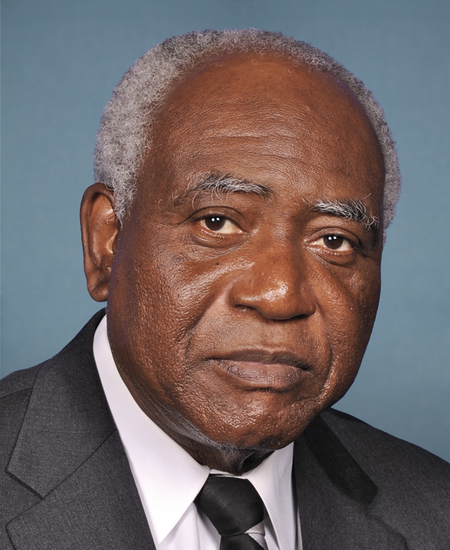
Rep. Danny K. Davis
Sponsored bills
Maddy summaryHRES 1071 is a non-binding resolution recognizing the historical desegregation efforts at Girard College in Philadelphia and the civil rights leaders involved. It highlights how the college, founded in 1848 to admit only poor white male orphans, rejected African-American students in 1954, leading to legal challenges led by figures like Raymond Pace Alexander and Cecil B. Moore. The resolution notes the U.S. Supreme Court’s 1957 ruling that the racial ban was unconstitutional, followed by Girard College’s eventual admission of seven students in 1968 after further court action. The resolution formally acknowledges these events and the leaders’ contributions to expanding civil rights and integration.
Maddy summaryHR 7615, the RELIEF Act, requires the U.S. Customs and Border Protection Commissioner to refund all tariffs collected under emergency economic powers laws (specifically the International Emergency Economic Powers Act) for imports entered on or after January 1, 2025. It mandates these refunds be processed automatically within 90 days of the bill's enactment, without importers needing to file applications or protests. The refund applies to all importers of record for goods subject to these tariffs, covering entries including withdrawals from warehouses for consumption. This directly affects businesses importing goods subject to those specific tariffs by returning funds collected under the emergency authority.
Maddy summaryThe Head Start for America's Children Act amends the Head Start Act to enhance early childhood education services for low-income children, with specific provisions to improve culturally responsive programming for Native American and Native Hawaiian communities. It increases funding for Head Start programs, including $91.575 million for transportation, $37.5 million for workforce development, and $863 million for extended operations to provide full calendar year services. The bill updates definitions throughout the law to use more inclusive language, replacing "limited English proficient" with "children who are developing English proficiency," and establishes new requirements for staff compensation and benefits to improve recruitment and retention. Native American Head Start programs and migrant/seasonal programs are exempt from certain requirements, such as the full calendar year service requirement.
Maddy summaryThis bill prohibits Immigration and Customs Enforcement (ICE) officers from conducting most immigration enforcement operations during the four weeks before federal elections. Exceptions only allow enforcement for specific criminal investigations involving a particular individual or to prevent imminent death or serious injury. It directly affects ICE operations by requiring stronger legal justification for actions near election periods. The law amends existing federal code to explicitly include immigration officers in election interference prohibitions.
Maddy summaryThis bill grants permanent resident status to Roberto Carlos Lopez by bypassing standard immigration rules. It waives grounds for removal or denial that might apply to him, requires his application within 2 years of enactment, and reduces immigrant visa numbers for his country of birth by one. The bill also explicitly denies preferential immigration treatment to his parents, siblings, and brothers under existing law.
Maddy summaryThis bill authorizes a Congressional Gold Medal to honor the Freedom House Ambulance Service, which pioneered the first paramedic-based emergency medical system in the U.S. in the 1960s. It recognizes the service's role in establishing professional pre-hospital care standards, training marginalized residents (including the first women paramedics), and influencing national EMS protocols despite being defunded in 1975. The medal will be presented to the National Museum of African American History and Culture for public display, as specified in the bill. The legislation is purely commemorative, with no new policy or funding changes, focusing on preserving the service's historical significance in medical innovation and civil rights.
Maddy summaryHR 7599 creates a federal framework for extreme risk protection orders (ERPOs), allowing family members or law enforcement to petition courts to temporarily prohibit individuals from possessing firearms when they pose a risk of harm to themselves or others. The bill establishes a process for issuing ex parte orders (up to 14 days) followed by a hearing within 72 hours to determine if a longer-term order (up to 180 days) should be issued, requiring respondents to surrender firearms to U.S. Marshals or designated law enforcement. Courts must consider specific factors like recent threats, violence, substance abuse, or cruelty to animals before issuing orders, with no fees for petitioners. The law requires law enforcement training to address bias, includes annual reporting requirements, and ensures firearms are returned once the order expires and the individual is eligible to own firearms under federal law.
Maddy summaryHRES 1066 is a non-binding resolution expressing the House of Representatives' condolences to the families of five victims killed in a 2019 mass shooting at a warehouse in Aurora, Illinois. It honors the memory of Russell Beyer, Vicente Juarez, Clayton Parks, Josh Pinkard, and Trevor Wehner, while commending the Aurora Police Department officers and emergency responders who were wounded during the incident. The resolution does not create new laws but serves as a symbolic gesture of solidarity with the Aurora community and victims of gun violence nationwide.
Maddy summaryThis bill requires the Department of Defense to obtain a clean audit opinion for its financial statements or face automatic spending reductions. If the Pentagon fails to achieve this by fiscal year 2026, non-exempt programs would lose 0.5% of funding in the first year of failure and 1% annually thereafter, with cuts applied across all programs within the affected department. Military personnel, reserve, National Guard, and Defense Health Program accounts are exempt from these reductions. Any funds saved through these cuts would be deposited into the General Fund for deficit reduction, not redirected to military operations.