Enhance Access To SNAP Act of 2021 or the EATS Act of 20 21 This bill expands eligibility for the Supplemental Nutrition Assistance Program to students attending institutions of higher education.
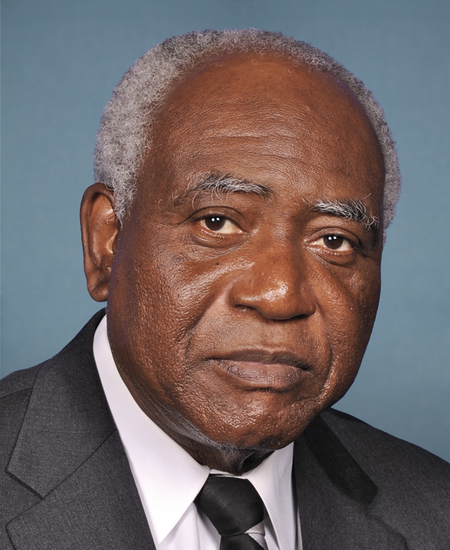
Rep. Danny K. Davis
Sponsored bills
Improving Access to Nutrition Act of 20 21 This bill repeals certain work requirements for the Supplemental Nutrition Assistance Program (SNAP, formerly known as the food stamp program). The requirements apply to able-bodied adults who are ages 18-49 and have no dependent children. Individuals who do not meet certain work requirements are generally prohibited from receiving more than 3 months of SNAP benefits over a 36-month period. Under current law, some of the work requirements under SNAP are temporarily suspended due to COVID-19 (i.e., coronavirus disease 2019).
Pursuing Equity in Mental Health Act This bill establishes and expands programs to address racial and ethnic disparities in mental health. Specifically, the Department of Health and Human Services (HHS) must award grants to establish interprofessional behavioral health care teams in areas with a high proportion of racial and ethnic minority groups. In addition, HHS may award grants to incorporate best practices and competencies to address mental health disparities in curricula for training social workers, psychologists, and other behavioral health professionals. HHS must also promote behavioral and mental health and reduce stigma associated with mental health conditions and substance use disorder through outreach to racial and ethnic minority groups. HHS must consult with appropriate advocacy groups and behavioral health organizations to develop a strategy for this outreach. The bill also (1) reauthorizes the minority fellowship program to support the education of mental health professionals who provide services to racial and ethnic minorities, and (2) requires studies on mental health disparities and the effects of social media use on adolescents.
REO Act of 2021 This bill establishes the Reentry Employment Opportunities Program to make grants for the purpose of providing job training opportunities to formerly incarcerated adults, youths, and young adults who have dropped out of school. Grants are awarded to entities such as nonprofit organizations, organizations serving women or a minority population, and state and local governments to carry out projects related to apprenticeship programs, occupational skills education, on-the-job training, work experience, job referrals, basic skills remediation, educational services, and work readiness activities for such individuals.
Tax Parity for U.S. Mutual Funds Act of 2021 This bill establishes international regulated investment companies (IRICs) and specifies rules for the taxation of such companies. An IRIC is a regulated investment company (i.e., a mutual fund) that has all of its outstanding stock held by foreign shareholders, including nonresident alien individuals (and their foreign estates) and qualified foreign pension funds, and meets other specified requirements.
Safer Neighborhoods Gun Buyback Act of 2021 This bill authorizes the Department of Justice's Bureau of Justice Assistance (BJA) to make grants to states, local governments, or gun dealers to conduct gun buyback programs. The BJA may distribute smart prepaid cards for use by a state, local government, or gun dealer to compensate individuals who dispose of firearms. Additionally, the bill establishes a new criminal offense for using or accepting a smart prepaid card in the acquisition or transfer of a firearm or ammunition. A violator is subject to a fine, up to two years in prison, or both.
Medical Nutrition Therapy Act of 2021 This bill expands Medicare coverage of medical nutrition therapy services. Currently, Medicare covers such services for individuals with diabetes or kidney disease under certain circumstances; such services must also be provided by a registered dietitian or nutrition professional pursuant to a physician referral. The bill extends coverage to individuals with other diseases and conditions, including obesity, eating disorders, cancer, and HIV/AIDS; such services may also be referred by a physician assistant, nurse practitioner, clinical nurse specialist, or (for eating disorders) a clinical psychologist.
Interstate Rail Compacts Advancement Act of 2021 This bill establishes a grant program and makes other changes to support interstate rail compacts with improving and enhancing intercity passenger rail transportation systems. The Department of Transportation (DOT) must award up to 10 matching grants each fiscal year to interstate rail compacts or commissions for administrative costs related to the compact. In awarding the grants, DOT must consider (1) the amount of funding from and participation of railroads and other stakeholders, (2) whether the compact seeks to restore routes formerly operated by Amtrak, and (3) other factors. Additionally, DOT must give preference to compacts that are initiating, restoring, or enhancing intercity rail passenger transportation. Further, DOT must publish on its website a list of interstate rail compacts, as well as annuallly updated information for the public about how states may establish compacts. The bill also repeals a prohibition on the use of funds made available for Amtrak to carry out interstate rail compacts.
Equity in Neuroscience and Alzheimer's Clinical Trials Act of 2021 or the ENACT Act of 2021 This bill sets out activities and requirements to increase the participation of underrepresented populations in research and clinical trials for Alzheimer's disease and related dementias. Specifically, the National Institute on Aging (NIA) must establish and provide technical assistance to Alzheimer's research centers located in areas with higher concentrations of minority groups. These centers must establish diagnostic and treatment clinics designed to serve minority, rural, and other underserved populations; operate clinical trials; and carry out public outreach to encourage members of minority populations to participate in clinical trials and research. Additionally, the NIA must disseminate information to members of minority populations about participating in clinical trials and take other actions to enhance diversity with respect to the Alzheimer's research that it conducts or supports. The bill also directs the NIA to increase diversity among Alzheimer's researchers by encouraging the participation of individuals who are from groups that are underrepresented in clinical, behavioral, and social sciences.

This resolution expresses support for the designation of National Foster Care Month.