Equal Pay for Equal Work Act This bill establishes the National Equal Pay Enforcement Task Force to improve enforcement of equal pay laws.
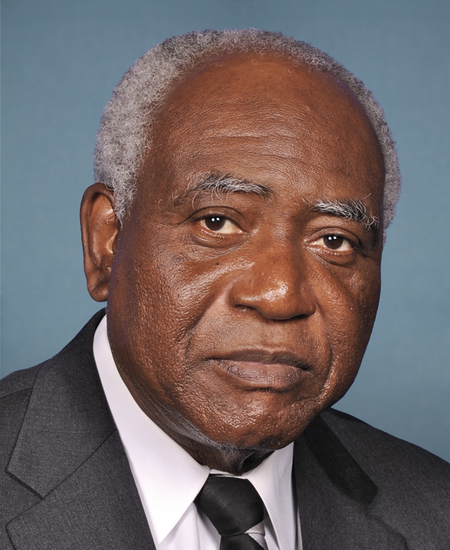
Rep. Danny K. Davis
Sponsored bills
Medical Device Nonvisual Accessibility Act of 2021 This bill requires certain medical devices with a digital interface to meet nonvisual accessibility standards established by the Food and Drug Administration (FDA). Specifically, the FDA must establish regulations to require a Class II or Class III medical device with a digital interface to provide a blind or low-vision user access to the same services and information, and generally the same ease of use, as provided to a user who is not low-vision or blind. (The FDA classifies medical devices in three classes. Class I devices are low-risk, Class II devices are moderate-risk, and Class III devices are high-risk.) A Class II or Class III medical device that does not meet the nonvisual accessibility standards established under this bill may not be sold.
Patient Access to ESRD New Innovative Devices Act This bill requires the Centers for Medicare & Medicaid Services (CMS) to provide a certain payment adjustment under the Medicare end-stage renal disease (ESRD) prospective payment system. Specifically, the CMS must provide for a three-year temporary add-on payment adjustment for new medical devices used to diagnose, treat, or manage ESRD. (CMS regulations currently provide a two-year temporary add-on payment adjustment.)
Domestic Workers Bill of Rights Act This bill provides rights and protections for domestic workers (e.g., housekeepers, nannies, caretakers, personal assistants, and chauffeurs), including pay and leave rights, and health and safety protections. Specifically, the bill repeals the exemption of domestic live-in employees from certain minimum wage and maximum hour requirements. Employers must provide written notice of termination and provide at least 30 days of lodging and two weeks of severance pay to terminated live-in employees. Live-in employees also must be provided with reasonable access to telephone and internet service during their employment. The bill requires employers to provide domestic workers with a written agreement covering wages, sick leave, benefits, and other matters. Further, domestic workers may request and be granted changes to work schedules due to personal events. The bill also provides domestic workers with certain privacy rights, extends to domestic workers protections against discrimination in employment, and increases the federal medical assistance percentage (FMAP) for certain Medicaid-funded medical services provided by domestic workers. The Department of Labor must (1) award grants for a domestic worker national hotline for reporting emergencies, training on hazards facing domestic workers, and workforce investment activities for domestic workers; and (2) establish a Domestic Worker Wage and Standards Board to investigate standards in the domestic workers industry. Labor must publish online a document that describes the rights and protections for domestic workers under this bill.

Protecting Renters from Evictions Act of 2021 This bill extends through December 31, 2021, the order issued by the Centers for Disease Control and Prevention titled Temporary Halt in Residential Evictions To Prevent the Further Spread of COVID–19 and published on September 4, 2020.
504 Program Level Flexibility Act This bill authorizes the Small Business Administration (SBA), upon a determination that the amount of its commitments to guarantee 504 loans could exceed the authorized limit, to guarantee up to 115% of that limit. Such loans, made through SBA community partners and certified by the SBA, provide long-term, fixed rate financing for major fixed assets that promote business growth and job creation.
Stop Copay Overpay Act This bill prohibits the Department of Defense (DOD) from charging a covered individual (i.e., individuals enrolled under the TRICARE program) a co-payment exceeding a certain rate for an outpatient visit for mental health or behavioral health under the TRICARE program, regardless of whether the visit is furnished by a specialty care provider. Specifically, the co-payment amount may not exceed the amount of a co-payment that would be charged under the TRICARE program for an outpatient visit for primary care services. During the one-year period after this bill is enacted, DOD may not increase the co-payment amount charged to a covered individual for any service (1) furnished by a specialty care provider under the TRICARE program, and (2) that is not mental or behavioral health care.
Seniors' Chronic Care Management Improvement Act of 2021 This bill eliminates cost-sharing for chronic care management services under Medicare.
Voters on the Move Registration Act of 2021 This bill requires the Consumer Financial Protection Bureau to develop, and specified agencies to distribute, a statement providing individuals with information on how to register to vote and their voting rights. This information must be provided to individuals upon their participation in certain rental assistance programs or application for certain residential mortgages.
Performing Artist Tax Parity Act of 2021 This bill modifies the tax deduction for the expenses of performing artists (including commissions paid to managers or agents) to provide for a phaseout of such deduction for taxpayers whose adjusted gross income exceeds $100,000 ($200,000 for joint return filers). The $100,000 phaseout threshold is adjusted for inflation annually for taxable years beginning after 2021.