

Combating International Islamophobia Act This bill establishes within the Department of State the Office to Monitor and Combat Islamophobia and addresses related issues. The office shall monitor and combat acts of Islamophobia and Islamophobic incitement in foreign countries. The bill establishes the position of Special Envoy for Monitoring and Combating Islamophobia, who shall head the office. The bill also requires certain existing annual reports to Congress about human rights and religious freedom in foreign countries to include information about Islamophobia, such as information about (1) acts of physical violence or harassment of Muslim people, (2) instances of propaganda in government and nongovernment media that attempt to justify or promote hatred or incite violence against Muslim people, and (3) actions taken by a country's government to respond to such acts. The office shall coordinate and assist in preparing these portions of the reports.
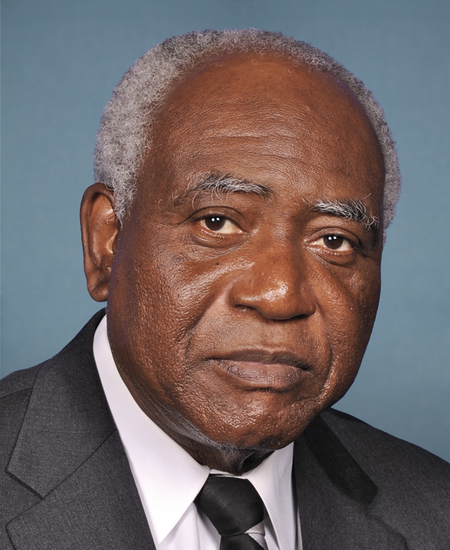
Rep. Danny K. Davis
Sponsored bills
Employee Retention Tax Credit Reinstatement Act This bill provides for a reinstatement of the employee retention tax credit through 2021. The credit was established to compensate employers whose businesses were negatively impacted by the COVID-19 pandemic for wages paid to their employees.
Maddy summaryHRES 835 is a symbolic House resolution recognizing November 2021 as National Runaway Prevention Month. It does not create new laws or allocate funds but formally supports efforts to address youth homelessness by highlighting statistics showing over 4 million youth and young adults experienced homelessness in 2017. The resolution emphasizes raising public awareness about the crisis, particularly affecting vulnerable groups like LGBTQ youth, people of color, and those in foster care, and encourages collaboration among communities and organizations like the National Runaway Safeline. Its purpose is purely declaratory, aiming to promote existing prevention initiatives rather than implementing policy changes.
Maddy summaryHRES 834 is a ceremonial resolution honoring the late Congresswoman Carrie Pittman Meek (1926-2021) for her congressional service and legacy. It commends her dedication to public service, her role as a trailblazer for Black women in politics, and her advocacy for communities in Florida. The resolution specifically recognizes her work securing hurricane relief funding after Hurricane Andrew and her service in the Florida State Senate and U.S. Congress. As a commemorative resolution, it contains no policy changes or funding provisions.
Eliminating Global Market Distortions to Protect American Jobs Act of 2021 This bill addresses unfair trade practices by making various changes to U.S. antidumping and countervailing duty law. Antidumping provides relief to U.S industries and workers that are materially injured or threatened with injury due to imports of like products sold in the U.S. market at less than fair value, while countervailing duty provides such relief from imports of products subsidized by a foreign government or public entity. Specifically, the bill establishes a process for successive antidumping and countervailing duty investigations. Successive investigations may be concurrent (an ongoing investigation of the same product from different countries) or recently completed (not more than two years before the date of the initiation of the successive investigation). Further, the bill establishes a time line for the Department of Commerce to issue determinations in successive investigations. Among other provisions, the bill authorizes Commerce to apply countervailing duty law to subsidies provided by a foreign government or public entity to a company operating in a different country, use another method for calculating the cost of production in specific circumstances, and require importers to provide a certification that the imported merchandise is not subject to an antidumping or countervailing duty order. Additionally, the bill establishes procedures for Commerce to conduct circumvention inquiries, including by specifying the deadlines for preliminary and final determinations. The bill repeals the Softwood Lumber Act of 2008, which addresses the importation of softwood lumber and softwood lumber products.
Strength in Diversity Act of 2021 This bill establishes a program through which the Department of Education may award planning and implementation grants to specified educational agencies (e.g., local educational agencies) to improve diversity and reduce or eliminate racial or socioeconomic isolation in publicly funded early childhood education programs, public elementary schools, or public secondary schools.
This resolution supports the designation of TED Awareness Week. Thyroid eye disease (TED) is a rare, progressive autoimmune condition that may result in pain, facial disfigurement, and vision impairment.
Tax Simplification for Americans Abroad Act This bill directs the Internal Revenue Service to make available a new tax form for certain individual taxpayers living abroad. The form shall allow such individuals to demonstrate nonresidence, and declare foreign income, foreign taxes paid, and U.S. source income from retirement, pension and social security benefits. The bill also expands the types of income allowed as foreign earned income for purposes of the foreign earned income tax exclusion.
Maddy summaryHRES 817 is a symbolic resolution expressing congressional support for National Adoption Month (November) and National Adoption Day (November 20). It recognizes the need for permanent families for children in foster care, acknowledges challenges posed by the pandemic, and encourages the public to consider adoption. The resolution does not create new laws or allocate funding - it solely promotes awareness, celebrates adoption success stories, and urges Americans to support children's safety and well-being. It directly affects public awareness and does not impose obligations on any specific group or entity.
Access to Birth Control Act This bill requires pharmacies to comply with certain rules related to ensuring access to contraceptives. Specifically, pharmacies must provide without delay a customer with any contraceptive or related medication that is in stock. If the contraceptive is not in stock, the pharmacy must immediately inform the customer and either order the contraceptive or refer the customer to a pharmacy that has it in stock. Laws in some states provide pharmacists with the right to refuse to dispense contraceptive-related drugs on religious or conscience grounds. Pharmacies may refuse to provide a contraceptive to a customer (1) if the customer lacks a valid prescription for a prescription contraceptive or is unable to pay for the contraceptive, or (2) based on a pharmacy employee's professional clinical judgment. The bill also establishes a private cause of action and civil monetary penalties for violations of the bill.