

Maddy summaryThis bill, known as the Fair Wages for Home Care Workers Act, would change federal labor rules to require overtime pay and minimum wage protections for certain babysitters. It specifically targets casual babysitting work that is irregular or intermittent, while excluding trained medical professionals like nurses and home health aides from these changes. The law would also allow babysitters to perform up to 20% of their work time on unrelated household tasks without losing their protected status. These amendments would apply to workers covered by the Fair Labor Standards Act of 1938 who provide custodial care for infants or children in private homes.
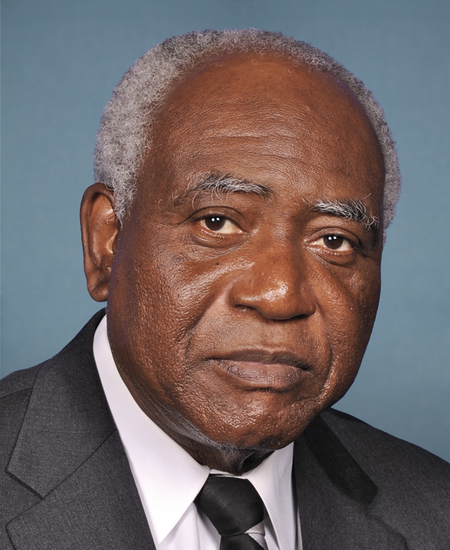
Rep. Danny K. Davis
Sponsored bills
Maddy summaryThis bill directs the Joint Committee of Congress on the Library to commission and place a statue of Clarence Mitchell, Jr. in a permanent public location within the United States Capitol. The legislation authorizes the committee to enter into agreements with an artist or organization to create the statue and permits the Architect of the Capitol to handle related contracts on the committee's behalf. Funding is authorized to cover the costs of obtaining and installing the statue, with no specific time limit for spending the allocated funds. The bill honors Mitchell, Jr., a civil rights leader and former NAACP Washington Bureau director, by recognizing his contributions to civil rights legislation through a physical memorial in the Capitol.
Maddy summaryThis bill creates a tax credit for small employers who set up new dependent care flexible spending plans for their employees. The credit covers startup costs like plan establishment and employee education expenses, but only for the first three years after the plan begins. To qualify, the employer must not have previously offered a similar plan to the same employees, and the plan must include at least one non-highly compensated employee. The maximum credit is $500 in the first year and the next two years, or up to $250 per eligible employee, capped at $5,000 total.
Maddy summaryThis bill would require infant formula manufacturers to conduct standardized testing for specific pathogens and microorganisms in both their facilities and finished products. It mandates that companies report positive test results to the FDA within one business day and retain records of these findings for inspections. The legislation also requires the FDA to notify congressional committees within one business day of receiving positive test results or issuing certain inspection classifications. Additionally, the bill establishes clear inspection standards that apply to all infant formula products regardless of where they are made.
Maddy summaryThis bill, titled the Promoting Fairness for Medicare Providers Act of 2026, changes how Medicare pays for certain surgical procedures performed in doctors' offices when those procedures involve expensive medical supplies. Starting in 2027, Medicare will pay office-based facilities 80% of the amount it would pay for the same procedures performed in ambulatory surgical centers, with additional rules for device-intensive procedures. The bill defines which procedures qualify based on supply costs exceeding $500 and requires participating doctors' offices to agree to accept these payment amounts as full payment. The list of covered procedures will be reviewed annually beginning in 2028, with the Secretary of Health and Human Services able to add or remove procedures based on supply cost thresholds that adjust for inflation.
This concurrent resolution directs the President to terminate the use of U.S. Armed Forces from hostilities against Iran or any part of the Iranian government or military unless a declaration of war or authorization to use military force for such purpose has been enacted. The resolution specifies that it shall not be construed to prevent the United States from defending itself from imminent attack.
Maddy summaryThis resolution (HRES 1108) expresses the U.S. House of Representatives' support for designating March 2026 as "Music in Our Schools Month." It recognizes music's historical role in U.S. education, its cultural importance, and the current inequities in access to music programs - particularly in schools serving urban, rural, low-income, and majority Black, Hispanic, or Native American communities. The resolution does not create new laws or allocate funds; it is a symbolic gesture urging greater support for music education in public schools. It highlights research linking music participation to improved student engagement, cognitive development, and social skills.
Maddy summaryHRES 1109 is a symbolic resolution supporting National Women and Girls HIV/AIDS Awareness Day, observed annually on March 10. It recognizes the disproportionate impact of HIV/AIDS on women and girls in the U.S., particularly women of color who face higher infection rates and barriers to care. The resolution calls for increased investment in prevention, treatment, and education programs to reduce new infections and address health disparities, while emphasizing the need for culturally responsive services and comprehensive sexual health education. It does not create new laws or funding but expresses congressional support for ongoing efforts to end the HIV epidemic among women and girls.
Maddy summaryHRES 1107 is a House resolution urging the President to issue a proclamation flying the U.S. flag at half-staff to honor Rev. Jesse Jackson. The resolution recognizes his civil rights leadership, including founding the Rainbow PUSH Coalition and his presidential campaigns in 1984 and 1988, which advanced racial equality and economic justice. This symbolic gesture directly affects the President (as the one who would issue the proclamation) and the public, who would observe the flag at half-staff.
Maddy summaryThis bill, known as the Guarantee Access to Arts and Music Education Act of 2026, amends the Elementary and Secondary Education Act to expand federal funding for arts and music programs in public schools. It directly affects school districts and educators by allowing Title I funds to support sequential, standards-based instruction in dance, media arts, theater, visual arts, and music. The legislation requires these programs to be taught by certified educators and aligns them with state academic standards to ensure quality instruction. Additionally, the bill allows targeted assistance schools to use federal funds for supplies, professional development, and equipment needed for arts and music education.