

Sexual Harassment Independent Investigations and Prosecution Act This bill provides for the inclusion of sexual harassment as an offense subject to the authority of special trial counsel under the Uniform Code of Military Justice (UCMJ) and sets forth requirements related to independent investigations of sexual harassment under the UCMJ.
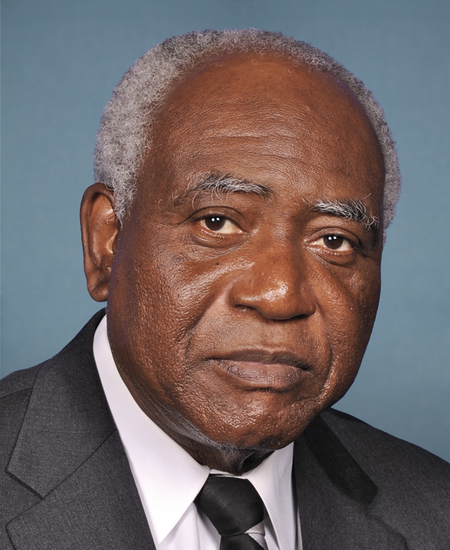
Rep. Danny K. Davis
Sponsored bills
This resolution recognizes that Black women are experiencing high, disproportionate rates of maternal mortality and morbidity in the United States and that Black Maternal Health Week is an opportunity to deepen the national conversation about Black maternal health.
Indian Health Service Health Professions Tax Fairness Act of 2022 This bill excludes from gross income, for income tax purposes, payments under the Indian Health Service Loan Repayment Program and certain amounts received under the Indian Health Professions Scholarships Program.
Congressional Accountability Act Enhancement Act This bill extends the liability of Members of Congress for employment discrimination settlements and awards and expands certain employment protections for congressional employees. Current law requires that a Member who commits an act of harassment in violation of employment-based civil rights protections must reimburse the Treasury for amounts paid as settlements or awards resulting from the act. This bill also requires that Members reimburse the Treasury for amounts paid resulting from any unlawful discrimination and related retaliation. Additionally, the bill grants congressional employees a 10-day period to amend a filing alleging employment discrimination if the hearing officer determines the initial filing failed to state a claim for which relief could be granted. The bill also allows the Office of Employee Advocacy to continue to assist a congressional employee with investigations and proceedings related to a claim of workplace discrimination even after the employee begins federal court proceedings.
New Era of Preventing End-Stage Kidney Disease Act This bill addresses rare kidney diseases through research, training for health professionals, and other means. It also modifies requirements for Medicare drug plan formularies that include drugs for rare diseases or conditions. The Department of Health and Human Services (HHS) must convene a conference focused on diagnosis and treatment of rare kidney diseases; study risk factors, access to care (including to genetic and genomic testing), and other matters related to rare kidney diseases; and establish grants for supporting kidney disease education and referrals in communities of color. HHS may award grants to educate and train health professionals about kidney disease and nephrology. Additionally, health professional schools that receive certain HHS funding for educating underrepresented minority individuals must support postgraduate nephrology training. The National Institutes of Health (NIH) must report on diversity in its kidney disease research. The NIH may also (1) support research on rare kidney diseases that, among other requirements, includes persons of color in study populations; and (2) establish regional centers of excellence for rare kidney diseases. The Centers for Medicare & Medicaid Services must evaluate methods for (1) treating rare kidney diseases, with a focus on delaying dialysis and transplant; and (2) raising awareness about rare kidney diseases, including in communities of color. Furthermore, if a Medicare drug plan formulary includes a drug to treat a rare disease or condition, at least two members of the committee that develops or reviews the formulary must have expertise in the field of medicine related to that drug.
Babies over Billionaires Act of 2022 This bill sets forth a special tax rule that requires the realization (i.e., deemed sold) at the end of the taxable year of the gains and losses of the publicly traded and private securities of taxpayers whose net worth exceeds $100 million. It limits the tax liability of such taxpayers to 35% of the amount by which their net worth exceeds $100 million at the end of the taxable year. The Internal Revenue Service must annually audit taxpayers whose net worth exceeds $100 million in the current taxable year and any of the 3 preceding taxable years and impose a penalty of 20% of understatements of tax (40% if understatements are due to failure to report an asset). The bill establishes the Family Investment Trust Fund to hold tax revenues generated by this bill for programs to support family well-being and the development of children.
Maddy summaryHRES 1045 (2022) is a symbolic resolution supporting National Youth HIV/AIDS Awareness Day (observed April 10). It calls on federal, state, and local entities to recognize the day and encourages efforts to address HIV disparities among youth, including promoting inclusive sex education, removing outdated HIV criminalization laws, and supporting youth-friendly healthcare access. The resolution does not create new laws or allocate funding but affirms existing policies like the Ryan White HIV/AIDS Program and the Affordable Care Act's protections for young people living with HIV. It focuses on raising awareness and reducing stigma rather than mandating specific actions.
Suspending Normal Trade Relations with Russia and Belarus Act This bill suspends normal trade relations with Russia and Belarus. It also permanently authorizes the President to impose visa- and property-blocking sanctions based on violations of human rights. Specifically, the bill authorizes the President to proclaim increases in the rates of duty applicable to products of Russia or Belarus. This authority terminates on January 1, 2024. The President may restore normal trade relations with Russia and Belarus, subject to congressional disapproval. The bill directs the U.S. Trade Representative to (1) condemn the recent aggression in Ukraine, (2) encourage other World Trade Organization (WTO) members to suspend trade concessions to Russia and Belarus, (3) consider steps to suspend Russia's participation in the WTO, and (4) seek to halt the accession process of Belarus.
Ending Importation of Russian Oil Act This bill prohibits the importation of energy products from Russia. Specifically, the bill prohibits the importation of Russian products that are classified under chapter 27 of the Harmonized Tariff Schedule (which includes mineral fuels, mineral oils and products of their distillation, bituminous substances, and mineral waxes). The President may terminate this prohibition, subject to congressional disapproval, if the President certifies that Russia (1) has reached an agreement to withdraw Russian forces and cease military hostilities in Ukraine, (2) poses no immediate military threat of aggression to any North Atlantic Treaty Organization member, and (3) recognizes the right of the Ukrainian people to independently and freely choose their own government.
Maddy summaryHR 7477, the CERTS Tax Exemption Act, ensures that grants provided under the Coronavirus Economic Relief for Transportation Services Act are tax-free for eligible transportation service providers. The bill directly affects companies and organizations providing transportation services that receive these specific federal grants. Key provisions state that grant amounts cannot be counted as taxable income, deductions related to grant-funded costs cannot be denied, and tax attributes (like basis increases) must be treated as tax-free for partnerships and S corporations. This change simplifies tax treatment for recipients by preventing unintended tax liabilities on relief funds.