

Maddy summaryHRES 1522 is a symbolic resolution condemning the November 19, 2022, mass shooting at Club Q, an LGBTQ+ nightclub in Colorado Springs that killed five people and injured 22. It honors the victims, offers condolences to their families, and expresses support for those impacted by the attack. The resolution also highlights the broader context of anti-LGBTQ+ violence and hate, including the Pulse nightclub tragedy, and calls for an end to anti-LGBTQ+ hate and violence. As a ceremonial resolution, it contains no new laws or funding but serves as a formal statement of solidarity with the LGBTQ+ community.
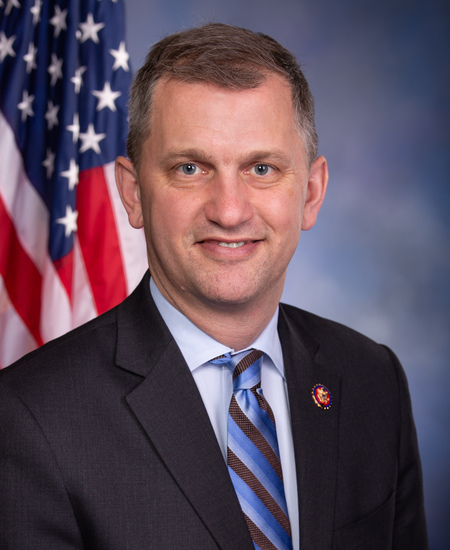
Rep. Sean Casten
Sponsored bills
Boundary Waters Wilderness Protection and Pollution Prevention Act This bill withdraws certain federal lands and waters in Minnesota from mining and related activities. Specifically, the bill withdraws approximately 234,328 acres of federal land and waters in a specified area in the Rainy River Watershed of Superior National Forest from entry, appropriation, and disposal under the public land laws; location, entry, and patent under the mining laws; and operation of the mineral leasing, mineral materials, and geothermal leasing laws. The area is adjacent to the Boundary Waters Canoe Area Wilderness and the Boundary Waters Canoe Area Wilderness Mining Protection Area. Land or interest in land within such area that is acquired by the United States shall be immediately withdrawn in accordance with this bill. The Forest Service is authorized to permit the removal of sand, granite, iron ore, and taconite from national forest system lands within such area if the removal is not detrimental to the water quality, air quality, and health of forest habitat within the Rainy River Watershed.
Bonding Reform and Taxpayer Protection Act of 2021 This bill revises bonding requirements for oil and gas development on public land leased from the federal government. Such bonds are required to ensure oil and gas developers have adequate financial resources for implementing reclamation plans to restore public land after oil and gas development (e.g., drilling operations) ceases. Specifically, the bill increases the bond amounts that oil and gas developers must provide prior to conducting surface-disturbing activities and requires such amounts to adjust at least once every three years for inflation. In addition, the bill sets fees to cover the cost for inspection and enforcement with respect to such leases. The bill also requires the Bureau of Land Management (BLM) and the U.S. Forest Service (USFS) to establish uniform standards for all interim and final reclamation plans. BLM and USFS may not release any bond amounts until the standards have been met by oil and gas developers and the inspection fees have been paid. Finally, the bill gives the U.S. Fish and Wildlife Service the authority to obtain and retain adequate financial assurances (e.g., bonds) from nonfederal entities to repair potential damages to resources of the National Wildlife Refuge System prior to the commencement of activities related to mineral development, such as oil and gas operations.
Ending Taxpayer Welfare for Oil and Gas Companies Act of 2021 This bill addresses royalties related to the development of federal energy resources. Among other requirements, the bill increases the onshore royalty rates for new oil, gas, and coal leases; increases onshore rental rates for oil and gas leasing; modifies the current onshore oil and gas minimum bid from $2 to $10 and requires it to be adjusted every four years for inflation; and increases inspection fees and penalties on oil and gas operators.
Period PROUD (Providing Resources for Our Underserved and Disadvantaged) Act of 2022 This bill provides additional funding through FY2027 for the Social Services Block Grant to support the provision of menstrual products (e.g., menstrual cups and underwear, sanitary napkins, and tampons) to low-income individuals. (This grant is a flexible funding stream used by states and territories to support a wide range of social services.) The bill also exempts the additional funds from sequestration. Sequestration is a process of automatic, across-the-board reductions under which budgetary resources are permanently cancelled to enforce specific budget policy goals.
Respect for Marriage Act This act provides statutory authority for same-sex and interracial marriages. Specifically, the act replaces provisions that define, for purposes of federal law, marriage as between a man and a woman and spouse as a person of the opposite sex with provisions that recognize any marriage between two individuals that is valid under state law. (The Supreme Court held that the current provisions were unconstitutional in United States v. Windsor in 2013.) The act also replaces provisions that do not require states to recognize same-sex marriages from other states with provisions that prohibit the denial of full faith and credit or any right or claim relating to out-of-state marriages on the basis of sex, race, ethnicity, or national origin. (The Supreme Court held that state laws barring same-sex marriages were unconstitutional in Obergefell v. Hodges in 2015; the Court held that state laws barring interracial marriages were unconstitutional in Loving v. Virginia in 1967.) The act allows the Department of Justice to bring a civil action and establishes a private right of action for violations. The act does not (1) affect religious liberties or conscience protections that are available under the Constitution or federal law, (2) require religious organizations to provide goods or services to formally recognize or celebrate a marriage, (3) affect any benefits or rights that do not arise from a marriage, or (4) recognize under federal law any marriage between more than two individuals.
Working for Immigrant Safety and Empowerment Act of 2022 or the WISE Act of 2022 This bill addresses immigration-related issues for victims of domestic violence and other crimes. For example, the bill (1) extends the period of admission into the United States for certain spouses or children who derive their immigration status from an individual who is abusing the spouse or child; and (2) establishes a presumption that an individual with certain pending applications, such as for a visa for a victim of human trafficking or certain other crimes, should be released from immigration detention without conditions.
READ Act Reauthorization Act of 2022 This bill reauthorizes a law that requires the implementation of a strategy to promote quality basic education in partner countries by (1) expanding access to basic education for all children, particularly marginalized children and vulnerable groups; and (2) improving the quality of basic education and learning outcomes.
Climate Adaptation Science Centers Act or the CASC Act This bill provides statutory authority for the Department of the Interior's National and Regional Climate Adaptation Science Centers. The centers must provide scientific expertise to managers of natural resources, cultural resources, and ecosystem services to inform decisions that aid adaptation to a changing climate and extreme weather events. The program shall include a National Climate Adaptation Science Center and Regional Climate Adaptation Science Centers. Among its activities, the National Center shall serve as the national office for the regional centers, develop and facilitate coordination among the regional centers, and conduct research on cross-regional and national science priorities. Regional centers shall develop research, education, training, and advisory service priorities regarding the impacts of climate trends and variability on natural and cultural resource management. Interior shall establish an Advisory Committee on Climate and Natural Resource Sciences to advise the National and Regional Climate Adaptation Science Centers on specified matters, including (1) the contents of a national strategy identifying key climate adaptation science priorities to advance the management of natural and cultural resources in the face of climate change; and (2) the integration of equity, particularly for historically underserved communities, in the operation of the National Center and regional centers.
Federal Mechanical Insulation Act This bill provides that the installation of mechanical insulation property is an energy or water efficiency measure that may be used in federal buildings under the National Energy Conservation Policy Act.