

FEMA Climate Change Preparedness Act This bill requires the Federal Emergency Management Agency (FEMA) to (1) revise its 2018-2022 Strategic Plan to ensure that the plan explicitly mentions climate change and addresses the implications of climate change on homeland security and near- and long-term national disaster risk, and (2) ensure that future strategic plans do likewise. The Department of Homeland Security must establish, as a subcommittee of the National Advisory Council, the Climate Change Subcommittee, which shall advise FEMA on how to best incorporate climate change, including risk assessments and strategies for adaptation and mitigation, into and throughout FEMA's policies, plans, programs, and operations. FEMA must publish as a report, submit to specified congressional committees, and make available to Congress and the public, a comprehensive assessment of climate change risks and preparedness.
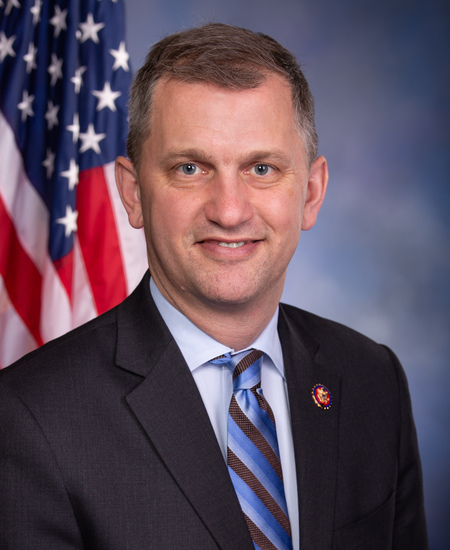
Rep. Sean Casten
Sponsored bills
Green Bus Act of 2021 This bill requires all buses purchased or leased with Federal Transit Administration funds to be zero-emission beginning on October 1, 2029. The Department of Transportation (DOT) must issue an annual best practices report on zero-emission bus programs to help states and transit agencies implement zero-emission bus fleets. DOT must give preference in awarding grants under the low or no emission program to transit agencies who have completed a full fleet transition plan. The federal share of the cost of any zero-emission bus purchased or leased in accordance with this bill shall be 90%.
Safe And Friendly for the Environment Streets Act or the SAFE Streets Act This bill revises the Highway Safety Improvement Program to create special rules for vulnerable road users. The bill defines vulnerable road user as a nonmotorist such as a pedestrian, pedalcylcist, bicyclist, other cyclist, or person on personal conveyance. Specifically, the bill requires states and metropolitan planning organizations (MPOs) with above the median rate of vulnerable road user fatalities and serious injuries to dedicate at least 75% of funds under the program for projects to improve safety for such users, and states and MPOs to create vulnerable road user safety assessments that include locations and corridors where serious injuries and fatalities occur and strategies to reduce safety risks for such users in the corridors.
No Congressional Gun Loophole Act This bill prohibits the Capitol Police Board from allowing Members of Congress or their staff to carry firearms on the grounds of the U.S. Capitol or in its buildings. Members and their staff may store firearms in their cars in Capitol complex garages if their possession complies with the firearms laws of the District of Columbia and the firearms are locked with gun locks while on the complex. Current board regulations allow Members of Congress to keep firearms in their offices; the regulations also allow Members and their staff to transport unloaded and securely wrapped firearms within the Capitol grounds. Firearms are prohibited inside the chambers of the Senate and the House of Representatives, as well as in adjacent lobbies and cloakrooms, the galleries, the Marble Room of the Senate, and the Rayburn Room of the House, unless approved by the Sergeants at Arms for security purposes.
Flood Resiliency and Taxpayer Savings Act of 2021 This bill requires federal agencies to take specified actions to evaluate and mitigate the risk of floods to federally funded projects. Specifically, the bill directs federal agencies to evaluate the potential for flooding throughout the planned lifetime or duration of a federally funded project to reduce the risk of financial and property losses and prevent the disruption of critical services during floods. Further, federal agencies must consider certain data and information (e.g., the most recent flood insurance rate map published by the Federal Emergency Management Agency) when evaluating whether a federally funded project is in a floodplain. If the agency determines the data and information are not adequate for understanding the flood risks to the project, then the agency must use an alternative design standard outlined by the bill. Finally, the bill directs the Federal Interagency Floodplain Management Task Force to issue guidelines for federal agencies related to flood risk management.
Child and Animal Abuse Detection and Reporting Act This bill requires the Children’s Bureau of the Administration for Children and Families to disseminate information through the National Clearinghouse on Child Abuse and Neglect Information about the incidence of cases of child abuse that involve abuse to animals.
Keep Our Promise to America's Children and Teachers Act or the Keep Our PACT Act This bill provides funding through FY2031 for grant programs operated by local educational agencies to provide supplementary educational and related services to low-achieving students and other students who attend elementary and secondary schools with relatively high concentrations of students from low-income families. Additionally, the bill permanently reauthorizes the grant program to assist states and outlying areas in providing special education and related services to children with disabilities.
This resolution expresses support for a National Day of Mourning for the lives lost as a result of COVID-19 (i.e., coronavirus disease 2019).
CARES Windfall for the Wealthiest Repeal Act This bill restores and makes permanent the limitation on excess businesses losses of noncorporate taxpayers. It also allows taxpayers a carryback of their net operating losses arising in 2019 and 2020.
USPS Fairness Act This bill repeals the requirement that the U.S. Postal Service annually prepay future retirement health benefits.