

Khalid Jabara and Heather Heyer National Opposition to Hate, Assault, and Threats to Equality Act of 2021 or the Jabara-Heyer NO HATE Act of 2021 This bill creates grants for state and local governments to combat hate crimes. It also authorizes additional penalties for hate crime offenses. Specifically, it establishes grants for states to create state-run hate crimes reporting hotlines. It also authorizes grants for states and local governments to implement the National Incident-Based Reporting System and to conduct law enforcement activities or crime reduction programs to prevent, address, or respond to hate crimes. Finally, in the case of an individual convicted of a hate crime offense and placed on supervised release, the bill allows a court to order that the individual participate in educational classes or community service as a condition of supervised release.
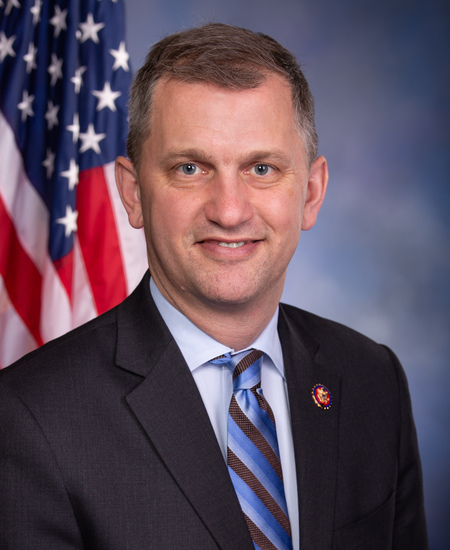
Rep. Sean Casten
Sponsored bills
Prevent Gun Trafficking Act This bill establishes new federal criminal offenses for gun trafficking and related conduct. First, the bill establishes a stand-alone federal criminal offense for gun trafficking. A violation is punishable by a fine, a prison term of up to 10 years, or both. The bill also authorizes the seizure and forfeiture of the firearms and ammunition involved in the offense, the property involved in the offense, and the proceeds (or property traceable to the proceeds) derived from the offense. Second, the bill makes it unlawful to sell or dispose of a firearm or ammunition to any person knowing or having reason to believe that the person intends to sell or dispose of the firearm in violation of a federal law, or to sell or dispose of the firearm to a person in another state in violation of that state's law. A violation is subject to existing penalties under current law—a fine, a prison term of up to 10 years, or both. Current law already authorizes the seizure and forfeiture of firearms and ammunition involved in the offense. This bill also authorizes the seizure and forfeiture of the property involved in the offense and the proceeds (or property traceable to the proceeds) derived from the offense.
Gun Records Restoration and Preservation Act This bill amends several appropriations laws to remove limitations on the authority of the Bureau of Alcohol, Tobacco, Firearms and Explosives to conduct activities related to the administration of federal firearms laws. Specifically, the bill removes provisions that limit the use of firearms tracing data, limit the disclosure of data under the Freedom of Information Act, prohibit imposing a requirement that gun dealers conduct a physical inventory, prohibit consolidating or centralizing records maintained by federal firearm licensees (e.g., gun dealers), and require national instant criminal background check records to be destroyed within 24 hours.
Guaranteed Refugee Admission Ceiling Enhancement Act or the GRACE Act This bill establishes that the maximum number of refugees admitted each fiscal year shall be no less than 125,000 and that the maximum number shall be treated as the numerical goal for refugee admissions for the applicable fiscal year. The President may set a higher number if it is justified by humanitarian concerns or is otherwise in the national interest. Currently, the number admitted each fiscal year may not exceed 50,000 unless the President determines that a higher number is justified by humanitarian concerns or is otherwise in the national interest. The bill directs the President to take into consideration information from the United Nations High Commissioner for Refugees when establishing the maximum admission number and making certain other related decisions. The President shall report to Congress quarterly on (1) the number of refugees admitted during the preceding quarter, (2) the number of aliens who were security-cleared during the preceding quarter, (3) a plan to reach the numerical goal for admitted refugees for that fiscal year, and (4) other related information.
Healthcare Workforce Resilience Act This bill makes previously unused immigrant visas available to nurses and physicians who petition for such a visa before the date that is 90 days after the end of the declared national emergency relating to the COVID-19 (i.e., coronavirus disease 2019) outbreak. The number of visas available shall be the total number of unused employment-based immigrant visas from FY1992-FY2020, up to 40,000. Of such visas, 25,000 shall be reserved for nurses and 15,000 for physicians. Certain family members may accompany the principal beneficiary of a visa provided under this bill, and visas for such family members shall (1) be made available from the unused visas from FY1992-FY2020, and (2) not be counted against the 40,000 cap. Visas provided under this bill shall be exempt from per-country limitations.
Dignity for Detained Immigrants Act of 2021 This bill directs the Department of Homeland Security (DHS) to establish standards for facilities holding aliens in its custody, phases out using non-DHS facilities for such purposes, and contains other related provisions. The standards shall comply with the American Bar Association's Civil Immigration Detention Standards. The DHS Office of Inspector General (OIG) shall conduct periodic unannounced inspections of each facility and shall take various actions against noncompliant facilities, including imposing fines, cancelling contracts, and closing facilities. DHS shall report to Congress any death of an alien in its custody within 24 hours and conduct an investigation within 30 days that identifies policy changes that could reduce the likelihood of such a death. DHS is prohibited from entering into contracts for third parties to operate detention facilities or alternatives to detention programs and shall terminate existing contracts within three years of the bill's enactment. The bill establishes that OIG facility inspection reports and contracts for an outside entity to operate a detention facility are records available to the public under the Freedom of Information Act. DHS shall maintain certain information relating to detained aliens, including the alien's location and whether the alien was separated from family. The bill provides for various requirements and procedures related to detaining aliens, including (1) prohibiting DHS from detaining children, (2) imposing a presumption that an alien should be released, and (3) establishing that aliens in custody shall be subject to the least restrictive conditions. The bill also abolishes mandatory detention for asylum seekers.
Equal Access to Abortion Coverage in Health Insurance Act of 2021 or the EACH Act of 2021 This bill requires federal health care programs to provide coverage for abortion services and requires federal facilities to provide access to those services. The bill also permits qualified health plans to use funds attributable to premium tax credits and reduced cost sharing assistance to pay for abortion services.
Closing the Law Enforcement Consent Loophole Act of 2021 This bill establishes a framework to prohibit law enforcement officers at the federal, state, and local levels from engaging in sexual acts with individuals who are in custody. At the federal level, the bill makes it unlawful for a federal law enforcement officer who is acting under color of law to engage in a sexual act with an individual who is under arrest, in detention, or in custody. Consent is not a defense to prosecution for unlawful conduct. A violator is subject to criminal penalties—a fine, a prison term of up to 15 years, or both. At the state and local level, the bill conditions eligibility for funds under the Community Oriented Policing Services program on the enactment of a similar law.
PrEP Assistance Program Act This bill establishes a grant program to provide pre-exposure prophylaxis (PrEP) and related services to individuals at no cost. PrEP is medication given to individuals at risk of HIV to reduce their likelihood of contracting the virus. The Department of Health and Human Services must award the grants to state, tribal, and local governments; certain health clinics; and community-based organizations.
Outdoors for All Act This bill directs the Department of the Interior to establish an outdoor recreation legacy partnership grant program under which Interior may award grants to states, certain political subdivisions of a state, special purpose districts, Indian tribes, or Alaska Native or Native Hawaiian communities or organizations. Funds must be used for projects to (1) acquire land and water for parks and other outdoor recreation purposes in qualifying areas, and (2) develop new or renovate existing outdoor recreation facilities that provide outdoor recreation opportunities to the public in qualifying areas. A qualifying area is an area that has a population of 30,000 or more in the most recent census, or that is administered by an Indian tribe or an Alaska Native or Native Hawaiian community organization. Interior shall give priority to projects that create or significantly enhance access to park and recreational opportunities in an urban neighborhood or community, engage and empower underserved communities and youth, provide opportunities for employment or job training for youth or underserved communities, establish or expand public-private partnerships, and take advantage of coordination among various levels of government.