

Maddy summaryThis resolution recognizes 28 Illinois schools (and all schools nationwide selected for 2025) as National Blue Ribbon Schools before the program's discontinuation. It celebrates the program's 43-year history since 1982, which honored over 9,000 schools for academic excellence and closing achievement gaps. The measure formally honors these schools' achievements and the program's legacy, without proposing new policy changes.
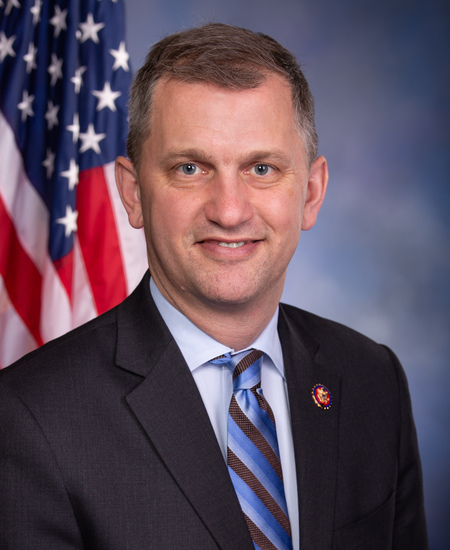
Rep. Sean Casten
Sponsored bills
Maddy summaryThe NIH Clinical Trial Integrity Act requires sponsors of clinical trials approved by the National Institutes of Health (NIH) to set and meet specific goals for including participants from diverse racial, ethnic, age, and sex groups. This includes submitting detailed plans for recruitment and retention - such as using telemedicine for follow-ups or flexible scheduling - and reporting annual demographic data without personally identifiable information. Trials failing to meet these goals must develop a community-informed strategic plan to improve participation, which the NIH will publish. The bill also mandates a national awareness campaign to promote diverse trial participation and a study on reducing cost barriers for participants.
Maddy summaryThe Antisemitism Response and Prevention Act of 2025 aims to combat rising antisemitism through evidence-based policies rather than political weaponization. It requires universities to designate Title VI coordinators to handle civil rights complaints, establishes a National Coordinator to Counter Antisemitism within the Department of Justice, and creates a Hate Crime Reporting Center at the FBI to improve data collection on hate crimes. The bill prohibits using antisemitism accusations to restrict diversity programs, political advocacy, or immigration policies, and ensures nonprofit security grants for Jewish community centers cannot be tied to unrelated political conditions. The legislation authorizes $280 million annually for the Department of Education's Office for Civil Rights and $50 million for the Hate Crime Reporting Center from 2027-2032.
Maddy summaryThe Public Health Air Quality Act of 2025 requires the Environmental Protection Agency to establish a national network for monitoring hazardous air pollutants near communities, focusing on facilities emitting specific chemicals linked to health risks like cancer and respiratory issues. The bill mandates fenceline monitoring at 100 high-priority facilities that emit chemicals such as benzene, formaldehyde, ethylene oxide, and other hazardous air pollutants, with public reporting of data within 7 days of collection. It also requires deployment of 1,000 low-cost air quality monitoring systems in communities disproportionately impacted by pollution, with data made accessible in multiple languages and formats. The Act authorizes $146 million for implementation during fiscal years 2026-2027 to support these monitoring requirements and public transparency efforts.
Maddy summaryThe Calumet National Heritage Area Act designates a specific region in Indiana and Illinois (including parts of three Indiana counties and portions of two Illinois counties) as a National Heritage Area to preserve its cultural, historical, and natural resources. This designation directly affects local communities, organizations like the Calumet Heritage Partnership (which will coordinate efforts), and federal agencies managing the program. The bill requires the local entity to create a management plan within three years and authorizes federal assistance for up to 15 years to support conservation, education, and tourism initiatives. It focuses on protecting the area’s industrial heritage, ecological sites like Indiana Dunes National Park, and immigrant cultural history without creating new federal funding or regulatory requirements.
Maddy summaryThe Protect America's Workforce Act cancels an executive order issued on March 27, 2025, that excluded certain groups from federal labor-management relations programs, making it legally unenforceable. It also ensures that all collective bargaining agreements between federal agencies and labor unions, which were active as of March 26, 2025, remain fully effective until their agreed terms expire. This directly affects federal agencies, labor unions, and the employees covered by these agreements. The bill prevents federal funds from being used to implement the canceled executive order while preserving existing labor agreements.
Maddy summaryThe Zero Food Waste Act sets a goal to reduce food waste by 50% by 2035 compared to 2015 levels. It authorizes the Environmental Protection Agency (EPA) to award competitive grants to states, local governments, tribes, and nonprofits for projects that prevent, rescue, upcycle, or recycle food waste - such as developing waste-reduction plans, collecting data on waste generation, and implementing pricing policies to discourage landfill disposal. The bill prioritizes funding for communities of color, low-income areas, and Tribal communities disproportionately affected by environmental harm. It requires grantees to report on progress and allocates $650 million annually from 2026 to 2035 to support these efforts, with the EPA publishing yearly effectiveness reports.
Miracle on Ice Congressional Gold Medal Act This act provides for the award of Congressional Gold Medals to the members of the 1980 U.S. Olympic men's ice hockey team in recognition of the team's achievement at the 1980 Winter Olympic Games.
Maddy summaryThe Keeping All Students Safe Act prohibits the use of unlawful seclusion and restraint in schools receiving federal funding, including physical restraint that restricts breathing or blood flow, chemical restraint not prescribed for medical treatment, and mechanical restraint. The bill requires schools to use less restrictive interventions first, mandates that staff using physical restraint be trained and certified through State-approved programs, and requires immediate parent notification after any restraint incident. States must develop plans to monitor compliance, collect and report data on restraint incidents (disaggregated by race, disability status, and school type), and implement positive behavioral interventions. The bill provides $40 million annually for five years to support states in implementing these requirements and improving school climate through evidence-based approaches.
Maddy summaryThis concurrent resolution (HCONRES 65) is a symbolic congressional commendment of state and local governments that have affirmed reproductive rights as human rights. It recognizes efforts by jurisdictions like Carrboro, North Carolina; Austin, Texas; and Fulton County, Georgia, which passed resolutions or proclamations declaring abortion access a human right and condemning criminalization of pregnancy outcomes. The resolution urges states to repeal restrictive abortion laws and protect access to reproductive care, but it does not create new legal requirements or fund programs. As a procedural resolution, it has no binding effect on federal or state law.