

Healthy Families Act This bill provides for paid and unpaid sick leave for employees to meet their own medical needs and those of their families. It requires employers with 15 or more employees to provide their employees with at least one hour of earned paid sick leave for every 30 hours worked, up to a maximum of 56 hours of paid sick leave in a year. An employer with fewer than 15 employees may also provide the same amount of paid sick leave, but may opt out of such requirement, in which case such employer must provide its employees at least 56 hours of unpaid leave in a year. An employee may use sick leave for absences (1) resulting from a physical or mental illness, injury or medical condition; (2) resulting from obtaining professional medical diagnosis or care, or preventive medical care; (3) to care for a child, parent, spouse, a domestic partner, or other blood or close relative; and (4) resulting from domestic violence, sexual assault, or stalking. The bill makes it unlawful for any employer to interfere with, restrain, or deny the exercise of an employee's right to accrue sick leave as provided by this bill. An employee may take legal action to enforce the right to sick leave granted by this bill and the Department of Labor must investigate complaints of violations of the requirements of this bill. Labor is authorized to conduct a public awareness campaign to educate and inform the public of the requirements for paid sick leave provided by this bill.
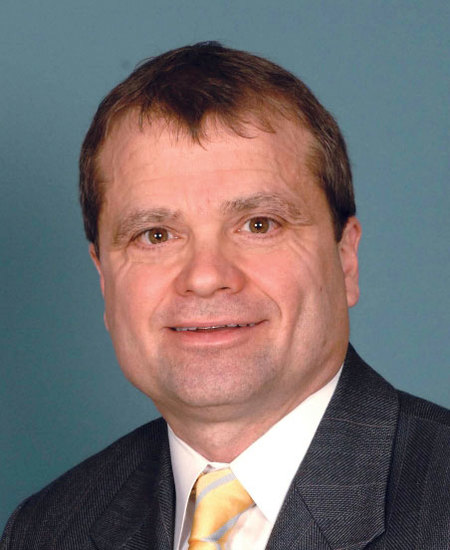
Rep. Mike Quigley
Sponsored bills
America's Clean Future Fund Act This bill establishes requirements and incentives to reduce greenhouse gas emissions and assist industries, communities, and workers transition to a low-carbon economy, including by establishing (1) the Climate Change Finance Corporation (C2FC); (2) the America's Clean Future Fund; and (3) a carbon fee on the use, sale, or transfer of certain fuels by covered entities. The bill provides appropriations to the C2FC, an independent agency, which must finance clean energy and climate change resiliency activities in order to meet the goal of eliminating greenhouse gas emissions by 2050. The bill also provides appropriations for the America's Clean Future Fund. Amounts in the fund may be used for the C2FC, stimulus payments (i.e., tax rebates) to individuals whose gross incomes do not exceed specified thresholds, decarbonization transition payments to the agricultural sector, and grants to help certain communities and workers transition to a low-carbon economy. Revenues generated from the carbon fee must also be deposited into the America's Clean Future Fund. Beginning in 2023, covered entities (e.g., entities that use, sell, or transfer fossil fuels) must pay a carbon fee of $25 per metric ton of carbon dioxide or carbon dioxide equivalent. The fee increases by $10 each year, multiplied by the cost-of-living adjustment. The fees further increase if the entities miss cumulative greenhouse gas emission targets established by the bill. Refund payments may be provided for carbon capture, sequestration, and utilization.
Providing Responsible Emergency Plans for Animals at Risk of E merging Disasters Act or the PREPARED Act This bill establishes requirements governing the care of animals by entities, such as zoos, in emergencies or disasters. Specifically, the bill requires each research facility, dealer, exhibitor, intermediate handler, and carrier to develop and follow a contingency plan to provide for the humane handling, treatment, transportation, housing, and care of their animals in the event of an emergency or disaster.
Transformation to Competitive Integrated Employment Act This bill addresses employment standards for individuals with disabilities. The bill directs the Department of Labor to award grants to states and certain eligible entities to assist them in transforming their business and program models to support individuals with disabilities by providing competitive integrated employment, assisting disabled individuals in finding and retaining work in such employment, providing integrated employment and integrated community participation and wraparound services for such individuals, and ensuring that such services comply with federal regulations for individuals receiving home and community-based services. The bill also prohibits the issuance of new special certificates that allow payment of subminimum wages to disabled individuals and phases out existing certificates over a four-year period. The bill directs Labor's Office of Disability Employment to award grants to provide technical assistance and other strategic support to employers transitioning from special certificates to competitive integrated employment for disabled individuals. Labor must contract with a nonprofit entity to conduct an evaluation of the impact of these transitions.
Water Affordability, Transparency, Equity, and Reliability Act of 2021 This bill increases funding for water infrastructure, including funding for several programs related to controlling water pollution or protecting drinking water. Specifically, it establishes a Water Affordability, Transparency, Equity, and Reliability Trust Fund. The fund may be used for specified grant programs. The bill increases the corporate income tax rate to 24.5% to provide revenues for the fund. In addition, the bill revises requirements concerning the clean water state revolving fund (SRF) and the drinking water SRF. It also creates or reauthorizes several grant programs for water infrastructure.
This resolution expresses the sense of the House of Representatives that blood donation policies should be grounded in science, minimize deferral periods, and allow donations by all those who can safely make them.
This resolution calls on the government of Azerbaijan to immediately return all Armenian prisoners of war and captured civilians. The resolution also urges the Department of State to engage with Azerbaijani authorities to bring about this result.
This resolution supports the vision, mission, and goals of the Global Partnership for Education, and it affirms the role of the United States in improving access to quality public education and improved learning outcomes for children and adolescents (particularly for girls) in the poorest countries.
HIV Epidemic Loan-Repayment Program Act of 2021 or the HELP Act of 2021 This bill directs the Health Resources and Services Administration (HRSA) to carry out a loan repayment program for certain health care providers who agree to provide HIV treatment or HIV dental care in (1) a designated health professional shortage area, (2) a clinical site that is funded under the Ryan White HIV/AIDS Program, or (3) an area that meets requirements specified by HRSA. For each qualifying year of service, HRSA pays one-fifth of the principal and interest on any eligible loan, with total loan repayment after five years; repayment is capped at $250,000 per borrower.
International Human Rights Defense Act of 2021 This bill establishes in the Department of State a permanent Special Envoy for the Human Rights of LGBTQI (lesbian, gay, bisexual, transgender, queer, or intersex) Peoples who shall serve as the principal State Department advisor regarding human rights for LGBTQI people and represent the United States in diplomatic matters relevant to the human rights of LGBTQI people. The special envoy shall periodically provide Congress with a U.S. global strategy to prevent and respond to criminalization, discrimination, and violence against LGBTQI people. The State Department and the U.S. Agency for International Development may provide assistance to prevent and respond to such activities against LGBTQI people. The bill also requires that annual country reports on human rights practices include information on criminalization, discrimination, and violence based on sexual orientation and gender identity.