

Traveling Exotic Animal and Public Safety Protection Act of 2021 This bill prohibits the use of exotic or wild animals in performances of a traveling animal act, such as a circus, carnival, or parade. The prohibition does not apply to zoos, aquariums, research facilities, wildlife sanctuaries, and other entities. The prohibition also does not apply to domestic animals or farm animals.
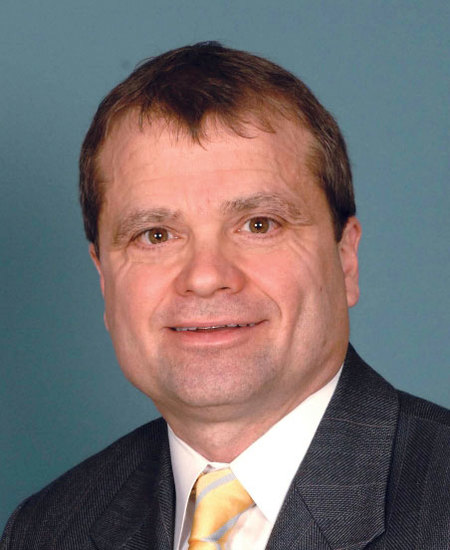
Rep. Mike Quigley
Sponsored bills
IDEA Full Funding Act This bill provides permanent, mandatory funding for the grant program that assists states and outlying areas in providing special education and related services to children with disabilities.
Early Childhood Nutrition Improvement Act This bill makes various changes to the Child and Adult Care Food Program, which reimburses child care centers, day care homes, and other sites for meals and snacks provided to low-income individuals. Among these changes, the bill authorizes reimbursements for an additional meal or snack provided to children who are in care for at least eight hours, allows certain child care centers to certify their eligibility on an annual (rather than a monthly) basis, and establishes an advisory committee to make recommendations to reduce unnecessary recordkeeping requirements for program participants.
Partner with Korea Act This bill creates an E-4 treaty trader visa category for up to 15,000 nationals of South Korea each fiscal year who are coming to the United States solely to perform specialty occupation services, subject to various requirements. The 15,000 limit shall only apply to principal aliens and not the spouses or children of such aliens. (A specialty occupation is one that requires the theoretical and practical application of highly specialized knowledge and a bachelor's degree or higher.)
Greyhound Protection Act of 2021 This bill modifies the federal criminal statute commonly known as the Wire Act. Currently, the Wire Act contains four prohibitions on the use of a wire transmission facility (e.g., the telephone or internet) for certain gambling activities. All four prohibitions apply to sports gambling. However, there have been conflicting interpretations of the applicability of the prohibitions to nonsports gambling (e.g., state lotteries). This bill amends the Wire Act to expressly state that the statute does not authorize the use of wire communications to gamble on commercial greyhound racing or permit the transport of animals for commercial dog racing or related activities.
Protecting Our Communities Act This expands the types of parts, weapons, and devices that are subject to regulation under federal firearms laws. The bill also establishes a notification requirement following a firearms-related background check that results in a denial. Specifically, the bill includes as a firearm any combination of parts designed or intended to be used to convert a device into a firearm and from which a firearm may be readily assembled; adds armor-piercing, concealable weapons to the list of firearms subject to regulation under federal firearms laws; and provides statutory authority for the regulation issued by the Bureau of Alcohol, Tobacco, Firearms and Explosives to classify bump-stock devices as machine guns for the purposes of federal firearms laws. Additionally, the bill requires the Department of Justice to notify state and local law enforcement authorities following a firearms-related background check that results in a denial.
Temporary Family Visitation Act This bill establishes a new nonimmigrant visa classification for an alien temporarily entering the United States to visit a relative who is a U.S. citizen or lawful permanent resident. The maximum period of stay for a family visitor visa shall be 90 days. An alien seeking such a visa must have health insurance for the duration of the stay. An alien who holds such a visa may not change to another nonimmigrant visa classification except in certain limited instances. If an alien has been approved for a family-based immigrant visa and is waiting for one to become available, the alien may obtain a family visitor visa if the alien meets the eligibility requirements.
Raise the Age Act This bill establishes new restrictions on the sale or transfer of certain semiautomatic firearms to individuals under 21 years of age. Specifically, this bill makes it unlawful for a licensed gun dealer, importer, manufacturer, or collector to sell or deliver a semiautomatic center-fire rifle that has (or has the capacity to accept) an ammunition feeding device with a capacity of more than five rounds to an individual who the licensee knows or has reasonable cause to believe is under age 21. The prohibition does not apply if the individual under age 21 is a full-time law enforcement officer or active-duty member of the Armed Forces. The bill also requires the Federal Bureau of Investigation to report on the operation of its public access line, including a description of information sharing protocols and recommendations for improving such protocols.
Fiscal State of the Nation Resolution This concurrent resolution requires the congressional budget committees to conduct an annual joint hearing to receive a presentation from the Comptroller General regarding (1) the Government Accountability Office's audit of the financial statement of the executive branch, and (2) the financial position and condition of the federal government.
Justice for ALS Veterans Act of 2021 This bill extends increased dependency and indemnity compensation to the surviving spouse of a veteran who dies from amyotrophic lateral sclerosis (ALS or Lou Gehrig's disease) regardless of how long the veteran had such disease prior to death. Under current law, such compensation is paid for a service-connected disability that was rated totally disabling for a continuous period of at least eight years immediately preceding death. For purposes of this bill, a surviving spouse is a person who was married to the veteran for a continuous period of eight years or longer prior to the veteran's death.