

Maddy summaryThe Air Carrier Access Amendments Act of 2026 updates the Air Carrier Access Act to strengthen protections for individuals with disabilities who travel by air. It directly affects passengers with disabilities, service animal handlers, and air carriers by establishing new rules for handling specific violations. The bill allows aggrieved passengers to file civil lawsuits in federal court without first exhausting administrative remedies and permits courts to award compensatory and punitive damages. Additionally, it mandates that the Department of Transportation refer cases involving patterns of discrimination to the Attorney General for further legal action.
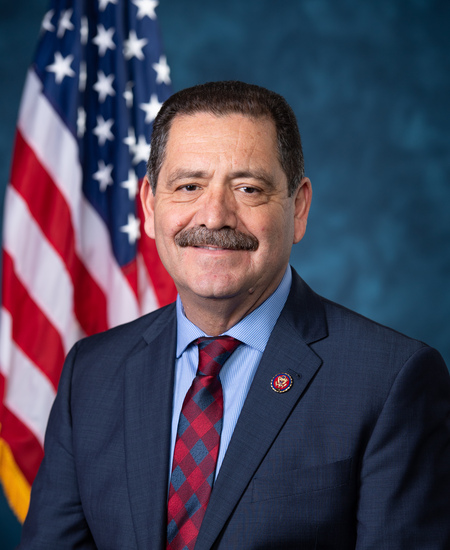
Rep. Jesús G. "Chuy" García
Sponsored bills
Maddy summaryThe HEART Act of 2026 directs the Department of Health and Human Services to create a new office dedicated to providing mental health and family stability support to communities affected by federal immigration enforcement actions. This office would fund mobile response teams, emergency counseling vouchers, and grants for local organizations to offer trauma-informed care and culturally competent behavioral health services. A key provision requires that any data collected about these enforcement actions be kept separate from immigration agencies to protect community trust. Additionally, the bill mandates the development of multilingual health education campaigns and the training of healthcare providers to better serve these populations.
Maddy summaryThis bill strengthens child labor protections by expanding the definition of hazardous work for minors, particularly in dangerous industries like mining and explosives, and requires the government to update these regulations every five years. It imposes strict rules on companies with federal contracts, prohibiting them from using child labor in their supply chains and holding them jointly liable if their subcontractors violate these rules. The legislation also increases penalties for violations, including higher fines for serious injuries or deaths, allows for stop-work orders, and enables victims to seek significant compensatory and punitive damages. Additionally, the bill mandates training programs to help identify and prevent child labor abuses and requires the Department of Labor to report annually on work-related injuries and deaths.
Maddy summaryThis resolution commemorates the 10th anniversary of the 2016 Pulse nightclub shooting in Orlando, Florida, which was an act of domestic terrorism. It formally honors the names of the victims and expresses condolences to their families while acknowledging the bravery of law enforcement and emergency responders who responded to the tragedy. The document also reaffirms support for the LGBTQ+ community and calls for continued efforts to improve gun safety and mental health legislation.
Maddy summaryThe PRIDE Act of 2026 expands the Office of Minority and Women Inclusion to include LGBTQI+ individuals and businesses. It amends existing financial and housing laws to require the office to consider gender identity and sexual orientation when enforcing regulations and supporting small businesses. The bill formally defines LGBTQI+ as lesbian, gay, bisexual, transgender, queer, or intersex and sets a standard where more than 50 percent of a business's ownership and profits must accrue to LGBTQI+ individuals to qualify as LGBTQI+-owned. This change directly affects the Department of the Treasury's oversight of financial institutions and the Small Business Administration's lending programs. By updating the legal definitions within the Dodd-Frank Act and related housing legislation, the bill ensures that federal support and compliance measures explicitly cover the LGBTQI+ community.
Maddy summaryThe Keep Public Funds in Public Schools Act of 2026 eliminates a federal tax credit that allowed parents to deduct contributions to scholarship granting organizations from their income. By removing these specific tax breaks, the bill prevents the use of public tax dollars to support private school vouchers and scholarship programs. This change directly affects families who currently rely on these tax incentives to fund education outside the public school system. The provisions take effect for taxable years beginning after December 31, 2026.
Maddy summaryThe DASH Act aims to expand affordable housing options for low-income individuals, homeless persons, and first-time homebuyers by creating new federal programs and modifying existing tax laws. A primary component is the creation of 250,000 new rental vouchers in 2026 for people experiencing homelessness or at risk of homelessness, which includes funding for supportive services like healthcare and job training, as well as requirements for public housing agencies to prioritize youth and families. The bill also establishes a modular construction pilot program to lower building costs, a grant system to reward local governments that adopt zoning rules allowing denser housing like duplexes and accessory dwelling units, and a new tax credit to help low-income families purchase starter homes in distressed communities. Additionally, the legislation introduces a new refundable tax credit for first-time homebuyers, expands tax incentives for middle-income housing, and makes several adjustments to how homeowners can deduct losses or handle debt discharges related to their principal residences.
Maddy summaryThe Parent PLUS Loan Fairness and Responsibility Act of 2026 allows parents to transfer their existing federal student loans directly to their adult children under specific conditions. To qualify for this transfer, the loan must be in good standing, have been used for the child's education, and the child must be at least 18 years old with demonstrated ability to repay based on income and credit history. Once transferred, the child becomes the sole borrower responsible for the debt, while the parent is relieved of all repayment obligations and the loan retains its original terms and forgiveness eligibility. The bill also ensures that payments made before the transfer count toward Public Service Loan Forgiveness and that the transferred amount does not affect the child's future borrowing limits.
Maddy summaryThis bill, titled the Dignity and Due Process for Children Act of 2026, restricts how unaccompanied children under 18 are handled by immigration authorities in the United States. It requires immigration judges to issue an arrest warrant before detaining these children pending removal decisions and prohibits the use of military personnel or Department of Defense vehicles to transport them for deportation, except during declared natural disasters. Additionally, the law forbids government agencies from pressuring children to sign legal documents that affect their status without first ensuring they have confidential access to a lawyer, mandating legal referrals within five business days if a child does not already have one.
Maddy summaryHR 5408, the Faster Labor Contracts Act, requires employers to begin negotiating a first contract with a newly certified union within 10 days of written request. If no agreement is reached within 90 days, the parties must seek mediation, and if unresolved after 30 days of mediation, the dispute moves to binding arbitration by a three-member panel. The arbitration decision, based on factors like employer finances, industry standards, and cost of living, becomes binding for two years. This bill directly affects newly certified unions and their employers during initial contract negotiations, aiming to reduce delays that currently average 465 days.